
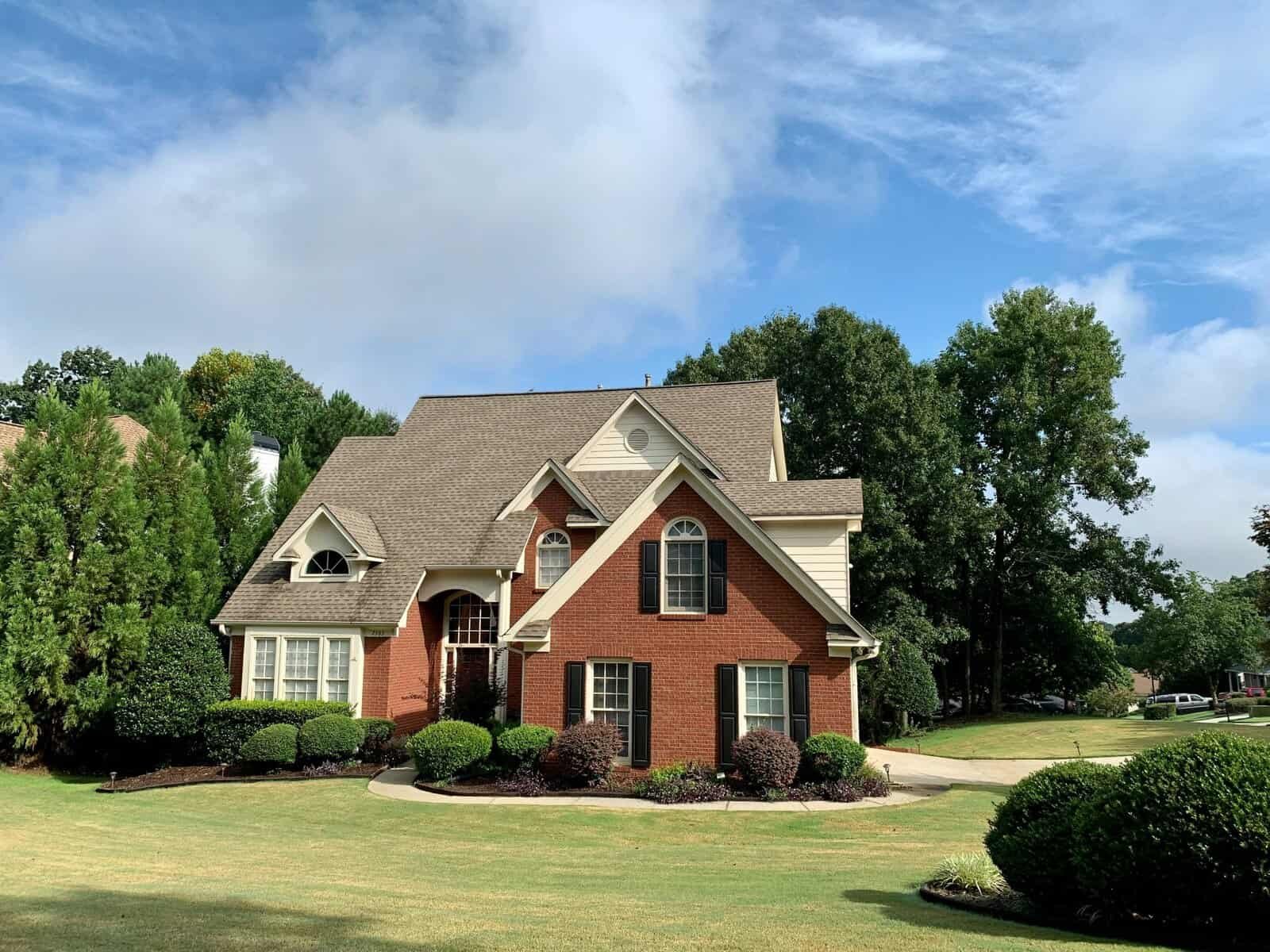
- Empty-nest baby boomers own many more 3-bedroom-plus U.S. homes than younger families raising children, underscoring a mismatch between who has space and who needs it.
- Millennials with kids are facing both affordability and inventory challenges–but at the same time, baby boomers have little financial incentive to move–and there’s limited inventory of reasonably priced, small, one-story homes for them to go to.
- More large homes could hit the market as affordability improves, the lock-in effect eases and it becomes easier for sellers to test the market via the new Redfin-Compass partnership.
- Empty-nest baby boomers own more large homes than millennials with kids in every major U.S. metro. Millennial families own the biggest portion of large homes in Austin and Columbus, and the smallest portion in Los Angeles.
Baby boomers living in one- to two-adult households own 28% of large homes in the U.S. By comparison, millennials with children living at home own 16% of those houses—barely more than half as much. Gen Z parents own less than 1% of the nation’s large homes.
Baby boomers with households of three adults or more own an additional 7% of the country’s three-bedroom-plus homes (which we also refer to as “large homes” in this report). Those are likely made up of adult children living with their parents.
This is based on a Redfin analysis of U.S. Census data from 2024 (the most recent year for which data is available) that breaks down the share of three-bedroom-plus homes owned and occupied by each generation, by household type and size. See the end of this report for more details on methodology.
Millennials are the largest generation of parents in the U.S., but they own a relatively small share of family-sized housing. Gen Z parents—many of whom are just beginning to enter the housing market—barely register at all. It’s also worth noting that millennials are the largest generation in the U.S., period.
This dynamic can limit mobility for younger families, many of whom face both inventory and affordability challenges when trying to upgrade to bigger homes. One, there aren’t enough large homes on the market for the millennial families who need them, partly because in some parts of the country, there aren’t enough small reasonably priced homes for older Americans to downsize into. And two, home prices and mortgage rates are high; in many parts of the U.S., families are priced out of the housing market.
More than one-quarter (28%) of millennials aren’t buying a home in the near future because mortgage rates are too high, the most commonly cited reason for not buying among people in that age group who are either renters or long-term homeowners unlikely to move soon. That’s according to a November 2025 Redfin survey fielded by Ipsos. One in five (20%) aren’t buying a home soon because they’re unable to save for a down payment. Some millennials just don’t want to buy a home: 13% enjoy the flexibility of a rental lease, and 6% don’t want to put in the effort to maintain a home.
At the same time, many baby boomers have little financial incentive to move, often benefiting from low mortgage rates or fully paid-off homes. Nearly three in five (57.8%) baby-boomer homeowners have no mortgage; their home is fully paid off.
There are also social and lifestyle reasons to stay put: Baby boomers, in their sixties and seventies, may want to stay in the neighborhoods they’ve lived in for a long time, close to their friends, family, work and/or recreational activities. It’s also worth noting that one reason baby boomers own more large homes is simply because they’re older and have had more time to earn and save money, and use it to buy large homes.
“Younger buyers are looking to move into single-family homes in specific neighborhoods, those with a family friendly vibe and highly rated schools,” said Brenda Beiser, a Redfin Premier agent in Philadelphia. “The problem is, younger families have a hard time finding those homes because the older people living in them can’t find anywhere they want to move to. I hear empty nesters say they want to downsize, but it’s hard to find move-in ready, small, one-story homes or condos in their price range–especially since many of them are living in a fully paid-off home. So there’s a lack of movement that’s keeping both older and younger buyers where they are, even though the older ones want a smaller home and the younger ones want a bigger home.”
More Large Homes Could Hit the Market as Affordability Improves
Homebuying affordability is improving, and Redfin economists expect it to improve more as the year goes on. That could allow some younger buyers to break into the market. Additionally, there could be more large homes come on the market as the mortgage-rate lock-in effect eases.
Redfin agents in some parts of the country say they’re starting to see more older homeowners downsize. A Redfin agent in Omaha, NE said some baby boomers are selling to younger families as they move into homes without stairs and without much maintenance. A Sacramento Redfin said several older residents are selling the family home because they’re downsizing—though those listings are rare, and competitive.
Redfin and Compass recently partnered on a phased marketing initiative that could motivate more homeowners to sell. Redfin economists estimate that housing inventory could increase by 6% to 12% annually in markets where home sellers are given the flexibility to test pricing strategies before formally listing.
A separate Redfin analysis found that the median age of first-time homebuyers has ticked down, from 38 in 2018 to 35 in 2025, signaling that at least some housing inventory is turning over to younger Americans. Additionally, Gen Z’s homeownership rate ticked up in 2025, and millennials eked out a gain, too.
Millennials Have Gained Ground Over the Last Decade, But It’s Not Because Baby Boomers Are Letting Go of Their Homes
Empty-nest baby boomers own essentially the same share of large homes they did a decade ago: In 2014, they owned 27.7% of the nation’s stock of large homes; now, they own 27.8%.
Millennials with kids have made progress as they’ve grown into prime homebuying and child-rearing age. In 2014, they owned 4.9% of the nation’s large homes; now, they own 15.7%.
Some of the large homes millennials now own come from the oldest living generation. In 2014, the Silent Generation owned about 18% of the nation’s large homes; now, they own about 8%.
Millennials With Kids Own the Biggest Portion of Large Homes in Austin and Columbus, and the Smallest Portion in Los Angeles
Empty-nest baby boomers own more large homes than millennials with kids in every major U.S. metro.
Millennials with kids own less than 20% of large homes everywhere in the country. They own the biggest share of large homes, 19.2%, in Austin, TX and Columbus, OH. Minneapolis (18.9%) rounds out the top three.
Millennials with kids own the smallest share of large homes in Los Angeles, where they own just 10.5% of them. It’s followed by Miami (12.5%) and San Jose, CA (13.1%).
On the flip side, empty-nest baby boomers own at least 20% of large homes everywhere in the country. They take up the biggest share of large homes in Memphis, TN, where they own 31.2% of the metro area’s three-bedroom-plus homes. It’s followed closely by Cleveland, where empty nesters own 30.9% of the metro’s three-bedroom-plus homes, and Pittsburgh (30.6%).
In Salt Lake City, empty nesters own one in five (20.1%) of the metro area’s large homes, the smallest share in the U.S. It’s followed by Riverside, CA (21.4%) and Austin, TX (22%).
| Metro-Level Summary: Who Owns the Metro Area’s Stock of Large Homes?
50 most populous U.S. metro areas Large homes = three-plus bedrooms Empty nesters = Baby boomers with 1-2 adults living in the household |
||
| U.S. metro area | Share of large homes owned by millennials w/ kids | Share of large homes owned by empty-nest baby boomers |
| Atlanta, GA | 15.9% | 25.1% |
| Austin, TX | 19.2% | 22.0% |
| Baltimore, MD | 15.4% | 26.8% |
| Birmingham, AL | 15.3% | 28.3% |
| Boston, MA | 16.1% | 25.1% |
| Buffalo, NY | 15.9% | 29.3% |
| Charlotte, NC | 16.5% | 25.1% |
| Chicago, IL | 15.9% | 24.8% |
| Cincinnati, OH | 17.7% | 27.4% |
| Cleveland, OH | 13.9% | 30.9% |
| Columbus, OH | 19.2% | 25.3% |
| Dallas, TX | 17.6% | 22.8% |
| Denver, CO | 16.4% | 24.5% |
| Detroit, MI | 14.8% | 27.3% |
| Hartford, CT | 15.9% | 26.7% |
| Houston, TX | 18.3% | 22.3% |
| Indianapolis, IN | 18.6% | 25.2% |
| Jacksonville, FL | 15.9% | 28.8% |
| Kansas City, MO | 18.6% | 27.8% |
| Las Vegas, NV | 14.7% | 23.4% |
| Los Angeles, CA | 10.5% | 23.9% |
| Louisville, KY | 15.2% | 28.8% |
| Memphis, TN | 13.9% | 31.2% |
| Miami, FL | 12.5% | 23.8% |
| Milwaukee, WI | 16.1% | 29.2% |
| Minneapolis, MN | 18.9% | 25.5% |
| Nashville, TN | 17.4% | 25.0% |
| New Orleans, LA | 15.5% | 30.0% |
| New York, NY | 13.9% | 24.4% |
| Oklahoma City, OK | 18.6% | 27.0% |
| Orlando, FL | 13.7% | 24.7% |
| Philadelphia, PA | 15.0% | 26.6% |
| Phoenix, AZ | 15.3% | 25.2% |
| Pittsburgh, PA | 15.5% | 30.6% |
| Portland, OR | 16.0% | 26.7% |
| Providence, RI | 14.5% | 27.0% |
| Raleigh, NC | 16.7% | 24.8% |
| Richmond, VA | 15.9% | 29.3% |
| Riverside, CA | 15.9% | 21.4% |
| Sacramento, CA | 14.6% | 27.4% |
| Salt Lake City, UT | 18.9% | 20.1% |
| San Antonio, TX | 17.2% | 23.2% |
| San Diego, CA | 14.2% | 26.9% |
| San Francisco, CA | 13.8% | 25.6% |
| San Jose, CA | 13.1% | 22.4% |
| Seattle, WA | 17.6% | 24.3% |
| St. Louis, MO | 16.9% | 27.7% |
| Tampa, FL | 13.7% | 27.6% |
| Virginia Beach, VA | 16.7% | 29.0% |
| Washington, DC | 16.0% | 23.7% |
Methodology
This is based on a Redfin analysis of U.S. Census data from 2024 (the most recent year for which data is available) that breaks down the share of three-bedroom-plus homes owned and occupied by each generation, by household type and size. The three household types are as follows: 1 or 2 adults total living in the home; neither are minor children (for boomers, we refer to this category as “empty nesters”), 3 or more adults total living in the home; none are minor children, and households where adults are living with their minor children.
Adult Gen Zers were 19-27 years old in 2024, millennials were 28-43, Gen Xers were 44-59, and baby boomers were 60-78.
* ACS data was retrieved from IPUMS USA
*Steven Ruggles, Sarah Flood, Matthew Sobek, Daniel Backman, Grace Cooper, Julia A. Rivera Drew, Stephanie Richards, Renae Rogers, Jonathan Schroeder, and Kari C.W. Williams. IPUMS USA: Version 16.0 [dataset]. Minneapolis, MN: IPUMS, 2025