

Chabad UF Student Center largest Passover Seder in the U.S.
More than 1,000 people attended the Chabad UF Jewish Center’s Gator Seder on the University of Florida campus.
- The Gainesville City Commission approved a $45,000 forgivable loan for the Heartwood Soundstage music venue.
- The 4-3 vote was contentious, with some commissioners concerned about setting a precedent for funding a single organization.
- City staff was also directed to explore creating a broader, competitive loan program for all local arts organizations.
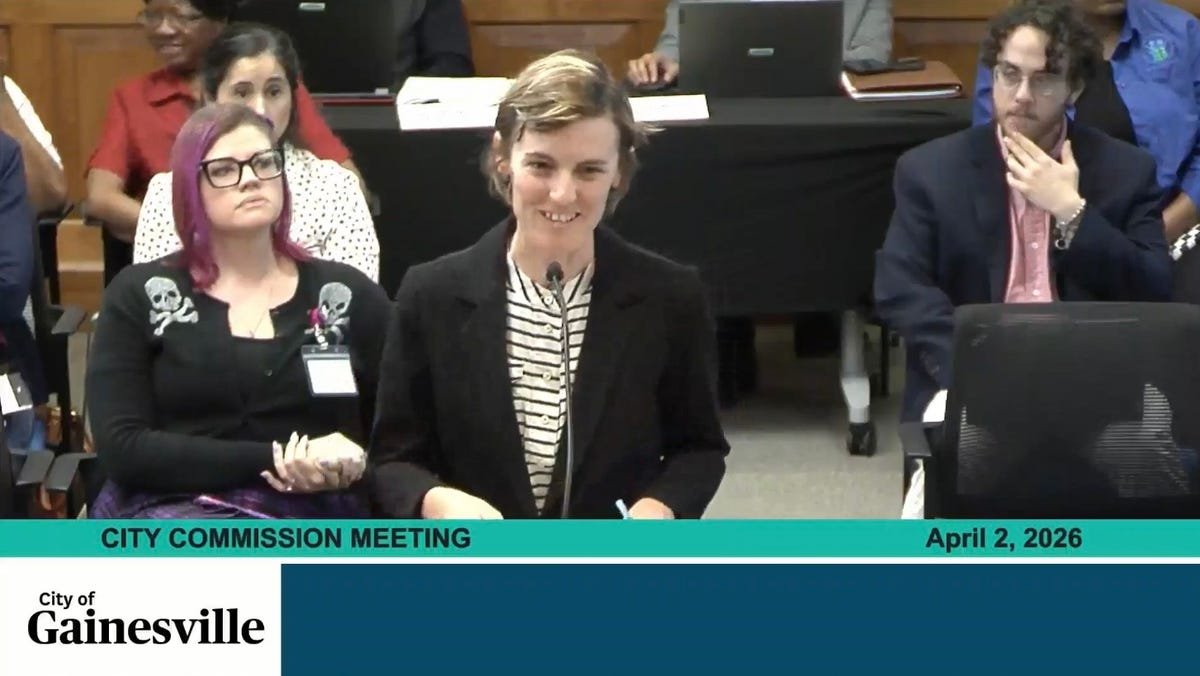
The Gainesville City Commission approved a $45,000 forgivable loan for Heartwood Soundstage during its April 2 meeting while also directing staff to explore the creation of a broader, competitive loan program aimed at supporting arts organizations citywide.
In a rare 4-3 vote, Commissioner Bryan Eastman’s motion approved $45,000 from excess fund balance as a forgivable loan, to be forgiven after three years if the venue hosts four free, publicly accessible events each year.
Mayor Harvey Ward and Commissioners James Ingle, Casey Willits and Bryan Eastman voted in favor, while Commissioners Desmond Duncan-Walker, Cynthia Chesnut and Ed Book voted in dissent.
At the beginning of the discussion, interim City Manager Andrew Persons reminded commissioners that the commission had previously asked staff to identify $55,000 in funding for Heartwood Soundstage.
Heartwood Soundstage Executive Director Chelsea Carnes told commissioners on March 5 that the music venue would use the “one-time stipend” to resolve outstanding debts and stabilize operations.
Emphasizing the local economic impact, Ward said surrounding businesses at South Main Station exist in part because of Heartwood.
Calling the situation “unique” and “difficult,” Book said he could not recall another instance where a for-profit organization converted to a nonprofit and then received funding to “get it up and running.”
After Book asked for updated financial information, Carnes said Heartwood welcomed more than 23,000 concertgoers in 2025, generating $864,000 in ticket revenue.
Backing Ward’s point on economic impact, Carnes said studies show performing arts centers help support nearby businesses such as restaurants and hotels.
Having operated as a nonprofit for about seven months, Book asked how much Heartwood had raised since converting. Carnes said the total was $94,016.
That total included a $58,000 donation from a Heartwood founder, $25,785 from corporate event sponsors during Tom Petty Weekend in 2025, $6,000 from RA disbursements for retirement funds, and more than $5,000 from Friends of Heartwood donations through its membership program.
“We’re doing quite well with sponsorships and is another reason I say I don’t expect to be back here for this kind of money. It’s a one-off. We’re doing well but I’ve just inherited some debt,” Carnes said.
As of the morning of April 2, Book said an additional concern was that the city had frozen 30 positions due to “fiscal restraint,” while another nonprofit had requested $130,000 in allocated funds earlier in the week.
Duncan-Walker said she had a subsequent conversation with the city’s arts grants program, PRCA, and learned Heartwood did not qualify.
While Duncan-Walker said she supports Heartwood, she said many organizations need assistance and expressed interest in discussing the issue with a cultural affairs council to move the request forward.
“There will also be the question of, “Well the city funded Heartwood, why won’t they fund us,’ ” Duncan-Walker said. “No one’s going to be concerned with what our bottom line of our budget is, they’re just going to say, ‘You funded Heartwood.’ “
Ward and Ingle discussed establishing a long-term program to make loans available for economic development and arts organizations. Ingle said such a program could allow for repayable loans at a reasonable rate.
Duncan-Walker then made a motion directing staff to return with options for a competitive loan program.