
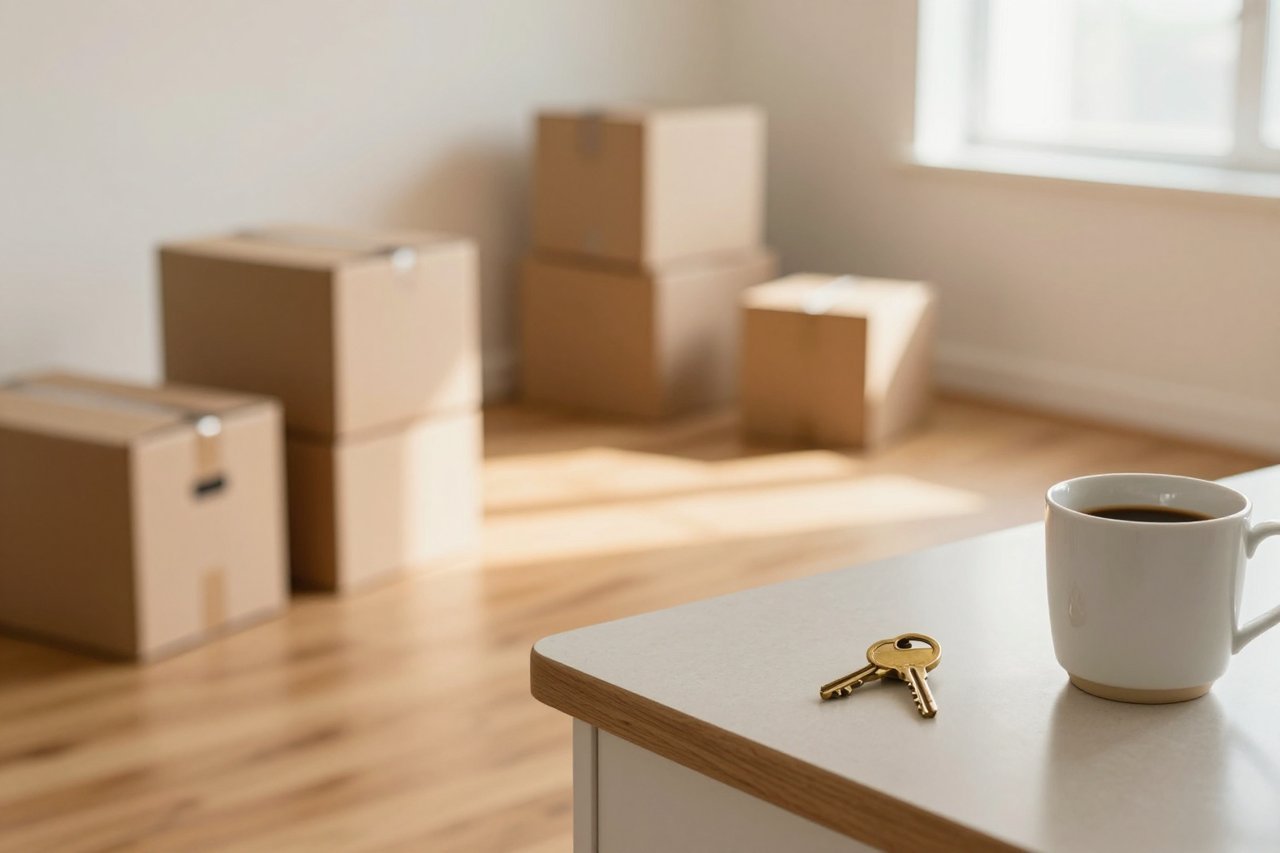
The keys are heavier than you expect. Ten minutes ago they were loose in a closing attorney’s folder; now they’re on a ring in your pocket, and a house you have never slept in belongs to you. Mortgage, roof, water heater, and every dripping tap included.
People spend months preparing for closing and almost no time preparing for the morning after. That gap is where most first-time buyer stress hides. Nobody hands you a checklist at the settlement table, and the to-do list that starts that afternoon doesn’t really end for a year.
Your First 48 Hours in the House
Before the moving truck arrives, you have one real advantage: empty rooms and a quiet house. Use them.
Get the locks rekeyed. You have no idea how many copies of that key exist. The seller had spares, a contractor or two probably did as well, and the lockbox on the front door held a code that half the neighbourhood could have memorised. A locksmith will rekey a typical set for somewhere between $150 and $300 depending on how many cylinders are involved. Replacing the locks yourself with a smart deadbolt costs more, but you’ll never wonder who still has a key.
Then walk the house and learn how it actually works. Find the main water shut-off, the gas valve, the breaker panel, and the furnace filter. If a pipe bursts at 2am in February, you want those locations in your memory, not on a flashlight hunt through the basement.
- Photograph the electric and water meters on day one so your first bill has a baseline to check against
- Press the test button on every smoke and carbon monoxide alarm, and swap the batteries whether they need it or not
- Write down the furnace filter size while the old one is still legible
- Take dated photos of scratches, dents, or stains before your furniture hides them
- Locate the sump pump and pour a bucket of water into the pit to confirm it cycles on
Utilities Rarely Sort Themselves Out
Water and sewer service usually stays connected through a sale, but the account still has to move into your name, and plenty of municipalities insist you do that in person. Electricity and gas are more urgent. Schedule the transfer for closing day so there’s no gap, because a Friday afternoon without power turns into a weekend without power fast.
Internet is the one people forget. Installation appointments in busy months can run two to three weeks out, so book it the day you get your closing date rather than the day you move in.
Then comes the paperwork cascade, which is dull but genuinely important: mail forwarding with the postal service, your driver’s licence and vehicle registration, voter registration, bank and credit card addresses, payroll at work, and your home insurance policy. Ask the previous owner, or your agent, which day rubbish gets collected and whether recycling is a separate pickup. Small thing. You’ll care about it by Tuesday.
The First Mortgage Payment Confuses Almost Everyone
Close on 12 June and your first payment is likely due 1 August, not 1 July. That skipped month isn’t a gift from the lender. You prepaid interest at closing through the end of June, so the bank already has its money. Set up autopay before that first statement arrives, then check a week later that it actually pulled.
Don’t panic when a letter shows up from a mortgage servicer you’ve never heard of. Loans get sold constantly, sometimes within days of closing. Your rate, term, and balance don’t change, and your old servicer is required to forward any payment sent in error for 60 days. Read the welcome packet, register for the online portal, and confirm your escrow account details in writing.
One deadline is worth circling in red: the homestead exemption. Many states and counties require you to file by 1 March of the year after you buy. Miss it and you can pay several hundred dollars more in property tax every year until you sort it out.
Costs That Show Up Around Month Two
A commonly quoted rule of thumb puts maintenance at roughly 1% of your home’s value per year. On a $400,000 house, that’s about $4,000. The catch is that it never arrives in neat monthly instalments. It arrives as a $1,800 water heater in month three, a $600 tree removal in month five, and nothing at all for eight months straight.
Your first-year experience depends a lot on what you bought. A 1990s house with original systems will ask for money earlier and more often, while a new build comes with a builder warranty and a punch list instead. If you’re still weighing which route suits you, this breakdown of new construction versus an existing home covers how the first-year costs and quirks differ between the two.
Wait a season before you renovate
The urge to rip out the kitchen in week two is strong and usually wrong. Live through a full weather cycle first. Winter will show you which rooms are cold, where the drafts come from, and whether the heating bill is a problem. Summer will tell you how the sun moves and whether the upstairs needs a fan it doesn’t have. You’ll make better decisions with twelve months of lived experience than with a weekend of excitement.
Neighbours, HOA Rules, and One Tax Bill You Didn’t Plan For
Knock on a couple of doors and introduce yourself. Beyond being decent, neighbours are the fastest source of answers about which plumber is good, why the street floods, and whether the local internet provider actually delivers the speed it advertises.
If you bought somewhere with a homeowners association, read the covenants before you put up a fence, paint the front door, or park a trailer in the driveway. Most HOAs require architectural approval for exterior changes, and retroactively undoing work is far more expensive than filing a form first.
Also expect a reassessment. Many counties revalue a property when it changes hands, which means your property tax can rise in year two. Since taxes are usually paid through escrow, your monthly payment may increase to cover the shortfall. It’s not an error, and it’s not your lender being difficult. Budgeting for a modest payment bump in the second year saves a lot of confusion.
Small Habits in Year One That Pay Off for a Decade
Most of what protects a house is unglamorous and cheap: filters every 90 days, gutters cleared twice a year, the sump pump tested before spring, and the water heater flushed once. Keep a folder, digital or paper, with receipts, appliance manuals, and the dates of any work done. Future you, and any future buyer, will be grateful.
Fix tiny things as you notice them. A $4 washer on a dripping tap takes five minutes and prevents a stained cabinet. A loose gutter bracket costs nothing today and a foundation problem later.
The first year in a new home is mostly a process of learning its rhythms: which floor creaks, which window sticks in humid weather, how long the shower takes to run hot. Nobody knows those things on day one, and that’s fine. Pay the first mortgage payment on time, file the exemption, and let the house introduce itself. By the time you’ve seen it through four seasons, you’ll know it better than anyone who has ever lived there.