
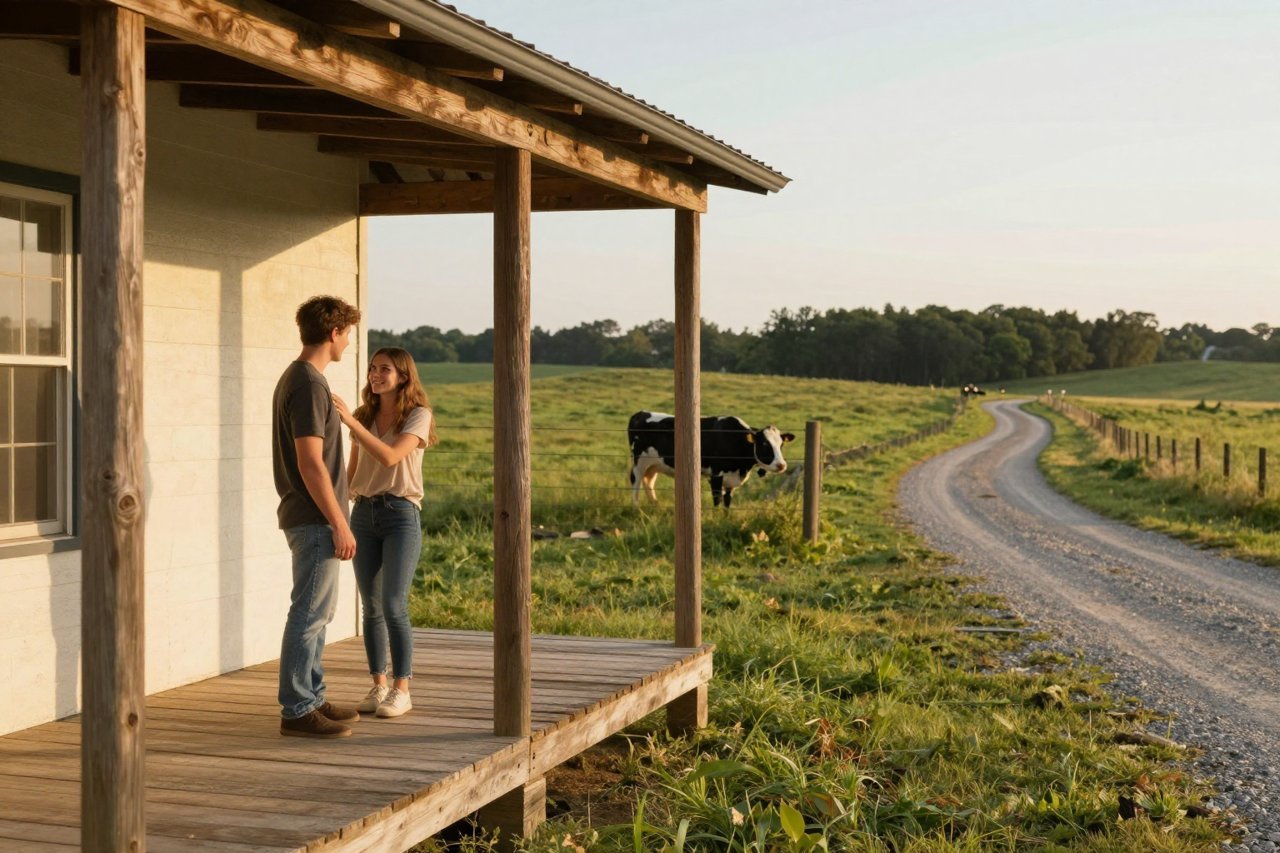
A USDA loan is one of the last true zero-down mortgages left in the country, and it comes with a catch that surprises plenty of buyers. The home has to sit inside an eligible rural area, and household income has to land under a county-specific cap. The USDA eligibility calculator answers both questions in about five minutes, which is worth doing before you fall for a farmhouse the program won’t finance.
Here’s how the tool works, where it stops being useful, and what to do with the answer it hands you.
What the USDA Eligibility Calculator Actually Checks
Two programs share the USDA name, and they don’t use the same rules. The Guaranteed program backs loans from approved lenders and serves moderate-income households. The Direct program is funded by the USDA itself, aimed at low and very low income borrowers, and can include a subsidy that pushes the effective rate below market. The calculator on the USDA’s site covers the Guaranteed program. Direct loans need a separate income worksheet through a local USDA office.
Both versions ask roughly three questions:
- Where is the property? The address gets matched against the USDA’s rural-eligible map.
- How much does the household earn? Total income for everyone who will live in the home.
- How many people live there? Income limits climb with household size.
That middle point trips people up. Say you earn $48,000 and your partner earns $52,000, and only your name goes on the application. A conventional lender counts your $48,000. The USDA counts $100,000, because every adult in the household is part of the calculation. An adult child or a parent moving in counts too.
Property Eligibility Comes Before Income
Run the address first. There’s no sense calculating income caps for a house the program will never touch. The USDA publishes its map at eligibility.sc.egov.usda.gov, and you enter the full street address, not the town name.
Why town names lie
An address that reads “Springfield” tells you nothing about whether the parcel qualifies. Eligibility is drawn by census tract and population density, so one side of a highway can be eligible while the other isn’t. Subdivisions on the edge of a metro area are the classic trouble spot. The map gets redrawn periodically, and a neighborhood that qualified two years ago may not today.
Grandfathered addresses
If a property was eligible when the borrower applied, it stays eligible through closing even if the map shifts mid-process. That’s a small mercy, but it means a seller’s claim of “we closed a USDA loan here in 2021” proves nothing. Run the address yourself.
Income Limits: The Part Buyers Most Often Get Wrong
For the Guaranteed program, the cap generally runs at 115% of the area median household income, adjusted for family size. Households of five to eight people get a higher threshold, usually 150% of the median. Numbers vary by county, so a $95,000 income might sail through in rural Kansas and blow past the limit forty miles outside Denver.
A quick illustration: if area median income is $78,000 for a family of four, the Guaranteed limit lands near $89,700. A family of four earning $93,000 is out, even with a spotless credit file.
Deductions exist, and they matter more than most people realize. The USDA lets you subtract $480 per dependent under 18, plus documented annual childcare costs, plus a deduction for each household member aged 62 or older. A family with two young kids and $12,000 in yearly daycare can knock nearly $13,000 off its counted income.
What to Gather Before You Run the Numbers
The calculator wants gross annual income, and guessing produces a wrong answer. Pull the paperwork first:
- W-2s and the last two years of federal tax returns for every adult in the household
- Your two most recent pay stubs, to capture overtime and bonuses
- Proof of side income, self-employment, Social Security, or pension payments
- Childcare statements if you plan to claim that deduction
- The exact property address you’re considering
Self-employed borrowers should expect the USDA to use net profit from the tax return, after depreciation and business expenses. That cuts both ways. A Schedule C filer showing $34,000 in net profit qualifies more easily than one showing $110,000 in gross receipts.
When the Calculator Says No, but You Might Still Qualify
A rejection from the eligibility tool isn’t always the end of the road.
The property failed, but the income passed
Look a few miles farther out. Rural eligibility often begins right past a town’s outer boundary, and the price gap between an ineligible suburb and an eligible exurb sometimes runs $30,000 in the buyer’s favor.
The income failed, but the property passed
This is where comparing programs pays off. If your income exceeds the Guaranteed cap, a conventional loan with a low down payment or an FHA mortgage may be the realistic path. Running two programs side by side takes an afternoon and can save five figures over the life of the loan, and a step-by-step method for comparing government-backed mortgage rates applies just as well to USDA against FHA.
What a Calculator Can’t Tell You
The map and income tool deliver eligibility, not approval. Lenders layer their own rules on top, and those are often stricter than the federal baseline.
- Credit score. The USDA publishes no minimum, yet most lenders automate approvals at a 640 score.
- Debt-to-income ratio. 41% is the guideline, stretched into the high 40s with reserves or a long employment history.
- Upfront guarantee fee. 1% of the loan amount, usually rolled into the balance.
- Annual fee. About 0.35% of the balance each year, paid monthly.
- Property condition. The home must clear the USDA’s minimum property standards, which are stricter than many buyers expect.
Payment is the other blind spot. Eligibility says yes or no; it says nothing about whether the monthly number fits your budget. Once you have an eligible address, a USDA loan calculator will show principal, interest, taxes, insurance, and both fees combined, which is the figure that actually decides how much house you can carry.
Where the Calculator Fits in Your Homebuying Plan
Use it early, before you tour anything. A five-minute check keeps you from writing offers on homes you can’t finance with the program, and it gives you a realistic price ceiling to hand your agent.
From there, get pre-approved with a lender that closes USDA loans regularly, since not every loan officer handles them often. Once you’re under contract, watch pricing and consider a mortgage rate lock if the numbers look good. Lock periods run 30 to 90 days, and a float-down option is worth asking about when the market is jumpy.
Lender choice matters more here than on a conventional loan. A lender that closes a handful of USDA files a year will slow you down with repeated paperwork requests. Those that do volume know which appraisers understand rural property standards and how the income calculation is supposed to run. Reading up on how specific lenders handle government-backed loans before you commit is worthwhile, because the difference shows up in closing timelines and how fast conditions get cleared.
One last practical note. The income limits update annually, usually in spring, and the rural map changes too. If you’re planning a purchase six months out, run the address again before you make an offer. Numbers that worked in March can shift by October, and finding a $4,000 income gap two weeks before closing is a miserable way to learn that lesson.