
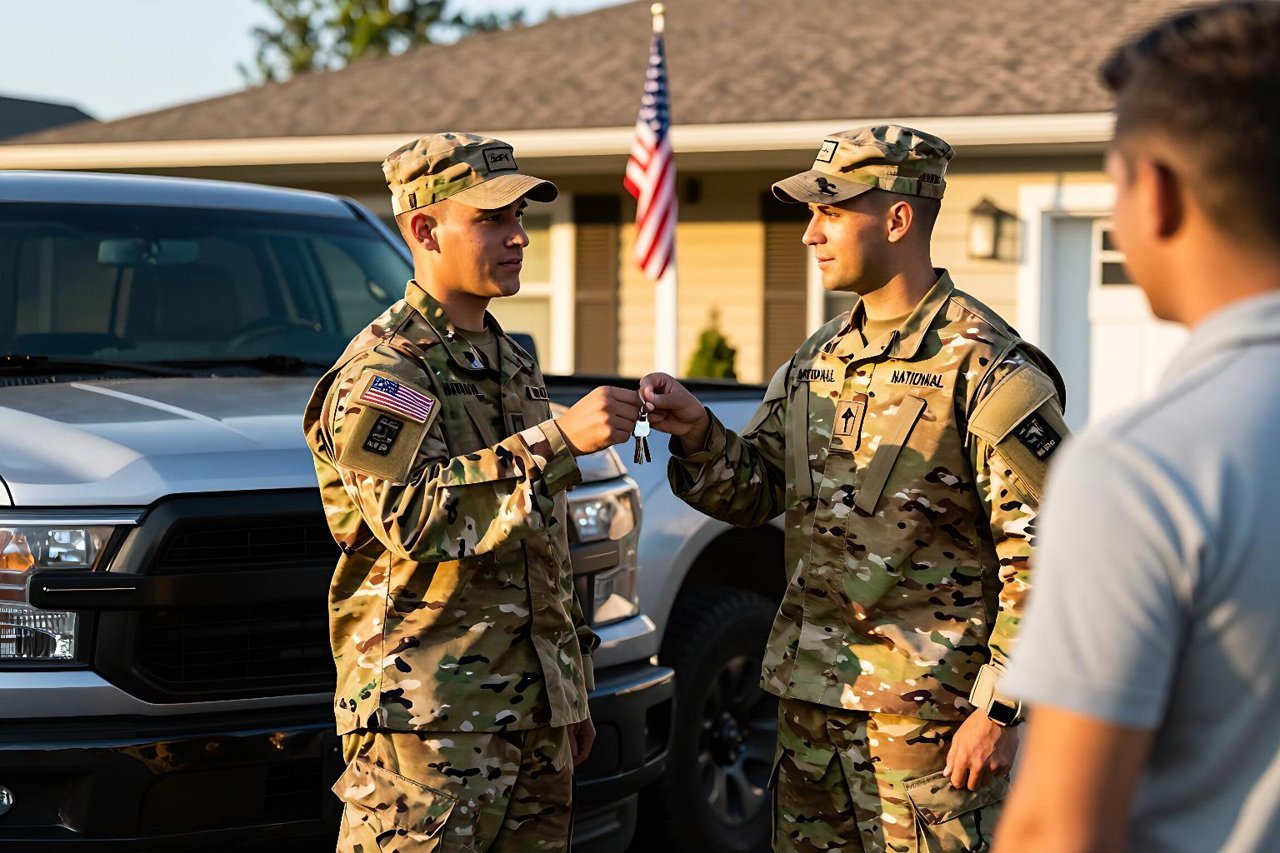
A staff sergeant in the Ohio Army National Guard called me last spring, three weeks from closing, holding a denial letter she couldn’t explain. Seven years of service. No overseas deployment. Two months on state active duty after a flood that took out half her county. The underwriter had opened her file, found no DD-214, and assumed she didn’t qualify.
She did qualify. Six creditable years in the National Guard, no federal mobilization required. Her loan closed on schedule once her unit produced a single form that had been sitting in a filing cabinet the whole time.
That story repeats constantly, because Guard eligibility runs on rules that look almost nothing like the rules for active-duty troops. Here’s how those rules actually work, and where files tend to fall apart.
Two separate doors, and you only need to walk through one
VA loan eligibility for National Guard members comes down to two independent tests. Pass either one and you can request a Certificate of Eligibility. You don’t need both, and you don’t need a combat deployment.
Door one: six creditable years of Guard service
Six years in the Selected Reserve or National Guard, served honorably, is enough on its own. No active duty, no deployment, no overseas time. Drill weekends and two-week annual trainings build toward it, and so does time spent on active guard reserve status.
The word that matters is creditable. Every year you need a good year for retirement purposes, which generally means accumulating at least 50 retirement points. A year with excessive unexcused absences, or a stretch in the inactive ready reserve, can leave a hole in the record. Six calendar years with five good years inside them is not the same thing as six good years.
The same six-year standard applies to drill-status reservists in the other branches, and what counts toward eligibility for reservists overlaps almost completely with the Guard rules. If you’ve bounced between components, the years usually stack.
Door two: 90 days of federal active duty
Guard members who’ve been mobilized federally can qualify much earlier than the six-year mark. The threshold is 90 continuous days of active duty under Title 10 orders during a qualifying wartime period, or 181 continuous days during peacetime. A shorter period can work if you were discharged for a service-connected disability.
A nine-month mobilization to Fort Hood, a year in Kuwait, a Title 10 activation for hurricane relief: those are the kinds of orders that open this door. A specialist with three years in and one federal mobilization behind her is eligible today. Her squadmate with the same time in service and zero federal orders is not, at least not yet.
The Title 10 versus Title 32 distinction that decides files
This is the single most common reason a Guard application stalls. The VA is looking for federal active duty. Most Guard duty, including the duty that takes over your life for months at a time, is performed on Title 32 orders issued by the state.
Two years of COVID response under state orders. A summer fighting wildfires. A winter spent staffing a hospital. All of it matters enormously to your community, and none of it automatically counts as qualifying active duty for VA loan purposes. The VA’s definition of qualifying service is narrower than most people expect, and the distinction lives in the order number, not in the hours you worked.
There are narrow exceptions and edge cases, including certain duty performed in support of a federally declared emergency. Initial entry training adds another wrinkle, since basic training and longer AIT schools run on federal orders and can contribute days toward the 90-day threshold when they’re properly documented. This is the point where a VA-accredited representative or a loan officer who closes Guard files regularly is worth more than any blog post, including this one.
What you can control is the paper. Keep a copy of every set of orders you’ve ever received, plus the DD-214 that should follow each federal activation. Units lose things. Soldiers who keep their own file don’t spend three weeks hunting for proof.
Documents that make a Guard file move
A Certificate of Eligibility request for a traditional Guard member usually needs three things, and the exact mix depends on which door you’re walking through. What the VA wants to see:
- NGB Form 23 or 23A, the retirement points accounting statement that shows your creditable years. Request it through your unit’s personnel office, not the VA.
- A DD-214 for every federal mobilization, showing the character of service. An honorable or general discharge under honorable conditions is what you need, and what your DD-214 needs to say is more specific than most people realize.
- A statement of service signed by your commander if you’re still serving and using current active duty to qualify, along with the orders themselves.
- VA Form 26-1880 only if you’re applying by mail. Online through VA.gov is faster and free, and most Guard members get a decision the same day.
Get the Certificate of Eligibility before you talk to a seller, not after. It costs nothing, takes about fifteen minutes, and turns a vague conversation with a realtor into a serious one.
What lenders look at once the VA says yes
Eligibility gets you in the room. It doesn’t approve the loan. Once the COE is issued, the decision moves to a lender applying its own standards, and that bar sits higher than the VA’s.
Most lenders want a middle credit score around 620, though the VA itself sets no minimum. Debt-to-income usually needs to land at or under 41% for automated approval, with room up to about 50% when compensating factors exist. Residual income, the money left after your obligations are paid, gets calculated against a regional table and disqualifies more Guard borrowers than credit scores do.
Drill pay counts as income if you can show a stable history and it’s likely to continue. AGR pay, federal technician wages, and a spouse’s salary all count too. Bonus income is trickier and usually needs a two-year paper trail. The gap between what the VA requires and what lenders require is where a lot of otherwise eligible Guard members get surprised.
Numbers worth knowing before you shop
A few costs and rules that catch Guard buyers off guard:
- Funding fee: about 2.15% of the loan amount on a first use with nothing down, 3.3% on subsequent use, and 1.25% if you put at least 10% down. Guard and Reserve members now pay the same rate as other veterans.
- Disability exemption: a VA-rated service-connected disability of 10% or more waives the funding fee entirely, which can mean several thousand dollars back in your pocket.
- No loan limit: since 2020, borrowers with full entitlement face no VA loan cap. Lenders may still impose their own limits, and jumbo pricing can apply above certain amounts.
- Occupancy: the home has to be your primary residence, generally within 60 days of closing. A Guard member renting it out while living elsewhere is a problem.
- Restoration of entitlement: if you’ve used the benefit before and paid that loan off, you can usually restore full entitlement and use it again.
If you’re early in your contract, start here
Three years into a six-year obligation, you have time to get this right, and the moves are simple.
Pull your retirement points statement once a year and check the math. Order a Certificate of Eligibility now, even if you’re not buying for two years, because the answer tells you which door you’re using and what’s missing from your file. And photograph every set of orders the day you receive them, storing them somewhere that isn’t a wall locker.
Guard members who did a single federal mobilization often qualify years before they assume they do. Members with a decade of state activations sometimes qualify through the six-year rule instead, and never think to check. Both groups tend to discover this at the worst possible moment, usually mid-negotiation with a seller who has another offer on the table.
The rules don’t shift dramatically from year to year, which is why the requirements that will still matter in 2027 look a lot like the ones in front of you today. Six creditable years. Ninety days of federal orders. A clean NGB Form 23 and a DD-214 for every mobilization. Get those in hand and the rest is ordinary underwriting, no different from what any other veteran goes through.