
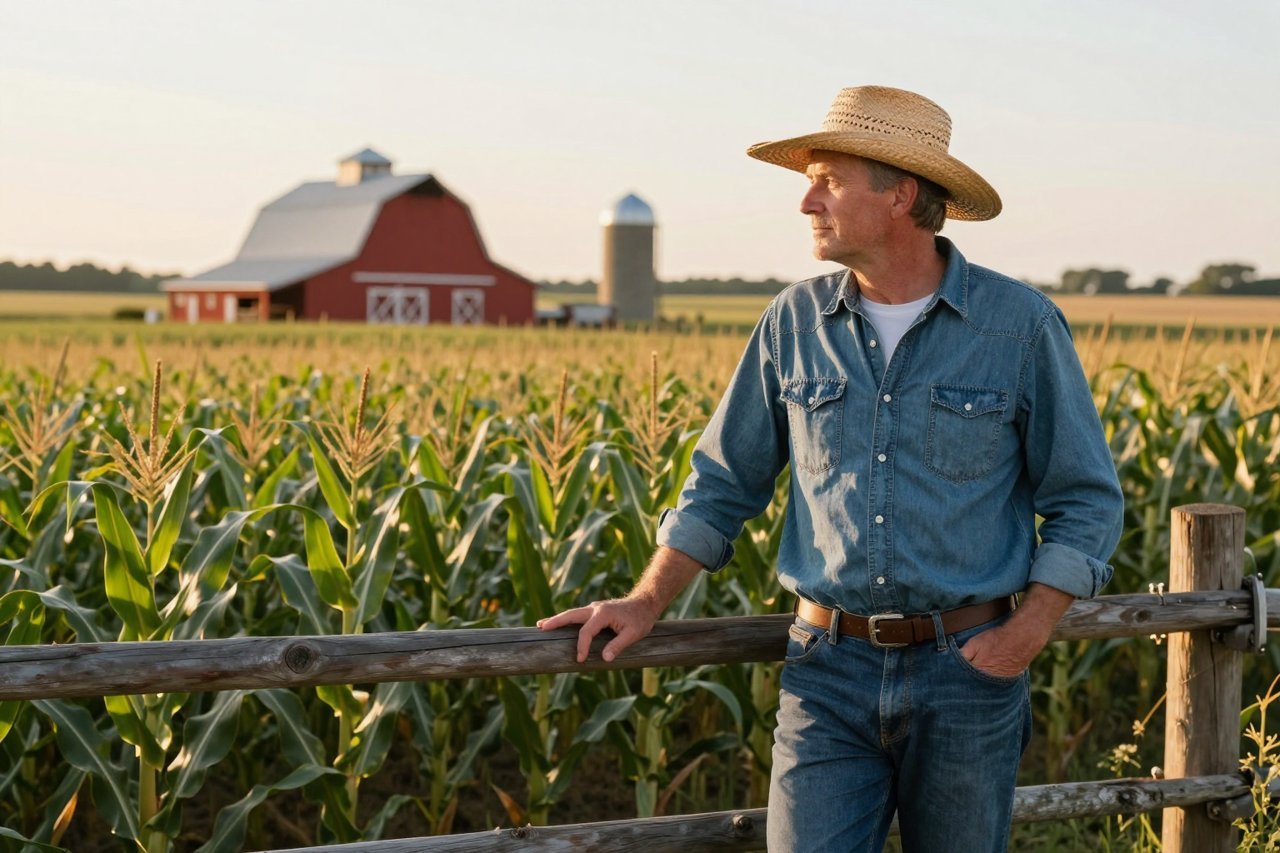
Buying farmland is one of the biggest financial decisions a farm family will ever make. In 2024, average U.S. cropland value sat at roughly $5,460 per acre, but top-producing counties regularly see deals in the $12,000–$18,000 range. On a 120-acre parcel, that turns into a monstrous price tag. But you don’t have to pay it all in cash. A farm mortgage spreads the cost of land over decades while allowing you to use the land itself as collateral. Here’s what you need to know about getting a mortgage that works for real agriculture, not a suburban lawn.
What Is a Farm Mortgage?
A farm mortgage is similar to a home loan except the collateral is agricultural property. You can purchase cropland, pasture, orchards, barns, silos, and sometimes your home within one instrument. The loan can also refinance debt tied to existing farmland. Most ag lenders want to see that the property is used for a legitimate farming operation, not just a land investment. They review both the borrower’s financial history and the earning potential of the soil itself, which is why underwriting for farmland can feel a lot more complex than a standard residential mortgage.
Main Farm Mortgage Types
USDA and FSA Loans
The most borrower-friendly farm mortgages often come from the U.S. Department of Agriculture. The Farm Service Agency, or FSA, extends direct loans to beginning and limited-resource farmers, and it also guarantees loans made through local banks. The Farm Ownership Loan program is the best-known option. Direct loans can be repaid over up to 40 years, and qualifying first-time farmers may get an interest rate reduction. If you use an FSA guaranteed loan through a private bank, you still get competitive terms but work with a regular lender during closing.
Many buyers first hear about USDA finance through the zero-down USDA mortgage for homebuyers. That program focuses on rural homes, but it reflects the same mission the agency applies to working land. If you understand how the USDA evaluates collateral and family income, you’ll have a head start on the documentation required for farm ownership loans.
Commercial Farm Mortgages
Banks, credit unions, and dedicated ag lenders offer commercial farm mortgages with their own underwriting rules. CoBank, Rabobank, and regional Farm Credit associations are major players. A commercial loan can be approved faster than a government-backed loan, sometimes in just a few weeks. These lenders generally want at least 20 percent down, and they expect a manageable debt-to-income ratio after the land purchase. If you have an established operation with strong cash flow, this may be the fastest and most convenient route.
Seller Financing and Private Agreements
Not every farm mortgage has to come from a financial institution. In many rural communities, the person selling the farm is willing to carry the note. A contract for deed or seller-financed mortgage can lower closing costs and allow for flexible terms that banks won’t offer. However, seller financing often includes a higher interest rate and a balloon payment after a few years. Always have a real estate attorney review the contract to confirm the title transfers correctly and that you’re not signing away important rights.
Choosing among FSA, USDA, commercial, and seller-financed paths is not a one-size-fits-all decision. This agricultural mortgage guide lays out side-by-side comparisons of these financing channels, including the paperwork each one demands and the kinds of farms they suit best.
Down Payment Expectations for a Farm Mortgage
Here’s where the numbers start to feel real. A commercial lender typically requires a 20–30 percent down payment, meaning a $1 million farm purchase needs $200,000 to $300,000 in cash. Unimproved land often triggers the higher end because resale is harder. FSA guaranteed loans can lower that to 10 percent, and direct loans occasionally allow even less for borrowers who meet income limits. Some USDA rural development programs permit 5 percent down, much like the agency’s residential mortgage, but they may require additional farm credit counseling. Whatever your down payment amount, remember that going below 15 percent equity often adds insurance requirements and makes the overall interest load heavier.
What Lenders Analyze Before Approving a Farm Mortgage
A lender looks at the land’s productive value, not only its market price. For row crop acreage, they review soil productivity ratings, yield history, and crop insurance coverage. For pasture, they ask about stocking rates and fence condition. They also check your two-year financial statements, federal tax returns, and farm management experience. Your personal credit score matters, but strong farm cash flow and a realistic business plan can outweigh a moderate FICO score.
Gather these documents before you apply:
- A complete balance sheet showing every asset and liability across the farm operation
- Income statements and tax returns from at least the previous two years
- Your farm operating plan, including projected income from the land being financed
- Lease agreements if you currently rent another ground
- Copies of water rights, mineral rights, or easement documentation relevant to the property
Being organized at this stage can cut weeks off the approval process, especially if multiple parties co-sign or the entity is a partnership or LLC.
Rates, Terms and Balloon Payments
Unlike a conventional 30-year fixed home loan, farm mortgages often behave differently. You might see a term that is amortized over 25 years but with an interest rate fixed for only five, seven, or ten years. When that initial period expires, the entire remaining balance becomes due and you refinance or pay it off. This is known as a balloon payment. It is not automatically a bad thing, but it introduces interest-rate risk later in the loan’s life. A farmer who borrows during a low-rate cycle and plans to hold the land for decades needs a clear strategy for the reset.
Compare adjustable-rate farm loans with longer fixed segments. If you’re planting a young orchard or installing permanent irrigation, you want a mortgage that won’t reset before the investment begins producing income. For annual row crops that generate income every season, a shorter reset could work perfectly.
The Current Farm Lending Landscape and Why Lender Health Matters
Farmland values have cooled from the 2022–2023 surge but are still historically high. At the same time, input costs for fuel, seed, and fertilizer remain elevated. That puts pressure on both borrowers and the banks that serve them. The stability of your lender can affect whether you receive reasonable terms during tough years. Financial institutions with healthy asset quality are more likely to keep extending credit, process modifications when drought hits, and compete on interest rates.
A great case in point is the recent BVFL upgrade to outperform, which highlighted strong asset quality and consistent loan growth as key reasons for optimism. A bank with that kind of financial footing is in a better position to support farm borrowers than one struggling with rising delinquencies. Watching how agricultural lenders report quarterly earnings can give you hints about how eager they are to write new farm mortgage loans.
Questions to Ask Before Signing Your Farm Mortgage
Do not walk into closing without asking a few sharp questions. Make sure you fully understand the true cost of the loan over its entire life:
- What happens if an extreme weather event ruins my crop and I miss a payment?
- Is there a prepayment penalty if I sell the farm before the loan matures?
- Can I later add neighbouring parcels by expanding this mortgage or will I need to refinance?
- What index is used when the adjustable rate resets, and what is the maximum interest rate cap?
- Can the mortgage be assumed by a family member if I die or retire?
There are no stupid questions here. A clear answer to each one can expose hidden costs and save you from a deal that looks cheap but turns expensive later. Take the time to request a loan estimate from two or three different lenders, then compare them side by side. The right farm mortgage should give you breathing room to operate while your land builds equity for the future.