
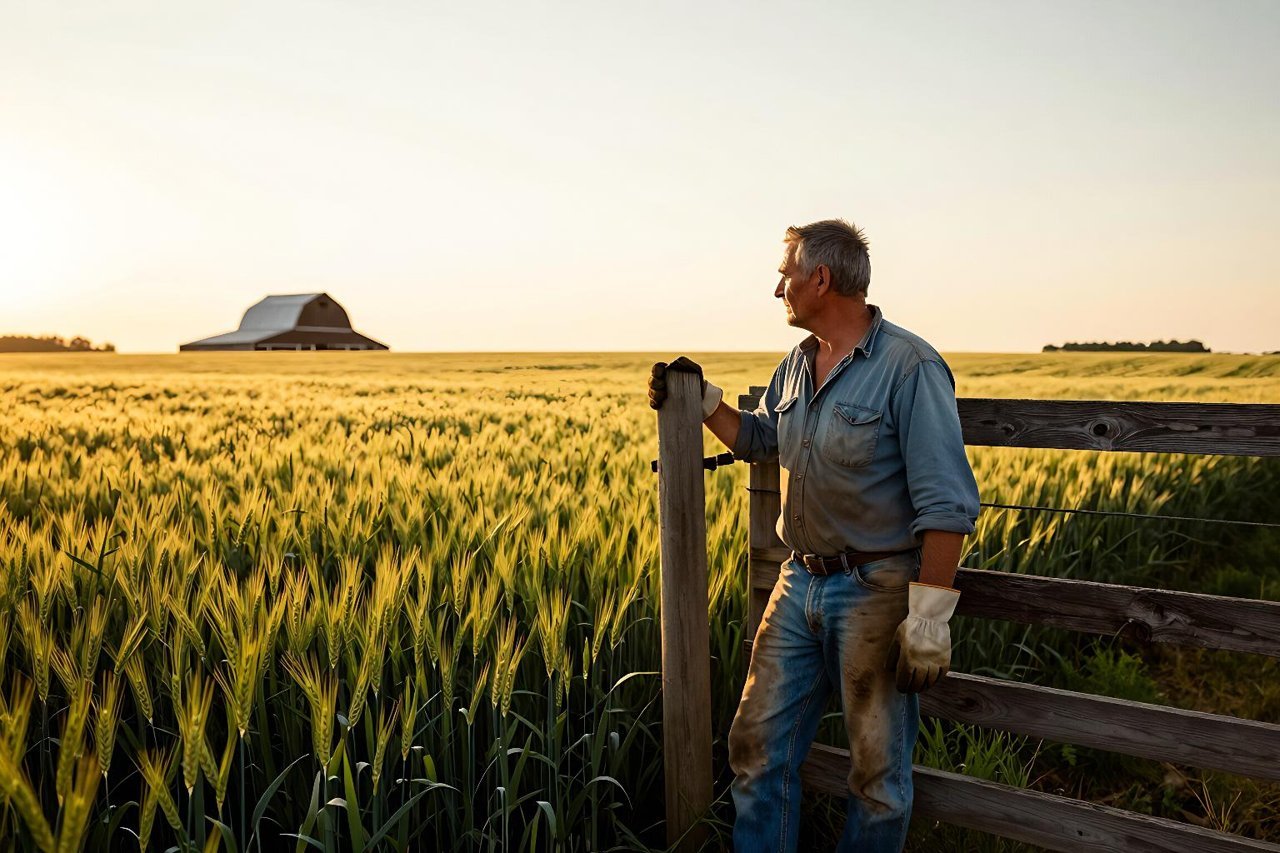
If you have ever bought a house, you know the lender asks for pay stubs and a credit report. An agricultural mortgage involves those same checks, but it also looks at soil quality, water access, farm income history, and your actual experience running an operation. The land needs to generate enough money, or you need to cover the payment from other income, or a lender will turn the file down.
What Is an Agricultural Mortgage?
An agricultural mortgage is a loan secured by a farm, ranch, or land used for agricultural production. The borrower can be a farmer, a rancher, an agribusiness, or an investor who plans to lease the land to someone else. In addition to covering the purchase price, the mortgage can help fund improvements like irrigation, fencing, machine sheds, or grain storage.
These loans come in several forms:
- FSA farm ownership loans: programs backed by the U.S. Department of Agriculture for beginning, veteran, and limited-resource farmers.
- Conventional agricultural mortgages: loans from banks and credit unions with in-house agricultural lending teams.
- Farm Credit System loans: cooperative lenders that specialize in farm real estate and production credit.
- Seller financing: arrangements where the landowner takes installment payments and often holds a mortgage.
Where You Can Get an Agricultural Mortgage
Farm Service Agency (FSA) Loans
The FSA route is a common starting point for first-time farm buyers. The agency offers direct ownership loans with terms up to 40 years, sometimes allowing a smaller down payment than a traditional lender would accept. FSA also guarantees loans made by private lenders. The trade-off is paperwork, income restrictions, and regular program reporting.
Conventional Agricultural Mortgages
Banks and credit unions write their own agricultural mortgages, which means the term sheets vary. You might find a fixed rate for five years followed by an annual renewal, or a 15-year term with a 30-year amortization. Expect a down payment of 20 to 30 percent and a stronger credit profile than the FSA program asks for.
Farm Credit System
Farm Credit is a nationwide borrower-owned cooperative network. Its associations fund farms, ranches, and rural homes. Loan officers understand local markets and seasonal cash flow. You can borrow against the land’s value while keeping your operating and equipment loans under the same roof.
Seller Financing
A retiring landowner might agree to carry the note. Seller financing gives you room to negotiate, but the deal must still include a recorded promissory note, an interest rate, and a default plan. Balloon payments are common, so have a refinance strategy in place before the final payment comes due.
How an Agricultural Mortgage Rate and Term Is Built
Farm loan pricing is not printed on a public rate sheet. Lenders look at the Federal Farm Credit Banks’ bond rates, your debt load, the value of the collateral, and your farm income projections. A common structure is a 10-year fixed rate on a 25-year amortization, but there are also three-year and five-year reset options. A long amortization keeps early payments low, but you may face a large balloon at the end of the fixed period. Make sure the lender states the amount clearly.
Your monthly outlay will also include property taxes. Land in agricultural zones can carry a surprisingly high bill once improvements are added. Before you make an offer, use a property tax calculator to see how the county’s assessed value will affect your real monthly payment.
What Lenders Review Before Approval
Residential underwriters look at your salary and debt-to-income ratio. Agricultural lenders dig further because farmland can be productive or worthless, depending on location and management. Expect them to request:
- three years of farm tax returns and financial statements
- a balance sheet that lists equipment, livestock, and crop inventory
- a cash-flow projection covering the full production cycle
- proof of experience managing a similar farm operation
- a personal credit score that typically starts around 640 for FSA loans and 680 for conventional loans
- water rights, irrigation district information, and soil tests
Many lenders want a debt coverage ratio of at least 1.25. That means your net farm income should cover the mortgage payment plus operating expenses by a margin of 25 percent. If your own farm income is still growing, a secured off-farm job can fill the gap.
Steps to Get Preapproved for Farm Financing
Start with paperwork. Pull your tax returns, production records, and current lease agreements. Write a page explaining the farming operation and the property you intend to buy. That page becomes your business plan when a lender asks why they should fund you.
Next, shop among lenders. Contact your local FSA office, one or two Farm Credit associations, and a commercial agricultural lender. Ask each for a preapproval letter that includes the loan amount, interest rate, and term. You are allowed to compare them like you would a home mortgage.
Before you sign an offer on a specific property, request the last two years of property tax statements from the seller. Local assessors often value farm and ranch land at a fraction of market value until a recent sale changes the formula. If that happens, your tax bill can jump immediately, so calculate property tax on a parcel before you commit to a purchase price.
Special Case: Vineyards and Wine Country Land
Vineyard financing looks different from row-crop financing because the permanent crop adds value. Banks may ask for a specialised appraisal that separates land value from the vines. Buyers also need to know if vineyard management agreements are in place and whether the existing grape contracts will transfer.
Interest in these properties has grown. When Douglas Elliman expanded to California Wine Country with experienced local agents, it reflected the demand from investors who see vineyards as both a lifestyle asset and a production farm. That kind of competition can push appraised values beyond what the wine business supports, so keep your financing conservative.
Questions to Ask Before You Close on an Agricultural Mortgage
Not every agricultural mortgage is set up the same way. Ask the lender for a written breakdown before closing.
- Is the loan fully amortizing, or is there a balloon payment?
- When can you adjust the interest rate, and are there caps on increases?
- Will the lender require crop insurance and assign it as additional collateral?
- Can you finance irrigation repairs, fencing, or new conservation improvements in the same loan?
- Are origination, appraisal, survey, and title fees included in the total closing costs you quoted?
Closing costs on farmland often fall between 2 and 5 percent of the purchase amount. A $500,000 farm mortgage could therefore carry $10,000 to $25,000 in fees on top of the down payment. A respectable lender will walk you through every number and let you take the loan documents home before signing.
Spend extra time with a local agricultural lender before you submit an application. Bring the records, walk the land, and check county tax maps. Once you understand the loan structure and the land’s real production potential, you can make an offer that will work in both good seasons and lean ones.