
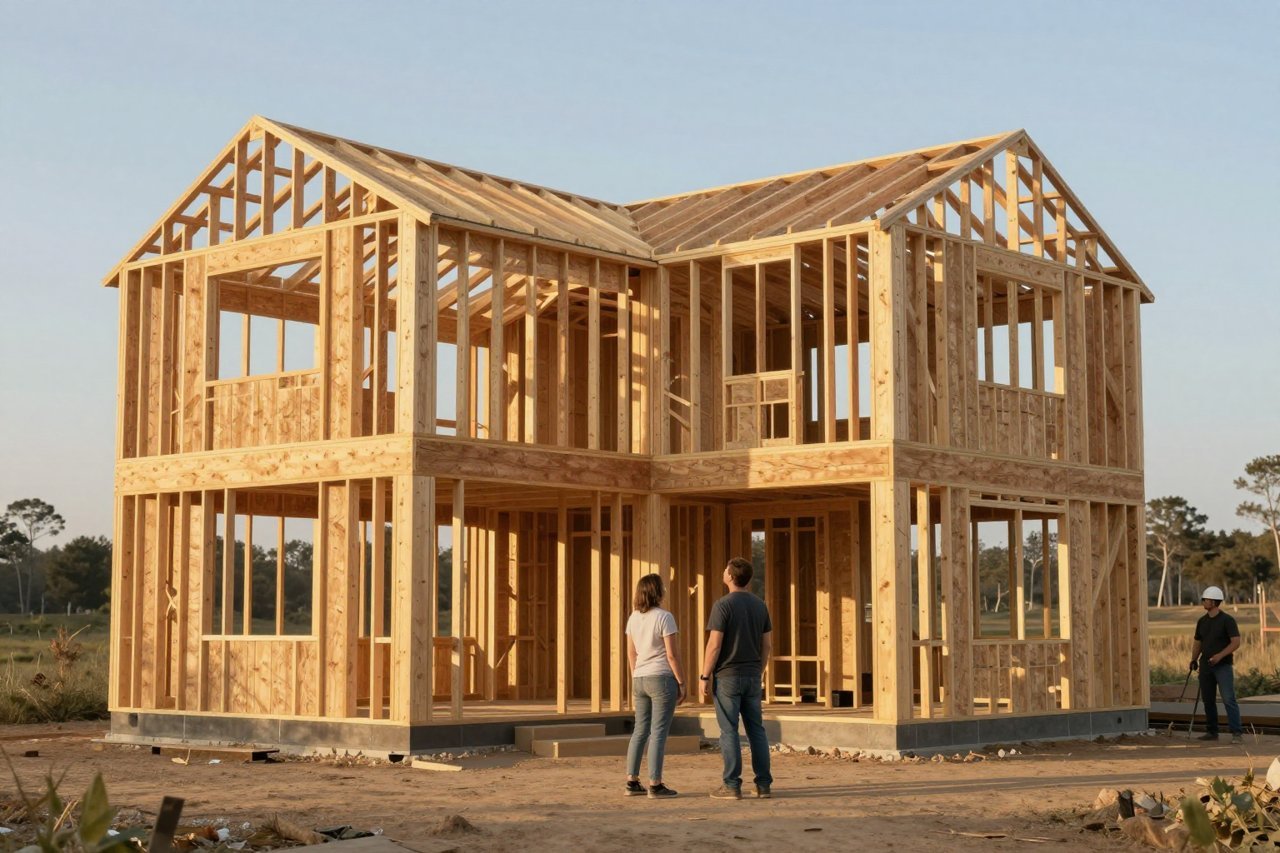
Buying a house that hasn’t been framed yet changes the loan math. A resale purchase is mostly about price and credit. A new build adds a construction schedule, a builder deposit that may be nonrefundable, a completion date that slips when rain shuts the framing crew down for two weeks, and a lender who has to keep your rate alive for ten or twelve months while all of that happens.
That last part is why the best mortgage lenders for new construction are rarely the ones with the biggest ad budget. The skill set is different: extended rate locks, appraisals done from plans instead of a standing house, and a processing team that doesn’t panic when the closing date moves twice.
Why new construction files fail in specific ways
Three things go wrong most often, and all three are lender-side problems as much as builder-side ones.
The appraisal happens before the house exists. On a pre-construction purchase, the appraiser works from blueprints, a site visit, and the upgrade list. Add a $30,000 finished basement after that appraisal and the value doesn’t automatically follow. Lenders who are good at new builds order the appraisal late enough to capture upgrades, or they re-order it at completion.
The lock has to survive the schedule. A standard 30-day lock is useless on a nine-month build. You need a 6- to 12-month extended lock, and you need to know in writing who eats the cost of extending it if the builder runs late.
The deposit gets counted wrong. Builders in tight markets ask for 5% to 20% at contract. Loan officers who don’t document that properly as your own funds create a paperwork mess in the final week before closing.
The builder’s lender is convenient. That is the entire pitch.
Walk into any model home and you’ll hear a version of the same offer: use our affiliated lender and we’ll cover $10,000 in closing costs, or knock the price down, or include the upgrade package you were already going to buy. Sometimes all three, stacked.
That’s real money. It’s also a sales tool, and it works because most buyers never price the alternative. The incentive is worth taking when the in-house rate sits within roughly an eighth of a point of what you’d get elsewhere. It stops being worth it fast when the in-house loan carries a rate half a point higher, because on a $450,000 mortgage that spread costs about $140 a month, or $50,000 over the life of the loan, against a one-time credit of $10,000.
Two questions before you accept the package. Ask whether the incentive can be converted into a straight price reduction, since a lower purchase price helps on every payment and on resale. Then ask whether the credit survives if the home is delayed past its scheduled completion date.
When the in-house lender genuinely wins
If you’re buying a quick move-in spec home and need to close in three weeks, the builder’s captive lender is often the only one who can hit that date, because they already have the file and the relationship. Same story if the builder makes pre-approval from their lending arm a contract condition. For a fast close on a finished inventory home, speed is the product, and some lenders are measurably better at it. This breakdown of lenders who can actually hit a 21-day closing is worth reading before you promise anyone a date you can’t move.
Lender types that handle construction properly
The institution matters less than whether they do this often. A few categories consistently outperform:
- Local and regional banks with in-house construction departments. They portfolio single-close construction-to-permanent loans, which means one closing, one set of fees, and one underwriting approval instead of two.
- Credit unions with construction programs. Frequently the cheapest single-close product available, though timelines and geographic reach vary enormously.
- Regional mortgage bankers with dedicated construction desks. Usually better extended-lock pricing than the big retail names.
- Builder-affiliated lenders. Fastest and most predictable, typically the most expensive once the incentive is spent.
Nationally known names that come up in construction conversations include Churchill Mortgage, which leans on manual underwriting and handles self-employed buyers well, Guaranteed Rate for extended locks on larger builds, and banks like U.S. Bank and TD Bank for true construction-to-perm. Navy Federal and other large credit unions are worth a call if you qualify. None of that is a recommendation so much as a call list. Rates and overlays shift monthly, and a lender that was excellent last spring may have tightened guidelines since. The framework for spotting the best lender for your specific loan matters more than any name on a list.
Two-close versus single-close, in plain terms
A two-close deal means you take a construction loan, the builder finishes, and then you refinance into a permanent mortgage. You qualify twice, pay closing costs twice, and carry the risk that rates or your income look different a year from now. A single-close construction-to-perm loan wraps both into one transaction: you close once, make interest-only payments during the build, and the loan converts automatically at the end. Most buyers who can qualify for single-close should take it. The catch is that fewer lenders offer it, and construction-phase guidelines get tighter the more unusual your plans are.
Down payments, loan limits, and where the build type matters
Conventional loans on new construction start at 3% down for qualifying buyers, FHA at 3.5%, VA at zero for eligible veterans. Above the conforming limit of $806,500, you’re in jumbo territory, and jumbo construction lending is a smaller, pickier pool. These lenders that actually approve jumbo loans above $806,500 are a reasonable place to start. Buyers stretching for the down payment should check which lenders deliver on small down payment programs rather than assuming the builder’s lender has the best option on the table.
What to ask before you sign the purchase contract
Get answers in writing. A verbal “we’ll figure it out” from a sales office is not a commitment. Ask for the lender’s extended lock terms: how long, what it costs, and whether there’s a float-down if rates fall. Ask what happens to your rate and your deposit if the certificate of occupancy is delayed 60 days. Ask whether the builder offers a completion-date guarantee and what the remedy is when they miss it. Ask how change orders get documented for the appraiser.
New builds also draw a lot of first-time buyers, partly because incentive packages are marketed hard to them, and the financing traps are the same ones that catch people on resales: an affordability number that ignores taxes and HOA dues, or a pre-approval that never got a full underwrite. These differences that actually matter for first-time buyers are worth ten minutes before you tour a model.
Where the money quietly leaks
The expensive parts of a new construction loan are rarely the headline rate. They’re the 0.375-point extension fee charged because the builder missed the framing deadline, the per-diem interest that starts the day the loan funds whether or not you’ve moved in, and the upgrade money rolled into the purchase price without showing up in the appraisal. Stack a few of those together and the lender with the friendliest advertised rate can end up the most expensive option in the room.
The buyers who come out ahead tend to do the same unglamorous thing. They get two or three Loan Estimates on the same day, with the same loan amount and the same lock period, and compare total cost of financing instead of rate alone. Then they read the builder’s financing addendum before signing, not after. That’s the whole edge. Everything else is marketing.