
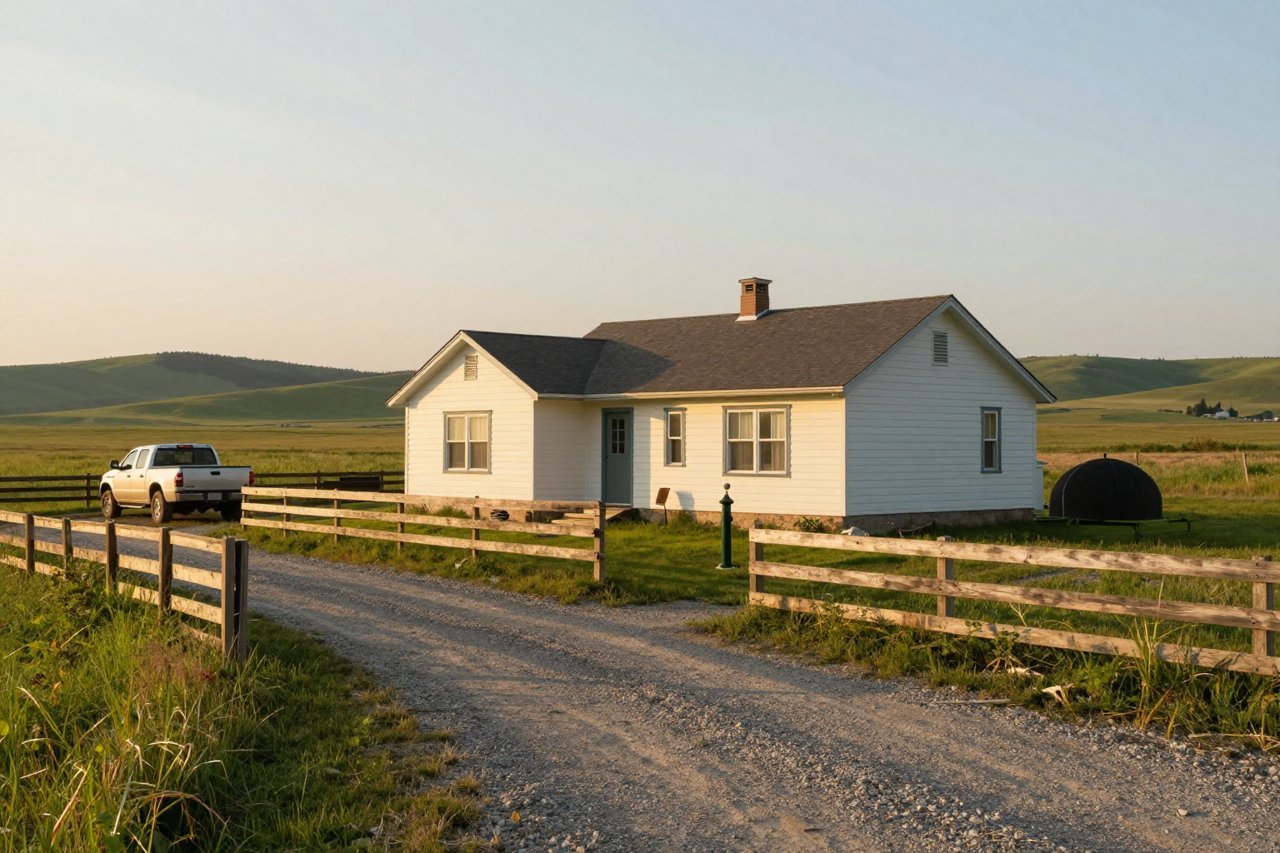
Buying outside city limits changes the math. A house on five acres with a well and septic system does not fit the same checklist as a subdivision colonial. Lenders know this, and the mortgage options that work best for rural home buyers reflect it. USDA loans often lead the pack, but VA, FHA, conventional, and local portfolio loans all have a place depending on your credit, down payment, income, and the property itself.
Here is what to compare before you make an offer.
Start With USDA Loans If the Property and Your Income Qualify
USDA Guaranteed loans are the closest thing to a default rural mortgage. They offer 100% financing, no down payment, and competitive rates. The catch is that both the property and your household income have to fit. If they do, USDA is hard to beat for a primary residence on a modest lot or small acreage.
How USDA eligibility actually works
The property must sit in an eligible rural area, usually a population under 35,000. Many communities on the edge of metro areas still qualify. Your household income must stay under 115% of the area median income, adjusted for family size. You must occupy the home as your primary residence.
USDA charges an upfront guarantee fee of 1% of the loan amount, which you can finance, plus an annual fee of 0.35%. There is no monthly mortgage insurance on top of that. If you are comparing no-down-payment paths, the breakdown of VA, USDA, and the 3.5% workaround is worth reading before you commit.
Where USDA loans fall short
Income limits disqualify plenty of buyers. Sellers may hesitate because USDA processing can be slower. Appraisal and repair standards are strict, and a property with major deferred maintenance may not pass. USDA also will not finance a home with income-producing acreage, such as a hay field or commercial greenhouse.
VA Loans Are Hard to Beat for Eligible Veterans in Rural Areas
If you or your spouse have qualifying military service, a VA loan is often the strongest option. It requires no down payment, has no monthly mortgage insurance, and limits seller-paid closing costs. Sellers can contribute up to 4% in concessions, which matters when you are preserving cash for moving costs or a new well pump.
VA appraisers confirm the property is safe, sound, and sanitary, so they will look closely at the well, septic system, roof, and electrical panel. A few acres and a barn are usually fine as long as the property is primarily residential. The funding fee is 1.25% for first use with zero down, or 2.15% for subsequent use, though it is waived for buyers with a service-connected disability.
FHA Loans Fill Gaps When USDA Says No
FHA loans require 3.5% down and accept credit scores as low as 580. They are a practical fallback when your income exceeds USDA limits or the property sits just outside an eligible rural zone. FHA also allows higher debt-to-income ratios than many conventional loans, which helps buyers who carry student loans or a car payment.
The trade-off is mortgage insurance: an upfront premium of 1.75% and annual premiums that usually last for the life of the loan if you put less than 10% down. FHA appraisals are stricter too. Peeling paint or a well that fails a flow test can hold up closing. If your credit is on the lower end, this explanation of what type of mortgage is best with a 580 credit score can help you decide between FHA and VA. An FHA 203(k) loan can also finance repairs on a rural fixer-upper, though it adds a HUD consultant and 60 to 90 days.
Conventional Loans Can Work If You Have a Bigger Down Payment
Conventional loans are not anti-rural. Fannie Mae and Freddie Mac allow homes with acreage, wells, and septic systems. The issue is lender overlays. Many banks add their own rules, such as a 10-acre maximum, a 660 minimum credit score, or a required septic inspection. Shop around because overlays vary wildly from one lender to the next.
If you have 20% down and a 740 credit score, conventional is often the cheapest option over time. You avoid FHA mortgage insurance and the USDA annual fee. You also avoid USDA income limits. For buyers with less saved, this guide to mortgage types for low down payment buyers who do not have 20% saved compares the real monthly costs.
Portfolio Loans and Local Banks for Unusual Properties
Some rural properties do not fit agency guidelines. Think 40 acres, a house with a commercial workshop, or a manufactured home on land that is not titled as real property. In those cases, a portfolio loan from a local bank or Farm Credit association can be the only path. These lenders keep the loan on their own books, so they can be flexible on acreage, property type, and credit history.
Big national lenders tend to apply one-size-fits-all rules. A review of Wells Fargo mortgage offerings and where they fall short shows how a large bank can be a poor fit for unique rural properties. Local lenders know the county, the appraisers, and the quirks of rural appraisals.
What to expect with portfolio loans
Rates are usually higher than agency loans, sometimes by 0.5% to 1.5%. Terms may be shorter, often 15 to 20 years, and some loans have a balloon payment after five or seven years. Down payments of 20% to 30% are common. Underwriting is manual, so a strong relationship can carry more weight than a credit score. Ask about prepayment penalties and whether the bank plans to sell the loan.
Special Programs for Rural Buyers With Lower Incomes or Credit Challenges
Beyond the major loan types, several programs target rural buyers who do not fit the standard mold. USDA Section 502 Direct offers subsidized payments to very low-income households. The Farm Service Agency backs loans for farms and rural businesses. State housing finance agencies often pair below-market rates with down payment assistance. This overview of mortgage types for low-income buyers covers how those programs stack up.
- USDA Section 502 Direct: Payment assistance for very low-income buyers, with terms up to 38 years.
- FSA Guaranteed Farm Loans: For buyers who plan to earn income from the land.
- State Housing Finance Agency loans: Often include down payment help and lower rates.
- VA Native American Direct Loan: Zero down for eligible Native American veterans.
- Nonprofit and land trust programs: Some sell homes with resale restrictions that keep prices affordable.
Manufactured homes are common in rural areas, and financing them is possible with FHA Title I, VA, USDA, and some conventional loans. The home generally must be built after June 1976, have HUD tags, sit on a permanent foundation, and be titled as real property. Ask early.
Rural Appraisals and Property Rules Can Decide Your Loan
Rural appraisals can make or break a deal. Comparable sales may be 10 miles away and six months old. An appraiser may require a well flow test, a septic inspection, a roof certification, or proof that the heating system works. If the property has income-producing land, such as a vineyard or horse boarding operation, agency loans may not allow it. FHA is the strictest, VA is close behind, conventional is more flexible, and portfolio loans are the most flexible of all.
Questions to Ask a Lender Before You Pick a Rural Mortgage
- Have you closed loans in this county in the last year?
- What is your maximum acreage limit for a residential loan?
- Do you require a well flow test or septic inspection, and who pays for it?
- Can you finance manufactured homes on permanent foundations?
- Do you service the loan in-house or sell it to another company?
- What happens if the appraisal comes in below the purchase price?
- Are there prepayment penalties or balloon payments?
Get a full pre-approval, not a pre-qualification. Rural sellers often know their property is unusual, and a pre-approval letter from a lender who has already reviewed the well, septic, and acreage tells them you are serious. If your credit or savings need work first, start with the loan types that match your current numbers and ask a local lender what you would need to qualify for USDA or VA later. The best rural mortgage fits the land, the house, and your long-term budget.