
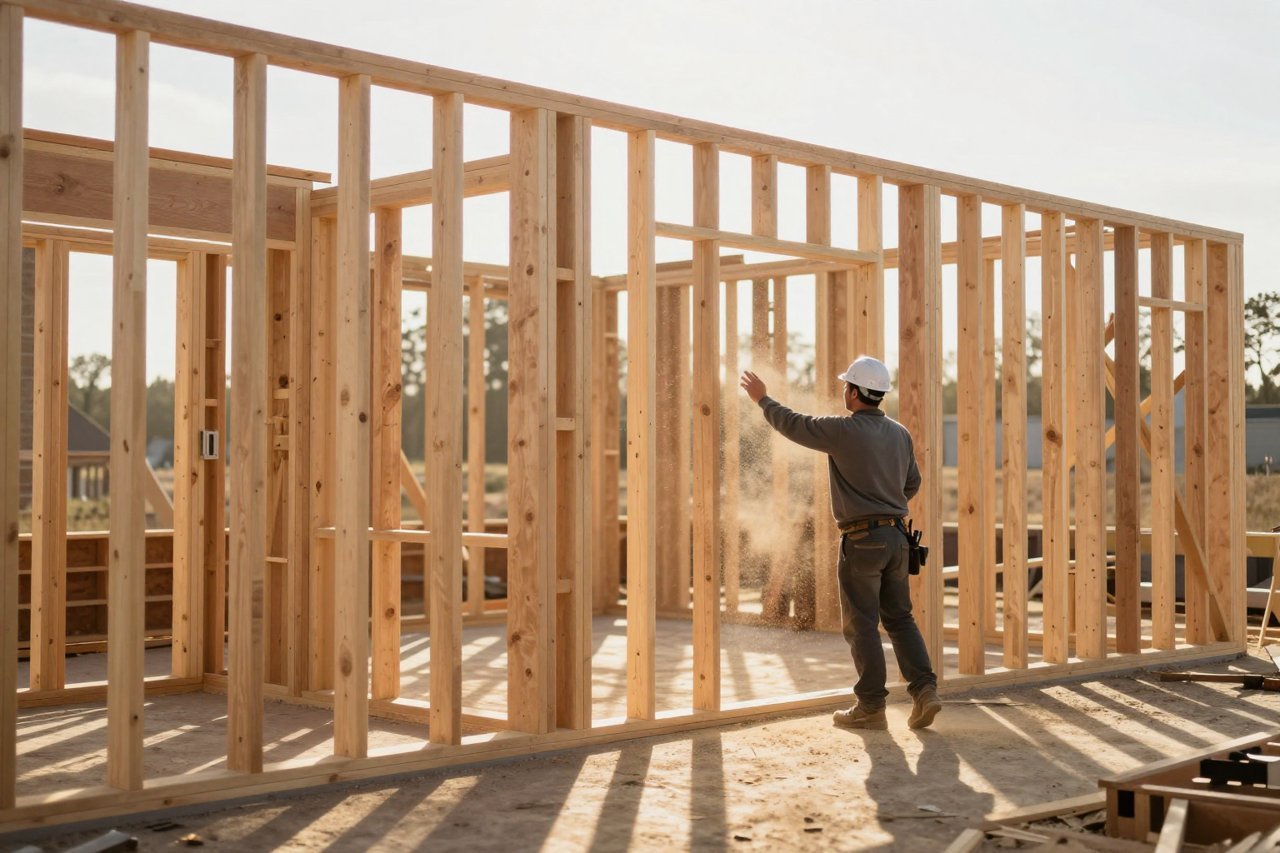
A construction loan does one job, and it does it badly on purpose. It gets a house built. The rate sits two or three points above a normal mortgage, the payments are interest-only, and the whole thing is designed to last 12 to 18 months and then get out of the way.
Which means the day your certificate of occupancy lands, you’re on a clock. Most builders’ lenders give you 30 to 60 days to convert before the loan rolls into extension pricing or, in some cases, default interest. The conversion is what people mean when they talk about a construction loan refinance, and getting it wrong can cost you tens of thousands of dollars over the life of the debt.
What Construction Loan Refinance Actually Means
You’re not refinancing to get a better rate on the construction debt itself. You’re replacing a short-term, interest-only facility with a permanent mortgage, usually a 30-year fixed or a long-term adjustable. In lender language this is the “take-out” or “end loan,” and many banks require proof at closing that you have one lined up.
There are two paths. The first is your construction lender’s own permanent product, which you may have been pre-approved for a year ago when the terms were sketched into your commitment letter. The second is shopping it out to a different lender entirely, which is often where the real savings live.
When It Pays to Refinance Out of the Build Loan
The obvious trigger is the deadline. The less obvious one is the math on your current payment.
Say you drew $400,000 at 9.25% interest-only. That’s $3,083 a month, and not one dollar of it reduces your balance. Move the same $400,000 into a 30-year fixed at 6.75% and the payment drops to $2,594, with roughly $340 of that first payment going to principal instead of vanishing. Over a year, the interest-only arrangement quietly costs you around $19,000 more than the permanent loan would have.
The build finished and the permanent offer looks stale
Commitment letters age fast. A permanent rate quoted 14 months ago may now be well above what the market is offering, or the lender may have tightened its credit box since. Read the fine print before you assume the original deal still stands.
Rates moved in your favour while you were hammering drywall
If the market has improved since your commitment was issued, you have leverage. Most take-out offers can be renegotiated, and a competing quote does more for that conversation than any amount of polite asking.
You funded part of the build yourself
Owners who paid cash for land, site work, or an upgraded kitchen can often pull that equity back out through a cash-out refinance at permanent rates. Expect a lower loan-to-value cap, typically 75%, and expect the appraiser to look hard at whether your improvements actually add value.
The Qualification Rules Are Stricter Than a Normal Refinance
Lenders treat the transition out of a construction loan like a fresh mortgage application, and they want to see that the project landed cleanly. A few requirements come up again and again:
- Certificate of occupancy or final inspection sign-off. No CO, no permanent loan. Some lenders will accept a passed final inspection with the CO pending, but that’s a negotiation.
- A fresh appraisal, usually ordered by the new lender, confirming the home is complete and worth what you’re borrowing against.
- Twelve months of on-time payments on the construction loan, if the loan has been outstanding that long.
- Debt-to-income under 43% to 45%, calculated on the full permanent payment, including taxes, insurance, and any HOA dues.
- Cash reserves, often two to six months of payments, depending on the loan type.
- Credit scores of 680 to 740+ for the best pricing, with conventional loans generally needing more than FHA or VA.
Self-employed borrowers get hit hardest here. If the construction loan was underwritten on bank statements or a profit-and-loss statement, expect a conventional take-out lender to want tax returns instead.
Shopping the Take-Out Loan Is Where the Money Is
Loyalty to the bank that funded your build is understandable and expensive. The spread between the best and worst take-out quote on a $400,000 loan can easily run half a percentage point, which is roughly $130 a month, or $46,000 over 30 years.
Get at least three quotes, and ask each lender for a written Loan Estimate so you can compare closing costs side by side. On a loan this size, expect $8,000 to $12,000 in fees and prepaids. That’s your break-even calculation: divide the total cost by the monthly saving to see how many months it takes to come out ahead.
Do think about product type as well as rate. If you’re staying in the house long term and want the payment to stop moving, locking in a new fixed rate is usually the right call. If you might sell or refinance again within five years, a shorter break-even on an adjustable product can make more sense.
Bridging the Gap Between Build and Permanent
Not every project lines up neatly. Delayed inspections, a change order that pushed the schedule, or a lender that suddenly gets cautious about its construction book can leave you holding a loan that’s maturing before the house is finished. When that happens, short-term bridge financing can buy the weeks you need rather than forcing you into a bad permanent deal under pressure.
The trick is timing. Bridge money is priced for speed, not for patience, so arrange it early rather than in the final week of an extension period.
Watch for the Traps That Show Up at Closing
The transition from construction to permanent is a heavily intermediated process, which makes it a magnet for padded fees, last-minute rate changes, and add-on products you didn’t ask for. Prepayment penalties buried in the permanent loan are a particular problem, because they lock you into a rate that may not suit you in three years.
Before signing, check that the loan amount matches the payoff on the construction loan, that no junk origination fee appeared between the quote and the closing disclosure, and that escrow and title charges reflect actual third-party costs. The patterns to look for are consistent across most mortgage products, and knowing them in advance puts you in a much stronger position at the table.
Folding Efficiency Upgrades Into the Same Refinance
If you’re refinancing anyway, it costs very little extra effort to roll energy improvements into the deal. Solar, a heat pump, better insulation, or upgraded windows can all be financed at the same time through products designed specifically for that purpose, often with better terms than a standalone home improvement loan.
The practical benefit is real: a $12,000 solar installation added to a refinance might raise the payment by $80 a month while cutting $150 off the utility bill, and the appraisal may credit part of the cost back as added home value.
A Timeline That Keeps You Ahead of the Deadline
Most construction loan blowups come from starting the refinance too late, not from bad credit or a weak appraisal. Working backwards from your completion date:
Two to three months before completion, start collecting quotes from take-out lenders. Ask your current lender for the permanent terms in writing, and ask what happens if you don’t use them.
Sixty days out, submit a full application to your top choice. Order the appraisal once framing and finishes are far enough along that the appraiser can see a finished home rather than a shell.
Thirty to forty-five days out, lock your rate. Floating into the final stretch of a construction payoff rarely ends well.
At closing, confirm the payoff figure in writing, check the settlement statement line by line, and make your first permanent payment on time. Then set a reminder for the two-year mark to re-shop your homeowners insurance, because that’s the next cost that quietly creeps up on new builds.