
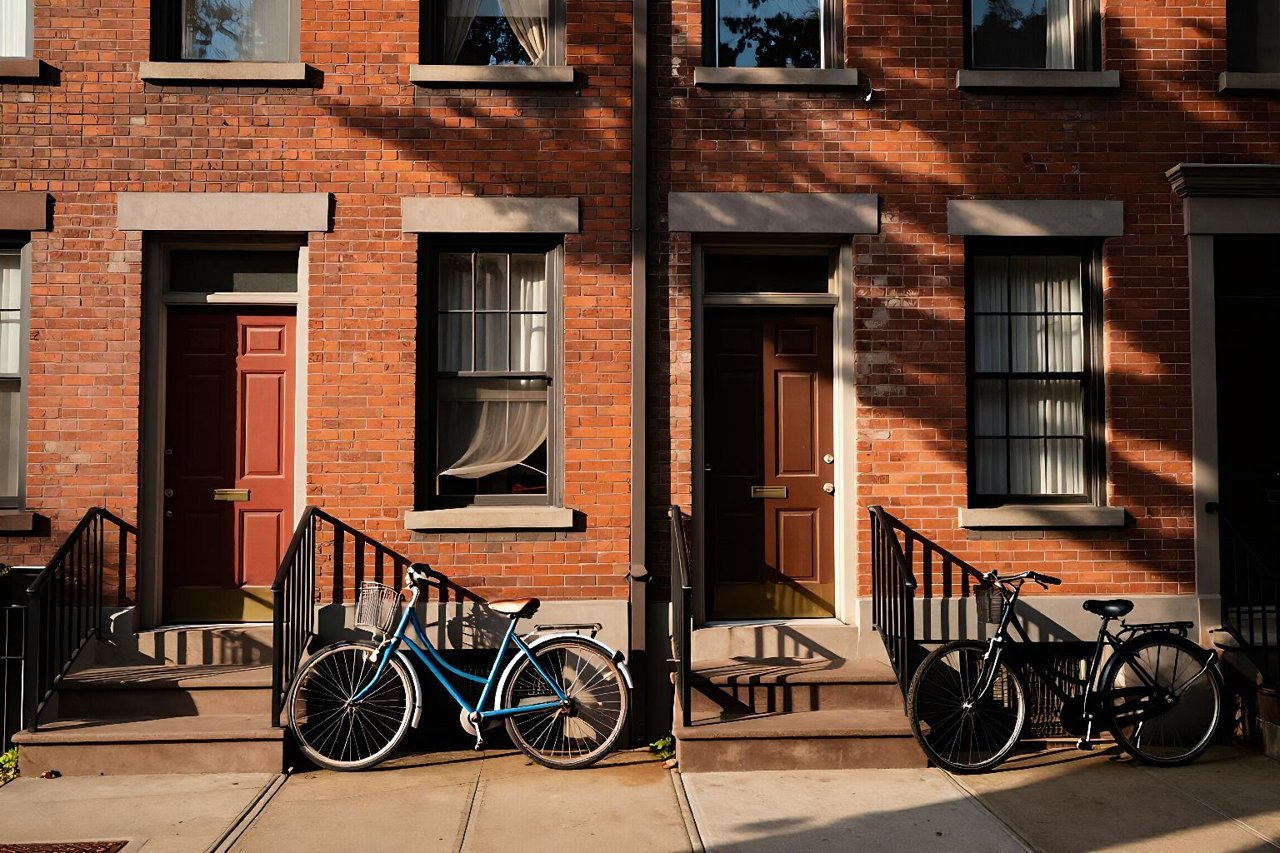
A duplex is an awkward piece of real estate. It’s one building with two addresses, two kitchens and two sets of tenants, one of whom might be you. Lenders don’t price it like a single-family house, and they don’t treat it like an apartment building either. A conventional loan for a duplex sits between those two worlds, and the line that matters most isn’t the property type. It’s whether you plan to sleep there.
Get that distinction wrong and you’ll be shopping with the wrong down payment, the wrong rate and the wrong expectations about what counts as income. Here’s how the rules actually work.
Two to four units still counts as residential
Fannie Mae and Freddie Mac buy conventional loans on properties with one to four units. A duplex, triplex or fourplex all qualify, which means you’re not pushed into a commercial loan with a five-year balloon and a lender who wants a personal guarantee and a business plan. Five units is the cliff. Cross it and everything changes.
What does change inside that 1-to-4 range is the pricing and the paperwork. A two-unit building gets an appraisal on Form 1025, the Small Residential Income Property Appraisal Report, instead of the standard single-family form. That report includes an income approach to value, not just comparable sales, and appraisers charge more for it. Expect $600 to $900 in many markets versus $450 to $600 for a house.
Living in one unit is the cheapest way to buy a duplex
Owner-occupied duplex loans get the best treatment conventional lending offers. On a two-unit property you occupy, the maximum loan-to-value is 95%, which means a 5% down payment. That’s the same floor as a single-family home for a well-qualified borrower. If you’d assumed duplexes always require 20% or 25%, that assumption is costing you.
The catch is that the property has to be your primary residence, and lenders verify it. You’ll sign an occupancy affidavit, and most require you to move in within 60 days and stay at least a year. Committing mortgage fraud to get a better rate is a bad trade, and servicers do check.
Three and four units are a different story
Down payment requirements climb fast as you add doors. A three- or four-unit building you occupy typically needs 15% to 25% down depending on the program and credit profile, and reserves jump too. Lenders often want six months of mortgage payments in the bank on a fourplex versus nothing extra on a two-unit. If you’re weighing how much cash to hold back, our breakdown of how little you can actually put down on a conventional loan walks through where the true minimums sit.
Renting both sides turns it into an investment property
Buy a duplex and rent both units, and you’re in investment property territory. Conventional maximum LTV on a two-unit investment purchase is 85%, so 15% down is the floor. Three and four units drop to 75%, which is where the familiar 25% figure comes from. Rates also carry a pricing add-on, usually a quarter to a half point above owner-occupied, and many lenders layer their own overlays on top.
That extra down payment isn’t just a lender preference. It’s the buffer that keeps a rental property from sinking you when a unit sits empty for two months. Our piece on what the 25% rule really costs you on an investment property runs the opportunity cost, and the number is bigger than most buyers expect.
You can’t call a duplex a second home
This trips people up constantly. Conventional guidelines define a second home as a one-unit property. A duplex doesn’t qualify, no matter how sincerely you plan to spend summers in one side. If you want the second-home treatment, buy a house. The second-home rules lenders don’t put in the brochure explain the occupancy tests in more detail.
You can use the other unit’s rent to qualify
On a two-unit primary residence, Fannie Mae allows 75% of the market rent for the unit you won’t occupy to be counted as qualifying income. You don’t need a signed lease. The appraiser’s opinion of market rent on Form 1025 is enough, and the 25% haircut accounts for vacancy and turnover.
That rent can be the difference between qualifying and not. Say you earn $78,000 a year and carry a $410 car payment and $6,000 in student loans. Adding $1,100 a month in rental income at the 75% figure, roughly $825, can add well over $100,000 in purchasing power. Underwriters still scrutinize your base income closely, and self-employed borrowers face deeper digging, which is why it’s worth knowing what underwriters actually look for in your income before you start collecting documents.
Investment duplex purchases work differently. You can count rent from both units, but only after the appraisal comes back, and lenders often want landlord experience, a larger reserve cushion, or both. It’s harder to close a rental duplex with thin cash reserves than with a modest income.
Where duplex deals actually fall apart
It’s rarely the borrower’s credit score. It’s one of these:
- Appraisal gaps. The appraiser needs recent sales of two- to four-unit buildings within a reasonable radius. In neighborhoods of mostly single-family homes, they may have to stretch the comps or explain adjustments, and low values kill deals.
- Condition flags. Peeling paint on a shared porch, a roof near the end of its life, exposed wiring, or no handrail on a common stairwell can trigger repair requirements before closing.
- Shared utilities. One water meter for both units is legal in plenty of places, but lenders sometimes balk, and it makes splitting bills a headache you’ll referee forever.
- Zoning and rental permits. Some cities restrict short-term rentals or require a permit to lease an accessory unit. An unpermitted kitchen in the basement is a problem if it’s being marketed as a second unit.
- Reserves. On three- and four-unit properties, verified liquid reserves after closing are a hard requirement, not a nice-to-have.
The full checklist of what gets verified before approval, from title and insurance to gift-letter documentation, is laid out in conventional loan requirements lenders check before they say yes.
The house-hack math, with real numbers
A $360,000 duplex with a 5% down payment leaves a $342,000 loan. At 7% that’s about $2,275 in principal and interest. Add $300 for taxes, $150 for insurance and roughly $140 in mortgage insurance, and you’re at $2,865 a month. Rent one side for $1,500 and your effective housing cost lands near $1,365.
Now subtract the parts nobody mentions in the pitch. Vacancy at 5% is $75 a month. Maintenance and capital reserves on a building with two furnaces and two water heaters run at least $250. Your landlord insurance policy costs more than a homeowners policy. Set aside $400 a month for all of it and you’re at roughly $1,765. That can still beat renting an apartment, but it’s not the free house people describe online.
Run it with one side empty
The most useful stress test for a duplex purchase is a simple one: can you carry the full mortgage, taxes and insurance on your own income with neither unit rented? If the answer is yes, a duplex is a genuinely good move. You get a below-market housing cost, a second income stream, and a crash course in property management that normally costs people a decade of watching from the sidelines. If the answer is no, you’re not buying a duplex. You’re buying a job with a mortgage attached.
Ask your lender for the payment with taxes and insurance included, not just principal and interest, and ask what the reserve requirement is before you fall in love with a building. Those two questions will tell you more about whether the deal works than any rent estimate a seller hands you.