
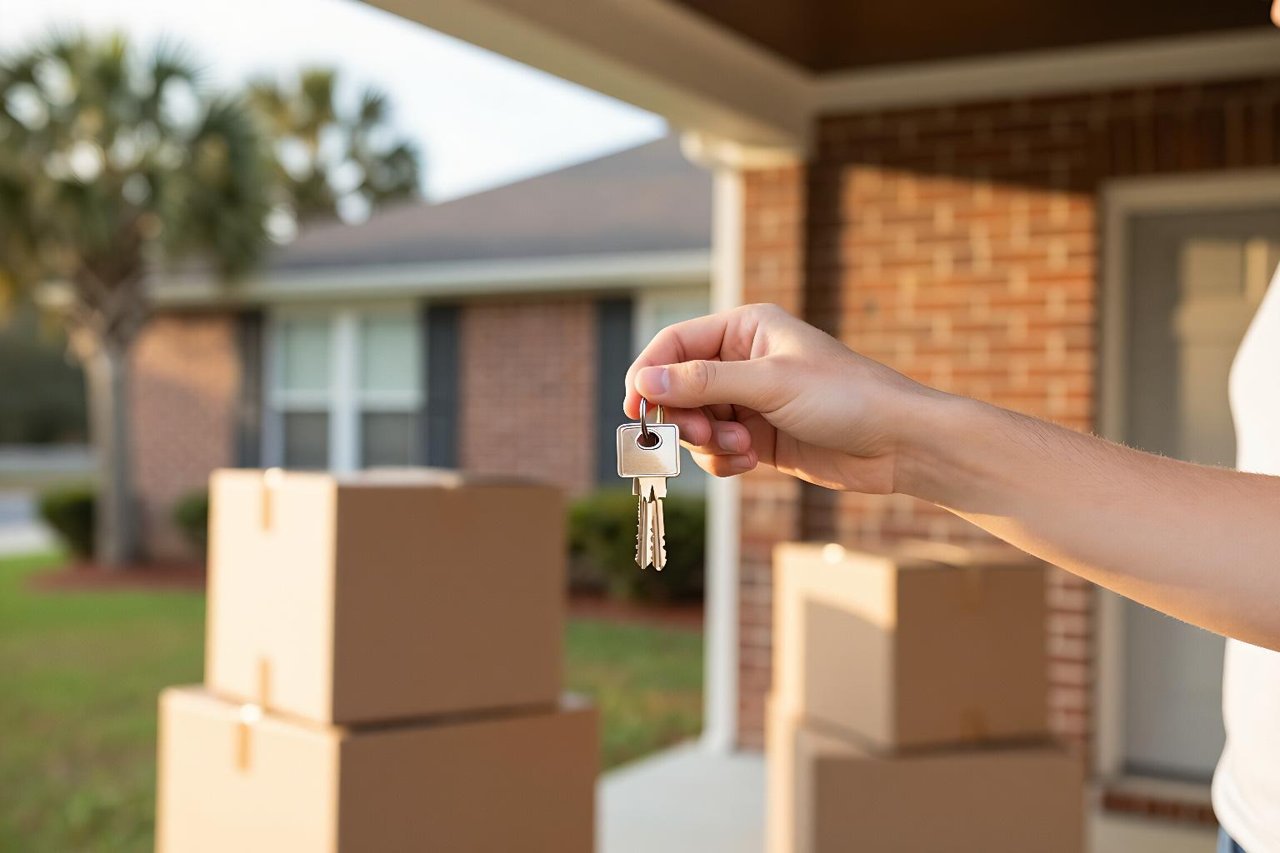
A $285,000 starter home in Lexington County needs roughly $10,000 down under a standard FHA loan, and that’s before the appraisal, the inspection, and the moving truck. Plenty of South Carolina households can comfortably carry a $1,900 monthly payment and still can’t produce ten grand in cash by closing day. That gap is precisely what down payment assistance in South Carolina is built to close, and the state has more of it available than most buyers realize.
The complication is that the money lives at three different levels: state, county or city, and federal. Each one has its own income caps, its own education requirements, and its own fine print about what happens if you sell or refinance too early. Here’s how the pieces fit together.
The Four Ways Assistance Actually Shows Up
Nearly every program you’ll run into falls into one of four categories. Knowing which one you’re looking at tells you most of what you need to know about the risk.
- Outright grants. Free money, no repayment, no lien. Rare, usually small, and often tied to a specific employer or profession.
- Forgivable second mortgages. The most common structure in South Carolina. You get a second lien at 0% interest with no monthly payment, and a percentage of the balance is forgiven each year you keep the home as your primary residence. Sell or refinance in year two and you owe the remainder in full.
- Deferred loans. Also 0% and payment-free, but the full balance comes due when you sell, refinance, or pay off the first mortgage. Nothing is forgiven over time.
- Matched savings accounts. Some community programs match every dollar you save toward a down payment, often two or three to one, up to a cap. Slower, but the money comes with zero strings attached at closing.
SC Housing: The Statewide Backbone
The South Carolina State Housing Finance and Development Authority, almost always just called SC Housing, runs the largest program in the state. It works as a package deal: a 30-year fixed-rate first mortgage paired with down payment assistance, offered through a network of participating lenders rather than directly to buyers.
The assistance has recently run up to about $8,000, structured as a forgivable second mortgage that disappears on a sliding schedule if you stay put. Terms get adjusted every year, so confirm the current figure and forgiveness period with a participating lender before you build a budget around it. Expect the first mortgage rate to sit a quarter to a half point above whatever a no-assistance loan would cost. That’s the trade: a slightly higher rate in exchange for not draining your savings.
Who tends to qualify
There are three gates, and buyers usually trip on the second one.
Income. Limits are set by county and household size, and they count everyone who will live in the home, not just the people on the loan. A fiancé moving in, a parent, a roommate: all of it goes on the household income worksheet.
Price. There’s a maximum purchase price that varies by county too, which rules out most new construction in Charleston and Greenville.
Education. You’ll complete a homebuyer course, typically eight hours, from a HUD-approved counseling agency. Free or cheap, mostly online now. Do it early, because it can’t be rushed at the last minute.
Some pieces of the program are limited to first-time buyers, generally defined as no ownership interest in a home during the previous three years. Credit score minimums land around 620 to 640 through most participating lenders.
Palmetto Heroes: The Annual Window Worth Diarizing
Every spring, SC Housing opens Palmetto Heroes, a short enrollment period with a rate discount and a noticeably larger chunk of down payment money for teachers, nurses, first responders, law enforcement, correctional officers, active military, and veterans. The pool is finite and it drains fast, often within days for the most popular categories.
If you fall into one of those professions and you’re anywhere near ready to buy, the practical move is to get pre-approved in February so you can submit the moment the window opens. Waiting until April usually means reading about it on a forum after the funds are gone.
County and City Programs Most Buyers Never Hear About
Local governments across the state administer HOME and Community Development Block Grant funds as their own down payment programs. They’re smaller and slower to close, but they often reach buyers the state program misses.
Charleston County and the City of Charleston both run homeownership assistance with deferred second mortgages for households under roughly 80% of area median income. Greenville County, Richland and Lexington counties, the City of Columbia, Spartanburg, and Horry County have versions of the same thing, sometimes delivered through a local community development corporation rather than the county office directly.
Two things to watch. First, many of these carry recapture provisions or resale restrictions, meaning the subsidy follows the house rather than the buyer. Second, the staff who run them are the single best source of local knowledge in your market, so a phone call is rarely wasted even if you don’t qualify.
Federal Pieces That Fill the Gap
South Carolina is unusually rural outside its metro corridors, which makes USDA loans a genuine option in a lot of counties. Zero down, no mortgage insurance in the traditional sense, and eligible areas reach further out from Charleston and Columbia than people assume. Check the address on the USDA’s eligibility map before dismissing it.
Beyond that: VA loans at zero down for eligible service members and veterans, FHA at 3.5% with the ability to accept gifted funds from family and employer assistance, and conventional options like HomeReady and Home Possible at 3% for buyers under the income cap in their census tract.
What Stacking Looks Like in Practice
Assistance sources can often be combined, and this is where a good loan officer earns their commission. A realistic scenario on a $260,000 purchase in Lexington County:
- FHA first mortgage at 3.5% down: $9,100
- SC Housing forgivable second mortgage: up to $8,000
- Seller concession negotiated at 3% to cover closing costs and prepaids
- Cash needed from the buyer: a few thousand, sometimes under $2,000
Not every lender can put that together. Some don’t participate in SC Housing at all, and others add their own credit overlays on top of the state requirements. Bank-specific programs also exist and vary wildly in generosity; if you’re considering a particular institution, it’s worth reading the specifics of what borrowers should know before applying for a Synovus mortgage and the breakdown of First Horizon mortgage rates and where the fine print bites to see how their assistance layers on top of state funds.
Where South Carolina Buyers Get Tripped Up
Refinancing in year three
Forgivable seconds forgive slowly. If rates drop and you refinance two years in, you’ll write a check at closing for the unforgiven balance, which can be most of it. Ask specifically what the payoff looks like in year one, year three, and year five before you sign.
Getting pre-approved by the wrong lender
A pre-approval letter from a lender that doesn’t offer SC Housing is close to useless if you’re relying on assistance. Confirm participation in writing, and ask whether they’ll underwrite to the state’s credit minimum or their own higher one.
Counting the wrong income
Buyers routinely qualify on their own salary and then discover a partner’s income pushed the household over the limit. Run the numbers against the county table with everyone in the home accounted for, including a roommate who plans to move out in six months.
Underestimating the rate bump
An eighth of a point sounds trivial. On a $250,000 loan it’s real money every month for thirty years. Compare the assisted loan against an unassisted one side by side and decide whether keeping your savings intact is worth the difference.
Your Next Two Weeks, Concretely
Start by pulling the current SC Housing income and purchase price limits for your county, then call two or three participating lenders and ask each one the same question: what would my total cash to close be, all in, on a $250,000 house? Comparing those three numbers tells you more than any brochure.
Book the homebuyer education course now, since it’s valid for a year and satisfies both state and most local programs. If you’re in a Palmetto Heroes profession, set a calendar reminder for the first week of February. Then call your county’s community development office and ask, plainly, whether they have down payment money available and what the income cutoff is. Those calls are free, they take fifteen minutes, and they regularly turn a stalled search into a closing date.