
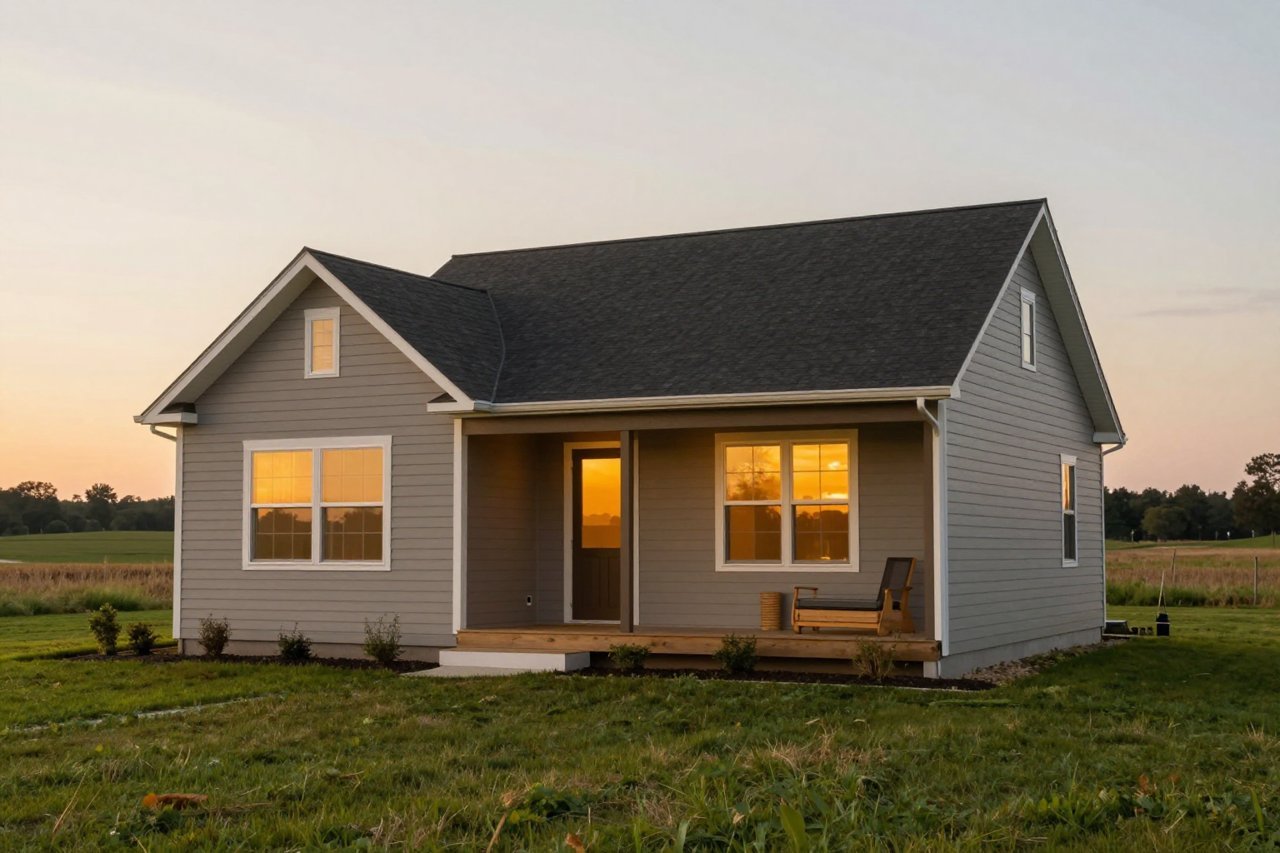
Factory-built housing is one of the only residential paths where a buyer can still get a livable home without paying traditional site-built prices. But people often freeze at the financing desk because a manufactured home mortgage is not one clean product. The loan changes depending on whether the house sits on wheels, on a permanent foundation, or on land that you own.
Get that classification right and the difference shows up in monthly payments, down payment expectations, and whether you can get a 30-year fixed rate at all. Get it wrong, and you may end up paying car-loan style rates for something meant to be your primary residence.
Choose between a chattel mortgage and a real property mortgage
Manufactured home financing splits into two buckets: chattel and real property. Chattel is the legal term for movable personal property. If you finance the house alone and pay rent for the land underneath it, the lender usually treats your home like a vehicle. You get the title, they get the lien, and the loan typically comes with a higher interest rate, a shorter repayment term, and a stricter down payment requirement.
If you own the land and permanently install the home, the whole package can be reclassified as improved real estate. Once that happens, a manufactured home mortgage starts to behave like a regular house loan. You can usually access a 30-year amortization, lower annual percentage rates, and conventional down payment programs. Removing wheels, attaching the structure to an approved foundation, and getting a certificate of occupancy are the steps that make the switch possible.
If the house is already on land you’re buying as one transaction, keep this real property route in mind. It is the reason a branded manufactured home can feel like a normal American home mortgage after closing.
Loan types to compare for your manufactured home mortgage
Depending on your credit, military service, neighbourhood and whether you own the lot, one of these programs will probably fit better:
- Conventional conforming loans work through Fannie Mae and Freddie Mac and generally require the home to be permanently attached to owned land. A buyer with a credit score near 620 can often find a fixed-rate product with 5% down, while newer programs designed for manufactured housing can push the entry point lower.
- FHA loans are a common fallback. Title I covers manufactured homes as personal property, while Title II treats the home as real estate once it is on a foundation. FHA accepts credit scores around 580, which matters if your credit history is still recovering.
- VA loans are one of the best kept secrets in manufactured housing. Veterans and active-duty service members can finance a home plus lot with no down payment in many cases, provided the home is accepted under VA property requirements.
- USDA Rural Development makes 100% financing possible in qualified rural areas. Income limits apply, but the combination of no down payment and a 30-year term gives lower-income households a genuine path to ownership.
Do not assume a lender offers all of these. Some banks only service chattel loans, while mortgage brokers often have better access to conventional and government-backed programs. Ask about each route before you settle on one.
Down payments and rate spreads are where buyers overpay
The interest rate on a chattel loan can run 1.5 to 2.5 percentage points higher than the rate on the same home after it becomes real property. On a $100,000 balance that gap can cost more than $100 a month, even after accounting for the shorter chattel term. This is why owners of the land have an enormous advantage: they can refinance an older purchase as real estate once the foundation and utility work are completed.
Before you compare offers, understand how rates are actually constructed. Lenders can quote a low rate but bury the real cost in points or exclude closing fees from the APR. Borrowers who start with a manufactured home quote often ignore the variables that shape conventional loans. Read how conventional mortgage rates are quoted today, built around real quotes, hidden variables and lock strategy, then ask your manufactured home lender to match that level of detail.
Down payments follow a similarly wide path. A broad real property loan with a good credit score can close with 3% to 5% down. A chattel mortgage often asks for 10% to 20% down and occasionally more when the home is older or the park lease is short. Your choice of land, not your income, may end up deciding your down payment number.
Land is the invisible anchor in every manufactured home mortgage
Owning the land changes more than your rate. Your debt becomes secured by real estate, your property tax position improves, and the loan typically becomes easier to sell to Fannie Mae and Freddie Mac. If you lease a lot in a mobile home community, by contrast, you depend on the stability of that lease. Lenders need to see the lease term and any rent renewal rules before they fund.
If you plan to buy the home first and add land later, expect to pay a slightly higher rate during the interim. Once the house is permanently affixed and a new appraisal shows real property value, refinancing can put you into the same low rate bucket as a conventional buyer. The paperwork takes several months, but the monthly savings are usually worth it.
What changed in 2026 for factory-built home buyers
Manufactured housing policy moved quickly this year, and some of it works in your favour. Fannie Mae and Freddie Mac have gradually made it easier to lend on factory-built homes. The latest shift removed a major timing headache for sellers and builders: the GSEs eased pre-funding rules and extended manufactured housing terms, especially for new construction. That move means more lenders will price these loans competitively instead of treating them as a niche product.
There is also broader federal interest in this corner of housing. A proposed Housing Act could impact homeownership and supply, with language that touches manufactured home communities, zoning, and financing incentives. If that bill gains momentum, the number of approved lots and eligible homes could expand, making lender competition stronger and the market less fragmented.
Do not wait for policy perfection. Mortgage rates still fluctuate based on inflation and employment data. A fixed rate locks in your payment for 30 years, and that stability is often more valuable than chasing the lowest possible APR.
The before-you-apply checklist
Take these steps if you want to avoid the most common manufactured home mortgage mistakes:
- Confirm the home’s HUD label and foundation design. Older homes may not meet current permanent foundation rules. Without that certification, the best conventional programs disappear.
- Decide whether to purchase the land before you shop rates. The answer determines whether you are comparing a real property loan or a chattel loan, and those are two different pricing worlds.
- Check your credit score from all three bureaus. Manufactured home lenders often use a middle score, and a 20-point difference can change your rate tier.
- Talk to at least one credit union. Many credit unions hold manufactured home loans on their own books and offer lower servicing fees than national banks. If you are open to membership, review the best credit unions to join in 2026 according to your needs and see which one has experience with factory-built homes.
- Read the fine print on the chattel prepayment penalty. You may want to refinance after converting the home to real property, so confirm you will survive the early payoff fee.
- Get a rate lock in writing. Manufactured home closings take longer than traditional ones. A 30-day lock can expire on you; look for 45 to 60 day lock terms and ask what the extension costs.
The entire proposition comes down to one sentence: turn the manufactured house into real estate in the eyes of the lender, and you will almost always get a better mortgage. Buy the land, fix the foundation, and keep your paperwork clean during the process. If you do that, a manufactured home mortgage can be the practical, affordable alternative to traditional housing that it was always meant to be.