
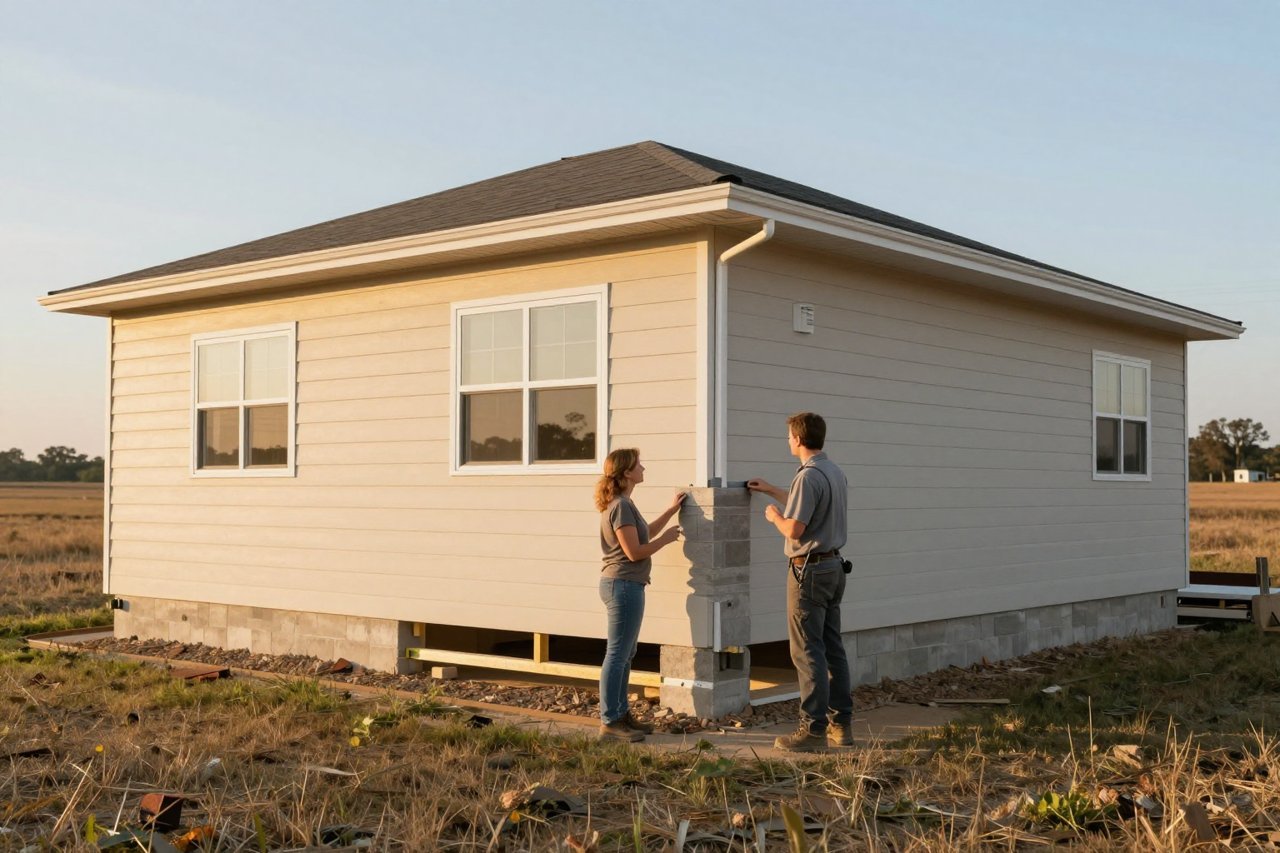
Two years ago, a borrower in Bakersfield financed a 2019 Clayton double-wide at 9.1% on a chattel loan. Her payment came to $1,412 a month on a $124,000 balance. This spring she pulled a manufactured home refinance quote at 7.4% and knocked roughly $190 a month off that payment without changing a thing about the house itself.
Stories like that are everywhere right now. So are the ones that collapse three weeks into underwriting. The difference is rarely credit score or income. It usually comes down to whether the home is titled as real property or personal property, whether you own or lease the land beneath it, and whether the foundation was engineered to HUD standards.
Why a Manufactured Home Refinance Isn’t Just a Regular Refi
Refinancing a site-built house is a fairly boring transaction. The appraisal is close to a formality, the title search follows a well-worn path, and almost every lender in the country will take the file. Manufactured housing breaks all three of those assumptions.
Fewer lenders handle these loans, the appraisal is a different form entirely, and much of the paperwork hinges on how your home was set up years ago, often by a dealer who has since gone out of business.
What “title” actually means in practice
If your home sits on land you own and has been permanently affixed to it, a lender can treat it like real property. That unlocks conventional and FHA financing at rates close to what a traditional house gets. If the home is still titled through your state’s motor vehicle or manufactured housing office, it’s personal property. Refinancing it becomes a chattel loan: shorter terms, higher rates, and usually a smaller loan ceiling.
Plenty of homeowners don’t know which category they fall into until they apply. Pulling your title documents before you shop is the single most useful hour you can spend.
Three loan types, three sets of rules
- Chattel refinance — home only, no land required. Fastest to close, highest rate, typical terms of 15 to 20 years. Common with credit unions and specialty lenders.
- FHA Title I — a government-backed chattel option capped near $70,000 in most states, with limits adjusted annually. Useful for smaller balances, less so if you owe $140,000.
- Conventional or FHA on owned land — the closest thing to a standard mortgage, with 30-year terms and the best pricing. Requires a permanent foundation and a real property title.
The gap between the best and worst of those three can easily be a full percentage point. Knowing which one you qualify for tells you whether refinancing is worth pursuing at all.
Run the Break-Even Before You Call Anybody
Closing costs on a manufactured home refinance typically land between $2,800 and $5,500, though chattel loans sometimes carry smaller fees because there’s no title insurance on land. Divide that number by your monthly savings and you get the number of months you need to stay put before the deal pays for itself.
A concrete example
Say you owe $118,000 at 8.75% and your payment is $1,047. A refi at 7.25% over the same 25 remaining years drops it to $853. That’s $194 a month, or $2,328 a year. With $3,900 in closing costs, you break even in 21 months. Move in year two and you’ve lost money, even though the new rate looked great on paper.
Before you commit to that math, it helps to see where the payment actually goes. A quick run through a manufactured home loan calculator will show you how much of each payment is principal versus interest at your current rate, which makes the savings from a refi far more concrete than a percentage-point comparison.
Land Ownership Changes Everything
The same home can be a great refinance candidate or an impossible one depending on the dirt under it. Own the land outright and you’re looking at conventional pricing. Rent a lot in a park and most agency lenders walk away, leaving you with chattel products and their higher rates.
There’s a middle scenario that trips people up: buying the land separately from the home. It can work, but the two transactions need to close together, and the lender has to be comfortable with the combined collateral. The rules around parks, land leases, and down payment requirements shift often enough that it’s worth reviewing current mobile home mortgage rates, down payments, and land rules before you assume your situation qualifies.
One more wrinkle: lease terms. If you’re refinancing a home in a park, underwriters want to see a lease that extends past the loan’s early years, or a written commitment from the park owner. A lease with 14 months left on it will kill the file.
What Underwriters Actually Pull Apart
Expect scrutiny in places a site-built borrower never thinks about. The clearer your documentation, the fewer delays.
- The HUD data plate and certification label, usually found near the water heater or on the exterior tail light end of the home
- An engineer’s foundation certification, typically prepared under HUD Handbook 4930.3G standards
- A 1004C appraisal rather than a standard uniform residential report
- Proof the home has never been moved since it was placed, or an explanation if it has
- 12 months of lot rent history, if applicable, with no more than one late payment in the last year
Missing foundation paperwork is the most common reason these loans stall. If you can’t find yours, an engineer can inspect and certify the foundation for $400 to $900, but that’s a cost and a two-week delay you’ll want to know about upfront.
2026 Rule Changes That Widened the Door
Agency appetite for manufactured housing has grown, and the guidelines have followed. Fannie Mae and Freddie Mac have adjusted their requirements in ways that make more files eligible, including looser rules on how much money needs to be verified before closing and longer terms on some loans. Those changes matter most for borrowers with moderate credit who were previously pushed into chattel pricing. The details of how the GSEs eased prefunding rules and extended manufactured housing terms are worth reading if you were turned down at a bank in the past two years, because the answer you got then may no longer apply.
Cash-Out Refinancing on a Manufactured Home
Pulling equity out of a manufactured home is possible, but the math is tighter than on a traditional house because these homes tend to appreciate more slowly and appraisals come in conservative. Lenders generally cap cash-out at 65% to 80% of the appraised value depending on the loan type, which is lower than the 80% you’d see on a site-built property.
It can still make sense if you’re consolidating high-interest debt or paying for a needed repair like a new roof or HVAC system. It rarely makes sense to fund a vacation. If you’re weighing that decision, the same logic that applies to cash-out refinance rates in 2026 applies here, just with a smaller equity ceiling and a steeper rate.
Costs, Add-Ons, and Traps to Watch
Manufactured loans carry a few expenses you won’t see on a standard mortgage, and a few sales tactics worth recognizing.
- Prepayment penalties. Some chattel loans include a 2% or 3% penalty if you pay off early. Ask specifically, and get it in writing.
- Dealer-affiliated lenders. The finance company attached to the dealership that sold you the home is often the most expensive option available. Get at least three quotes from independent lenders.
- Title conversion fees. Retitling a home as real property involves attorney or county fees that vary widely by state, from a couple hundred dollars to over a thousand.
- Mailers promising a “government refinance program.” There is no such program for manufactured homes. Those letters are marketing, sometimes from brokers who resell your information.
One last thing worth knowing: refinancing a manufactured home doesn’t reset depreciation, but it also doesn’t stop it. If your home has lost value since you bought it, a refinance can leave you owing more than the home is worth, which narrows your options later. A fresh appraisal before you apply tells you where you actually stand.
What to Have Ready Before You Apply
The borrowers who close in 30 days instead of 90 tend to be the ones who gathered documents first. Have your title or lien paperwork, the HUD data plate photos, your foundation certification, two years of tax returns, your most recent pay stubs, and a year of lot rent receipts if you lease land. If you’re on a lease, get a written statement from the park owner confirming the terms and renewal history.
Then do the unglamorous part: compare two Loan Estimates side by side, line by line, not just the rate. Section A and B fees are where manufactured loans differ most, and a rate that’s a quarter point lower can still cost more over five years if the origination and closing costs run $2,000 higher. Give yourself a full week for that comparison. It’s the cheapest week of the whole process.