
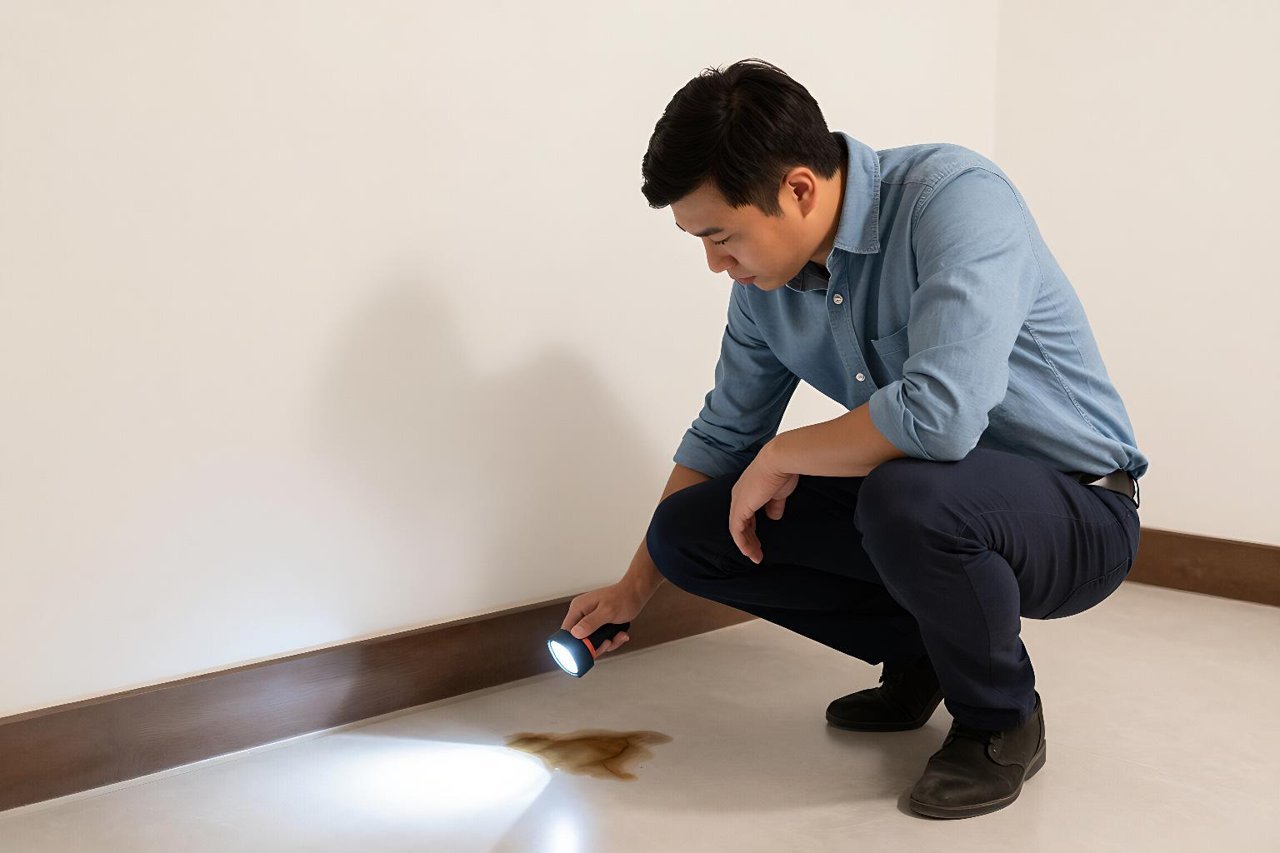
Walk into an open house on a Saturday afternoon and most buyers will head straight for the kitchen island or the primary closet. That is totally natural. It is also a mistake. The surfaces are easy to change. The problems that mess with your sleep and your bank account are usually hiding behind a fresh coat of paint, a plug-in air freshener, or a well-placed rug.
If there is one sentence worth remembering, it is this: the biggest warning signs during a home tour are not dramatic, and they don’t announce themselves with flashing lights. They whisper. The plan below is designed to turn you into a home-buying detective, so you can walk away from either with a fair price or no offer at all.
The Smell Test: What Your Nose Knows
Before your eyes adjust, give your nose a job.
A musty odour in a basement may be the first clue. If you smell it, walk toward it, because the source matters. Is there a dehumidifier humming in the corner? That is a neon sign that the current owners have been fighting moisture for months. Do you smell animal odours, especially in a closed-up room? That usually means years of dried urine, which often means the subfloor needs replacing, not just the carpet.
Beware the overpowering fragrance
Notice those plug-in air fresheners in every room, or a bowl of cinnamon sticks on the counter? The strongest scent is the one that deserves the most suspicion. Sellers often mask odours before a showing, and a very strong scent is your signal to search for the cause. Peek underneath sinks, behind the toilet, and inside the laundry room. Musty, sour or oddly sweet smells indicate organic growth, and when that is present, you are likely dealing with drywall, insulation and lumber repairs, all of which add up quickly.
Structural Issues You Can Spot in a Few Minutes
You don’t need a structural engineer to notice the clues that maybe something has shifted. These observations take less than five minutes if you know where to look.
Learning to read cracks
All houses crack. A single hairline crack above a window in a three-year-old home is normal settlement. Still, see if cracks are concentrated in one area or if they are wider than the edge of a coin. A diagonal crack that runs from a corner of a window or door toward the ceiling is more concerning than a jagged line in center. Stair-step cracks along brick or block foundation walls are your red flag. So are horizontal cracks that bow the wall inward. If you notice those, don’t leave a deposit; get a professional engineer to inspect before the end of the due diligence period.
Sloping floors and doors that stick
A small trick: place a tennis ball or a marble on the floor near the center of any room. If it rolls slowly to one side, you are standing on a floor that slopes. Some of that is not unusual in older houses with settled joists. When it is accompanied by doors that swing open on their own or stick in jambs, you need to be more careful. It indicates a foundation or floor framing issue that may only get worse.
The roof, seen from the wrong side
You won’t climb on the roof during a tour, but you can see it from inside. Look at the ceilings in the top-floor bedrooms, closets and attic hatch. Tiny brown spots or a yellowed edge are the ghosts of old water stains. If you see fresh staining or feel dampness in the ceiling paint, know that the source is likely still active.
Water Damage and Drainage Nightmares
Water is the most destructive element for a house. And water damage is one of the most expensive to repair properly. The biggest warning signs during a home tour are often quietly visible in the basement.
White or grey lumps on foundation walls
Efflorescence, a chalky mineral deposit, is a sign that water has soaked through your basement wall. If the wall feels dry at the moment, great, but the salts do not lie. Efflorescence means water has travelled through the concrete or block. That suggests poor drainage, a missing exterior waterproofing, or a high water table. It could also indicate an active leak in the future.
Fog between sealed window panes
Double-pane windows should have a clear view between the glass. If you notice a foggy film trapped inside or beads of condensation sitting between panes, the seal has failed. A single window is no big deal, but if many are compromised, budget about $500 to $900 per casement window, and remember that labor can take time.
- Peel back an edge of any carpet in a closet or corner; look for dark stains.
- Kneel down and sniff baseboards, especially on exterior walls.
- Check the bottom of the water heater for rust or a puddle underneath.
- Look at the grading around the exterior to see whether the soil slopes toward the foundation.
Electrical Red Flags That Should Make You Pause
Warning signs during a home tour aren’t just visible; they are tactile and can be dangerous. Ask if the outlets feel warm to the touch or if they make a buzzing sound when no device is plugged in. Make sure kitchen and bathroom outlets have the little reset/block buttons, the GFCI sockets. On the electrical panel, look out for rust, a missing cover, or a tangle of wires that loops around without any clear labels.
Old homes may still have knob-and-tube wiring or fabric-covered wiring. If the property has it, some insurers will refuse to issue a policy, and most electricians will insist on opening walls. Also, aluminum wiring that is connected to copper without special connectors is a potential fire hazard.
The difference between cosmetic and serious
Not everything is a problem. A jumble of extension cords in a home office might be an inconvenience, not a hazard. Light switch covers that feel warm are an automatic red flag, but flickering only when you switch on a high-powered appliance might just need an electrician to tighten a connection.
HVAC and Plumbing: the Systems That Quietly Drain Your Savings
During a tour, buyers tend to see the furnace room as storage space. But the mechanical room is where some of the biggest warning signs during a home tour are hiding.
Is the furnace old, rusted, or noisy?
Look for the metal plate with the manufacture date. An HVAC system over 15 years is nearing the end of its life. Rust or soot around the burner compartment is not acceptable. An air conditioner that is held together with foam tape or that seems to struggle when you turn up the thermostat suggests it will not survive another summer.
Give every faucet a few seconds
The toilet tank refills are not just random. Visit your sink, turn on the hot water, and let it run until the water warms. Low pressure might be a simple clogged aerator, but it may also mean corroded galvanized pipes with a narrowing interior. Run the water in the shower simultaneously to check if the flow slows dramatically. That’s a sign of shared plumbing with a limit, and it’s never a fun one. Test what happens when you flush the toilet and run the shower at the same time. If the toilet gurgles or the sink belches air, your drains are not happy. That can mean a tree root invasion or blocked vent stack, both of which cost more than you want to think about.
Don’t ignore the smell under the vanity
A leak might be obvious (look for staining, dampness, or corrosion). But the truly bad one smells like rotten eggs, and it can sometimes be caused by sewer gas escaping a failed wax ring. If it’s apparent under the sink drain, it may indicate the P-trap is a hack job with a missing nut.
The ‘May Be Ugly, Not Dangerous’ List
Not everything that catches your eye is a deal-breaker. During a home tour, you want to focus, but remember some of the most disgusting decor is actually cheap to fix. Ugly cabinets with good structure can be painted, dated light fixtures are simple to replace. Even old carpeting is a professional disposal job that covers many sins, but it is not usually a serious threat. Instead, let your energy focus on the systems that are most costly to repair: foundation, roof, electrical, plumbing, HVAC, and water intrusion.
Once the tour ends, the list of things you accepted (or didn’t accept) will help frame the inspection and terms of your offer. When you know where the real problems are, your agent can request credits that match the lifecycle of these elements. If nothing else, the next tour you take will be more calm.