
Some houses are good at first impressions. They sit behind a freshly mowed lawn, with a new front door and a sofa that angles itself toward the fireplace. You don’t see the leaking pipe behind the wall or the crooked floor joist under the polished wood. Learning how to spot a bad house before you buy it means ignoring the staging for a moment and listening to the small nudges around you. Most of the biggest warning signs during a home tour are visible if you simply take your time.
That first golden-hour visit is not the moment to fall in love. It’s the moment to test, poke, smell, and stare. Here’s how to do that.
Start Outside Before You Step Inside
Most buyers walk straight from the car to the front door. Don’t do that. The exterior reveals what years of weather have done to the house. Stand on the curb and study the roofline: do you see curling shingles, missing granules, or dark, patchy moss? Replacing a roof on a typical 1,800-square-foot home can cost anywhere from $9,000 to $25,000, depending on pitch and materials.
Walk along the siding and run your hand over any painted wooden surface. Bubbling or peeling paint means moisture is trapped underneath. If the wood feels soft or crumbles to your touch, rot has already taken hold. Pay special attention to the corners of window and door frames, because those are where water tends to collect first.
Another outside clue is the angle of the soil. The ground against the foundation should slope away from the house. If rain drains toward the walls, it creates hydrostatic pressure, which pushes moisture into the basement or crawlspace. You can see the result inside, but you can sometimes stop the problem by simply changing the grade.
Water Stains Are Never Just Cosmetic
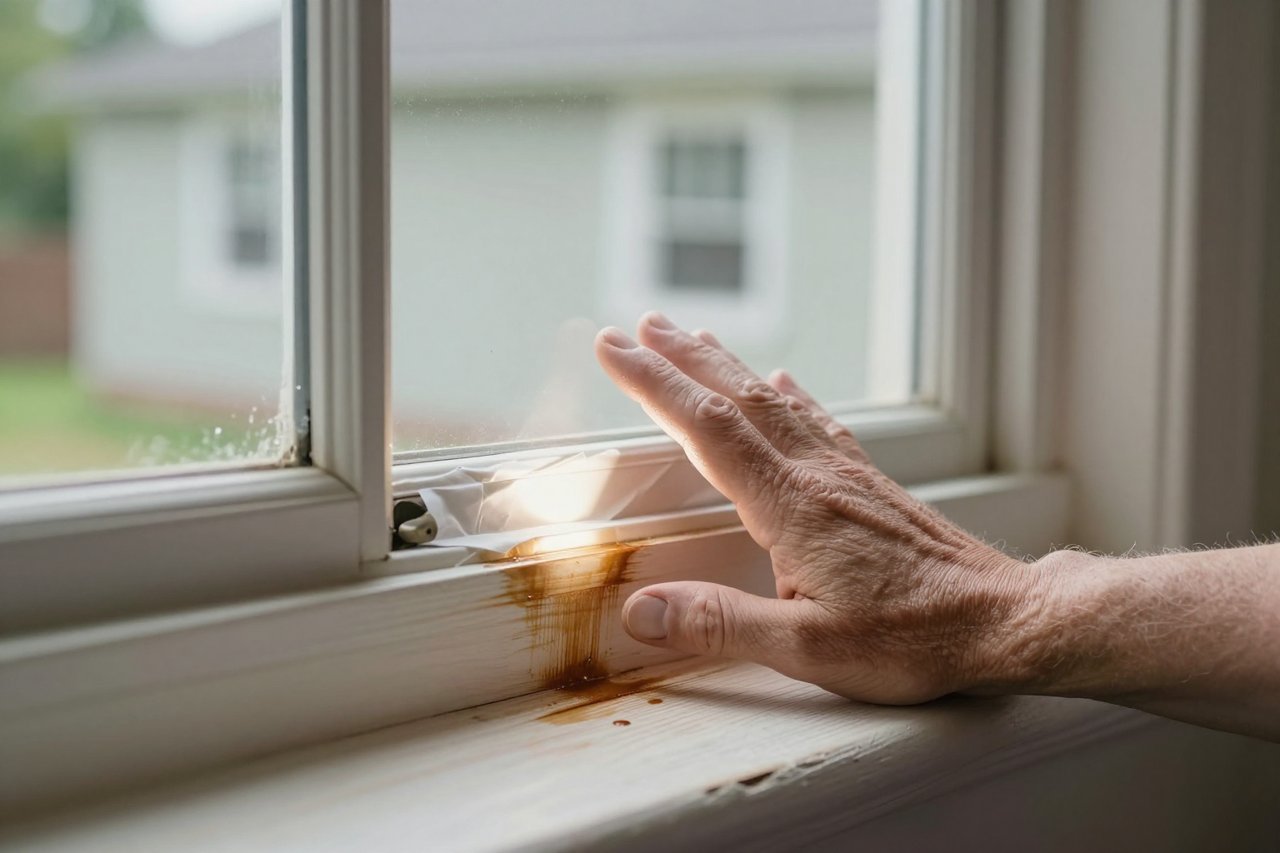
Once inside, most people instinctively look up at the chandelier or across the open floor plan. Make a different choice. Start with the ceilings in each room, especially near the roof and along exterior walls. Water stains show up as yellow or brown rings, but sellers often repaint them. Look at the ceiling from a low angle with a flashlight. A patch of paint with a different texture, a subtle ripple, or an area that’s slightly shinier than the surrounding drywall can hide a prior leak.
In the kitchen, open the cabinet under the sink and inspect the pipes. Touch them with a folded paper towel to check for slow drips. In the bathrooms, examine the caulk around the tub and shower. If it’s cracked or pulling away from the tile, water has been seeping behind the wall. It’s a small fix now, but it may hide significant rot later.
Three Wet Spots Buyers Usually Miss
- The base of the toilet, where caulk can disguise a broken wax seal.
- The bottom lip of each window, where condensation leaves its mark.
- Behind the washing machine, where old hoses develop hairline splits.
A little dampness in these areas is not always a deal-breaker. But if you see it in multiple rooms, you’re likely dealing with chronic moisture, and that’s a red flag that won’t go away.
Foundation Cracks Talk. So Do Sticky Doors.
Hairline cracks in a poured concrete basement wall are common and rarely a reason to panic. The trouble starts with diagonal cracks that are wider at one end, stair-step cracks in block foundations, or any crack that lets water through. You don’t need to know exactly what they mean; you just need to recognise that they need professional evaluation.
Foundation movement also shows up in strange places. Try every door in the house. A door that drags on the floor, sticks in its frame, or closes by itself when you leave it ajar has probably shifted with the house. Put a small round object, like a marble, on the floor of the living room. If it rolls quickly toward a corner, the floor is sloped. Some settlement is normal, but a slope of more than an inch across a room can signal a structural issue. When you find these clues, compare them against the 21 red flags to watch for when buying a house, because isolated signs often come as a package.
The Electrical System Throws Its Own Warning Signs
A new light fixture or smart thermostat doesn’t mean the wiring underneath is safe. If the seller allows it, open the electrical panel in the garage or utility room. Look for the name Federal Pacific on the breaker. That particular brand has a well-documented history of failing to trip, and many insurance companies will not cover a home with it. Also look for screw-in fuses or a panel marked 60 amps. A modern home needs at least 100 amps, and if you’re planning to run central air and an electric car charger, you’ll need more.
Inside the living spaces, note the outlets. Two-pronged outlets lack a grounding conductor, which is a hassle and a hazard. Outlet plates that are warm to the touch suggest overloaded circuits. If the lights flicker when you switch on the vacuum or the microwave, the home may have loose connections at the panel. These are issues an electrician can fix, but the cost adds up quickly, and sometimes it means running new wire through walls that have already been finished.
DIY Renovations Hide Some of the Costliest Surprises
A homeowner who renovates with skill is one thing. A homeowner who disguises sloppy work behind a fresh coat of paint is another. You can usually tell by the small details: tiles that sit unevenly on their backsplash, a cabinet door that doesn’t line up with its neighbour, or electrical outlets installed at odd heights. Caulking is a favourite trick. If the caulk around a window or a shower looks like it was squeezed out of a tube without being smoothed, it’s often covering a gap that water can get through.
Inspect every finished area with a suspicious eye. A basement that a seller “finished” without a building permit might have electrical splices hidden inside the walls. Ask to see permits for any major additions or renovations. If the owner says the work was “done by the previous owner” and no records exist, an engineer or inspector can examine the risky parts, but the repair bill may be significant. Renovations are a reason to negotiate the price down, not to cancel the home inspection contingency.
You Found a Major Issue. Now What?
Finding a defect doesn’t automatically mean you walk away. It means you get informed. Take photos and write down exactly what you saw. When you schedule a home inspection, an essential stage in the step-by-step home buying process, tell the inspector about your concerns. A good inspector will then test those specific areas and give you a realistic sense of repair costs. Some repairs, like regrading the yard or replacing a cracked overflow plate, are cosmetic. Others, like a sagging roof beam or a sewer line clogged with roots, can cost five figures.
If a serious issue shows up, you can ask the seller for a credit at closing, require them to make the repair, or lower your offer. If they won’t budge, let the house go. It’s much cheaper to walk away from a foundation problem than to buy it. Before you become emotionally attached to a home, read honest reflections from people who have been through the process. The things I wish I knew before buying my first house can remind you that the house you walk away from today isn’t the only house you’ll ever love. Learning how to spot a bad house before you buy it is a skill, and like any skill, it improves with practice. With every listing you tour, you’ll trust your instincts a little more.