
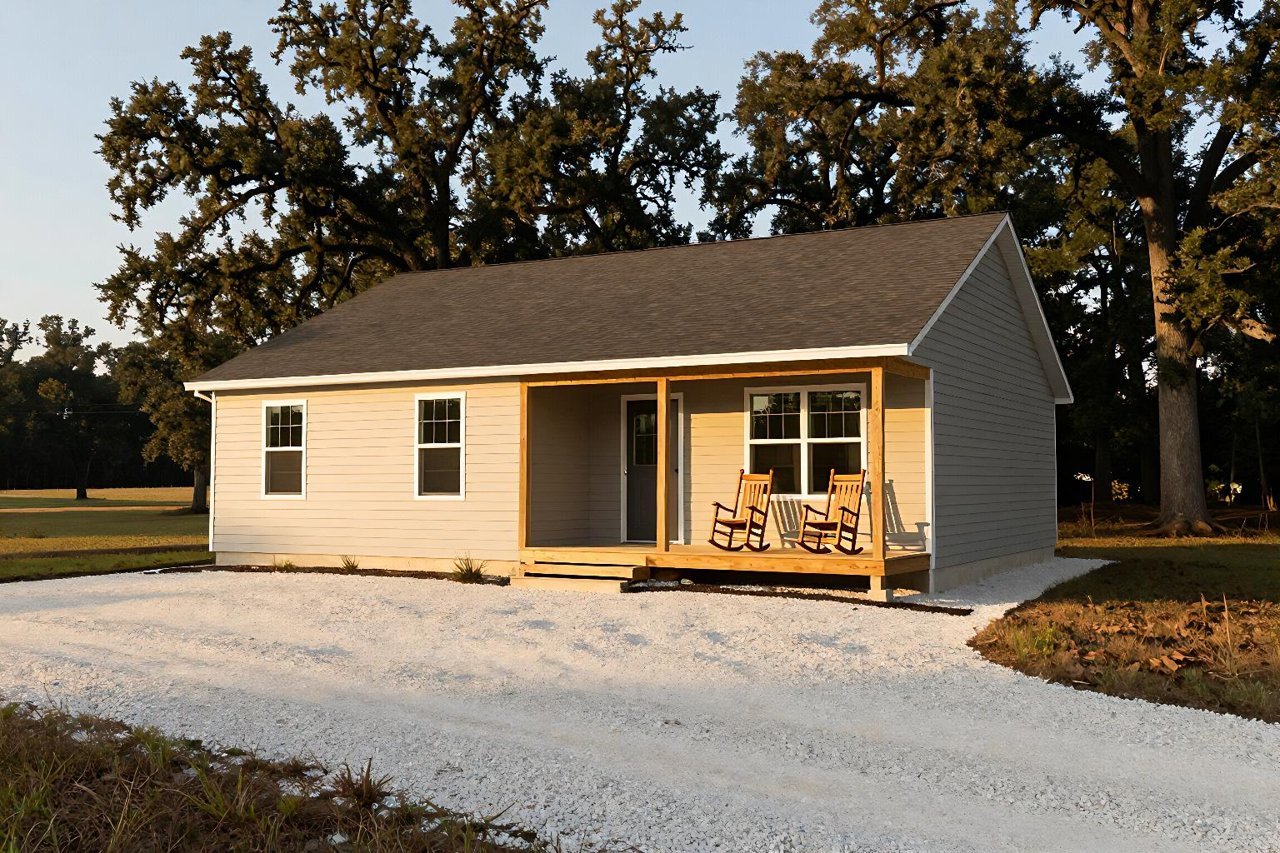
Manufactured homes make up roughly 6% of the housing in the United States, and for a lot of buyers they’re the difference between renting indefinitely and owning something. The trouble starts when you go looking for money. Call the bank that holds your checking account, ask about a manufactured home loan, and you’ll get transferred twice before someone tells you they don’t do those.
Manufactured housing sits in its own lending universe. The homes are built to a federal HUD code rather than local building codes, many are titled like vehicles instead of real estate, and a large share sit on land owned by somebody else. Each of those details changes which lenders will touch the deal and what they charge for it.
Here’s a working map of that landscape: who lends, what they look at, what rates look like, and the questions that separate a fair deal from an expensive one.
Chattel Loans and Mortgages Are Two Different Products
Start here, because this single question decides almost everything else. A lender’s first concern isn’t your credit score. It’s how the home is titled.
- Personal property, or chattel. The home keeps its state-issued title and you finance it much like a vehicle. This is the norm in leased-land communities and for older units that can’t be converted.
- Real property. You own the land under the home and the title has been retired with the state. Now conventional, FHA, VA, and USDA financing open up.
The gap between the two isn’t small. Chattel loans typically run one to three percentage points above mortgage rates, and terms often cap at 15 or 20 years instead of 30. On a $95,000 balance, that combination can add $200 or more to the monthly payment.
The Main Types of Manufactured Home Lenders
Chattel specialists
Two names dominate the market: 21st Mortgage and Vanderbilt Mortgage, both part of Clayton Homes, which Berkshire Hathaway owns. Cascade Financial Services, Triad Financial Services, and a scattering of regional lenders cover most of what’s left.
Worth knowing before you walk onto a dealer lot: the in-house finance office is usually tied to one of those lenders. The person quoting your rate isn’t shopping on your behalf, so get an outside quote before you commit.
FHA-approved lenders
The FHA insures two manufactured housing products. Title I covers chattel loans up to just under $70,000 for the home, which is enough for a decent single-section but rarely a double-wide in a good location. A standard FHA mortgage on a home that sits on a permanent foundation and titles as real estate is far more useful, since it gets you 3.5% down and a 30-year term.
VA lenders
VA financing works two ways here. If the home is permanently affixed and you own or buy the lot, it’s handled like any other VA purchase: nothing down, no monthly mortgage insurance. If it stays chattel, the VA still backs the loan but wants 5% down and caps the term at 20 years.
USDA and rural lenders
Section 502 loans through the USDA are among the cheapest money available for manufactured housing, with zero down and rates that undercut chattel lenders by several points. The home has to sit on a permanent foundation in an eligible rural area, and the land has to be part of the purchase. Because the program rules overlap so much, it pays to understand how USDA, VA, FHA, and local lenders compare in rural markets before you start filling out applications.
Credit unions and community banks
Call three or four local institutions and ask one blunt question: ‘Do you lend on HUD-code homes titled as real property?’ Some do. Because they hold the loans in portfolio, they aren’t bound to agency guidelines and can work with a home on well and septic or a borrower with a thin credit file.
Seller financing
Private sellers, especially in rural areas, sometimes carry the note themselves. It can be the only path when every bank says no, but the terms are often disguised: balloon payments due in five or ten years, rates above 10%, and none of the consumer protections a regulated lender has to provide. Have an attorney review any seller-financed agreement.
What Lenders Actually Underwrite
Manufactured home underwriting goes well beyond a FICO score. Every lender weighs these:
- The home itself. Year built, the HUD certification label, how many times it’s been moved, and whether it’s on a permanent foundation. Anything built before June 1976 falls outside the HUD code and is nearly impossible to finance.
- Down payment. Chattel lenders usually want 10% to 20% down. FHA real-property loans need 3.5%. VA and USDA can go to zero.
- Credit. Chattel lenders approve scores in the 500s, but the rate climbs quickly. Government-backed real-property loans generally want 620 or better.
- Debt-to-income. Keep total payments under 43% of gross income for FHA or conventional. Some chattel lenders stretch to 50%, at a price.
- The land. Leased ground pushes you into chattel territory almost every time, and underwriters want to see the lease terms, the park’s condition, and how long it’s been operating.
Appraisals are the other friction point. Fewer manufactured home sales mean fewer comparable properties, and appraisers sometimes pull comps from 30 miles away. That’s one reason online price estimates are shaky for these homes. Tools that work well on subdivision houses frequently miss the mark on HUD-code properties, so it’s worth knowing how accurate instant home value estimates really are before you lean on one during a negotiation.
What Rates and Payments Realistically Look Like
Chattel loans commonly land between 8% and 12%, depending on credit, down payment, and loan size. A mortgage on a manufactured home with land prices much closer to site-built financing, usually within a quarter to a half point. That spread is the strongest argument for getting the home titled as real property if there’s any way to do it.
Run your own numbers before you shop, so you can recognize a bad quote on sight. A manufactured home loan calculator shows the gap in concrete terms: $95,000 at 9.5% over 20 years runs about $885 a month, while the same balance at 6.5% over 30 comes in near $600.
Red Flags That Should End the Conversation
- A quote given as a monthly payment with no rate, APR, or total cost attached.
- Pressure to sign a finance application before you’ve compared another lender.
- Prepayment penalties, which are common on chattel loans and can cost thousands if you sell or refinance early.
- Balloon payments buried in a seller-carry arrangement.
- Vague answers about whether the loan will be chattel or real property. Get it in writing.
- Any fee collected before you’ve received a Loan Estimate.
Questions Worth Asking Every Lender
- Will this be a chattel loan or a mortgage?
- What’s the rate, the APR, and the total interest over the life of the loan?
- Is there a prepayment penalty, and how does it work?
- What happens if I sell in three years?
- Will you service the loan, or will it be sold?
- What’s the longest term you offer on this property type?
Write the answers down. Comparing two Loan Estimates side by side is the only reliable way to see which offer costs less, and plenty of lenders are counting on borrowers not to bother.
Refinancing Down the Road
Most chattel borrowers have an exit plan, and a good one usually exists. Buy the land under the home, retire the title, let your credit improve, and two or three years in you can move a 10% loan into an FHA or conventional mortgage at close to half the rate. Refinancing a manufactured home takes extra documentation, including proof of permanent affixation, a title conversion, and sometimes a new appraisal and engineer’s certification, so start the paperwork well before a rate lock expires.
Getting Started in the Right Order
Sequencing matters more than most buyers expect, and doing these steps out of order burns time and money.
- Find out how the home will be titled before you make an offer. Ask the seller or the park manager directly.
- Pull your credit reports and dispute errors now. Clearing them takes 30 to 60 days.
- Get pre-approved with at least two lenders, and make sure one of them isn’t connected to the seller.
- If money is tight, remember the down payment drives the whole decision. The difference between 3.5% down and 15% down is often the difference between buying and waiting, and there are proven ways of buying a home without stretching your budget.
- Compare Loan Estimates line by line before signing anything.
One last practical note: chattel rates move with the same bond market that drives regular mortgages, so a quote from three weeks ago isn’t a quote today. Get fresh numbers the week you plan to sign.