
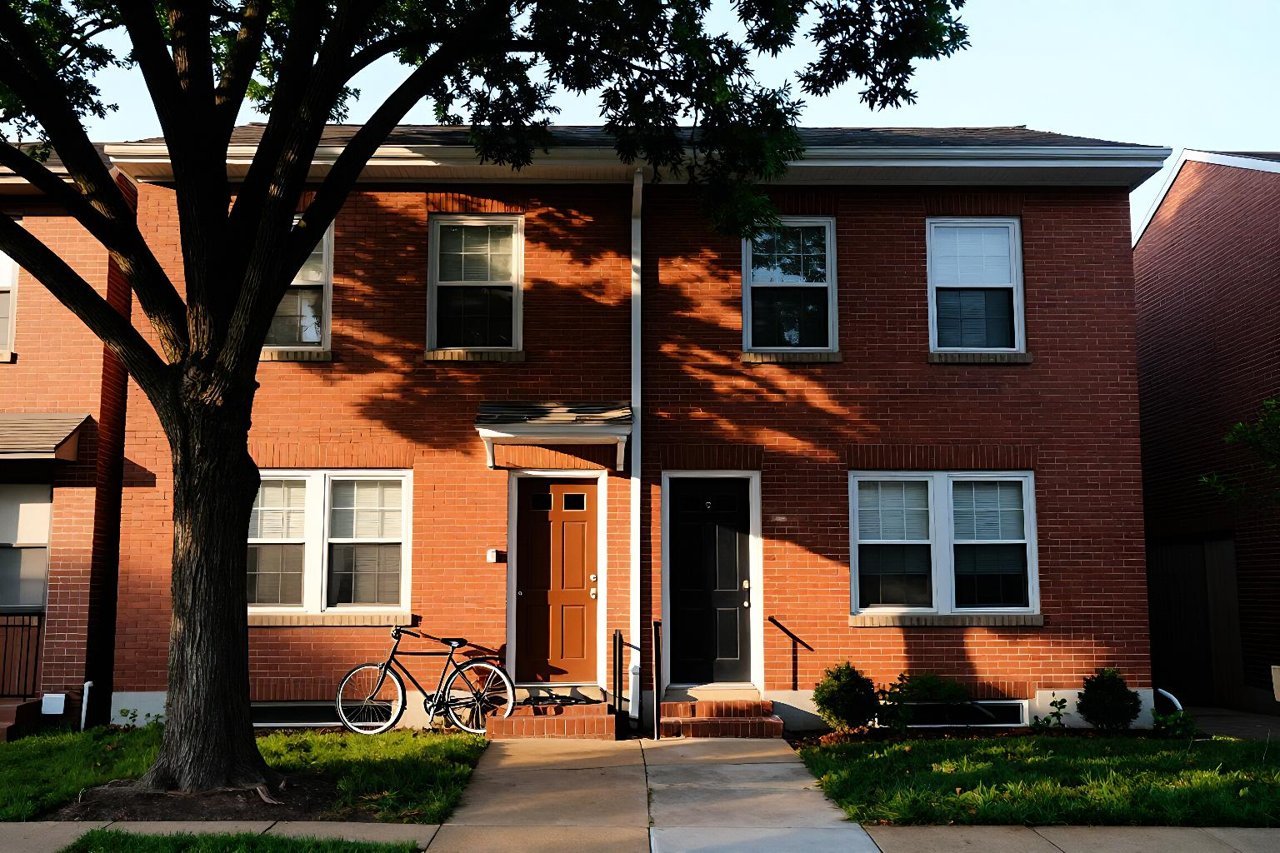
A duplex is the most practical entry point into real estate that most veterans will ever have access to. You buy a building with two front doors, live behind one of them, and let the tenant next door pay a chunk of your mortgage. The VA will back that purchase with zero down payment, no monthly mortgage insurance, and a rate that usually beats anything else on the market.
But the program’s rules for two-unit properties are specific, and the parts that trip people up aren’t the ones you read about on the brochure. Here’s what actually matters.
What the VA allows, in plain numbers
VA-backed financing covers owner-occupied properties with up to four units. Single-family homes, duplexes, triplexes, fourplexes, condos, and even manufactured homes on permanent foundations all qualify. What does not qualify is a duplex you buy purely as a rental — the VA is a home loan program, and the home has to be yours.
The zero-down structure holds for a duplex as long as the loan stays under the county limit. For 2025, the conforming limits the VA uses run roughly $806,500 for a one-unit home, about $1,032,650 for a duplex, $1,248,150 for three units, and $1,546,200 for four. Go above that in a high-cost market and you’ll need to cover the difference in cash, though your full entitlement can be restored in some cases.
You’ll still need to clear the standard eligibility hurdles — a valid Certificate of Eligibility, a credit profile lenders can work with, and enough documented income. The VA home loan requirements checklist walks through the service record and documentation side in detail, and it’s worth reading before you start touring properties.
The occupancy rule is not a formality
You have to certify that you intend to occupy one of the units as your primary residence. Not “someday.” The VA expects you to move in within a reasonable window after closing — in practice, about 60 days — and to stay there. Lenders document this with a signed occupancy affidavit, and misrepresenting it is mortgage fraud, not a gray area.
What the rule does allow is flexibility. You can rent out the second unit immediately. You can rent rooms. You can buy a duplex that needs cosmetic work and fix it up while living in the back unit. What you can’t do is sign the affidavit, keep your apartment across town, and treat the whole building as an investment.
How long you have to stay
There’s no fixed “seasoning” period written into the law, but the intent requirement is real. Most borrowers stay at least a year. After that, if you move out and keep the duplex as a rental, that’s generally acceptable — you’ve satisfied the original intent. Just know that you can’t simultaneously use the same entitlement for a new primary residence without addressing the first loan.
Counting the other unit’s rent
This is where a duplex quietly outperforms a single-family house. Lenders will typically credit 75% of the appraiser’s market rent estimate for the unit you won’t occupy, and that income goes toward your debt-to-income ratio.
A concrete example. Say you buy a $420,000 duplex and the appraiser estimates the vacant unit at $1,100 a month. Your lender counts $825 of that as effective income. With principal, interest, taxes, and insurance landing around $3,100 a month, you’re effectively qualifying on roughly $2,275 of housing expense instead of the full amount. That difference is often what gets a borrower approved on a duplex but turned down on the same-priced single-family home.
VA guidelines lean on the appraiser’s rental analysis rather than a strict formula requiring the building to pay for itself, so there’s more breathing room than FHA or conventional guidelines offer on multi-unit deals.
The funding fee, and who skips it
The VA charges a one-time funding fee in place of mortgage insurance. For a first-time use with nothing down, it’s 2.15% of the loan amount — about $9,030 on a $420,000 loan, which most buyers roll into the balance. Subsequent uses run higher, and putting 5% or 10% down reduces the percentage.
Veterans receiving compensation for a service-connected disability, surviving spouses, and certain active-duty Purple Heart recipients are exempt entirely. That’s a five-figure swing on a duplex purchase and one of the most commonly missed benefits in the program.
What the appraiser looks for on a two-unit
VA assigns the appraiser from its own fee panel rather than letting the lender pick, which removes some of the pressure you see in other loan types. The appraiser inspects both units, confirms the property meets minimum property requirements — working heat, sound roof, no safety hazards, no active pest infestation — and completes a rental income analysis.
Duplexes get more scrutiny on shared systems. A failing water heater that serves both units, a single electrical panel with obvious overload signs, or a roof patched in three places will generate conditions the seller has to fix before closing. Sellers who’ve only dealt with conventional buyers are sometimes surprised by how picky the list is; if you want a baseline for what inspectors flag on two-unit buildings generally, this breakdown of conventional loan appraisal requirements covers overlapping ground.
Recent sales and the income approach
On top of the standard sales comparison, the appraiser weighs rental income against comparable two-unit sales. In a thin market — say a small town with three duplex sales in the last year — values can come in softer than the contract price, and you’d need to renegotiate or bring cash. Ask your agent for two-unit comps before you make an offer, not after.
When the VA path stops fitting
A duplex two towns over from your job, or one you plan to rent entirely, isn’t a VA deal. Those situations call for different financing, and the trade-offs change meaningfully: down payment requirements climb, and how lenders treat the second unit’s income shifts. The conventional loan rules for a duplex are worth understanding as a comparison point, because the gap between the two programs on a two-unit property is bigger than most buyers expect.
It’s also worth planning the exit before you sign. If you intend to move out in three years and keep the duplex, that’s a solid strategy — but the loan on it stays a VA loan, and your entitlement stays tied up in it. Buying another home with VA financing then depends on remaining entitlement and the new purchase price. Some owners refinance into a conventional product to free up entitlement; that’s where the investment property loan math starts to matter, since you’d typically be looking at a 25% down requirement and a rate bump.
Questions to ask before you write an offer
Run through these on every two-unit property you get serious about:
- Is the second unit legal? A finished basement apartment with a stove and no permit can kill the loan or void your rental income. Ask the city for the certificate of occupancy or zoning confirmation.
- Are the utilities separately metered? Shared electric means you’re paying the tenant’s bill, and lenders will factor that into your budget.
- What are actual rents versus market rents? A unit rented at $750 that could fetch $1,150 is an opportunity, but the appraiser may only credit the lower figure if a lease is in place.
- What’s the deferred maintenance list? Two roofs, two furnaces, two water heaters. Budget for double.
- Can you cover the mortgage alone? Vacancy happens. If you need the second unit’s rent to survive the payment, you’re one bad tenant away from trouble.
One last thing worth knowing: VA loans are assumable. If rates climb, a buyer who qualifies can take over your loan at your original rate — a genuine selling point when you eventually move on from that duplex.