
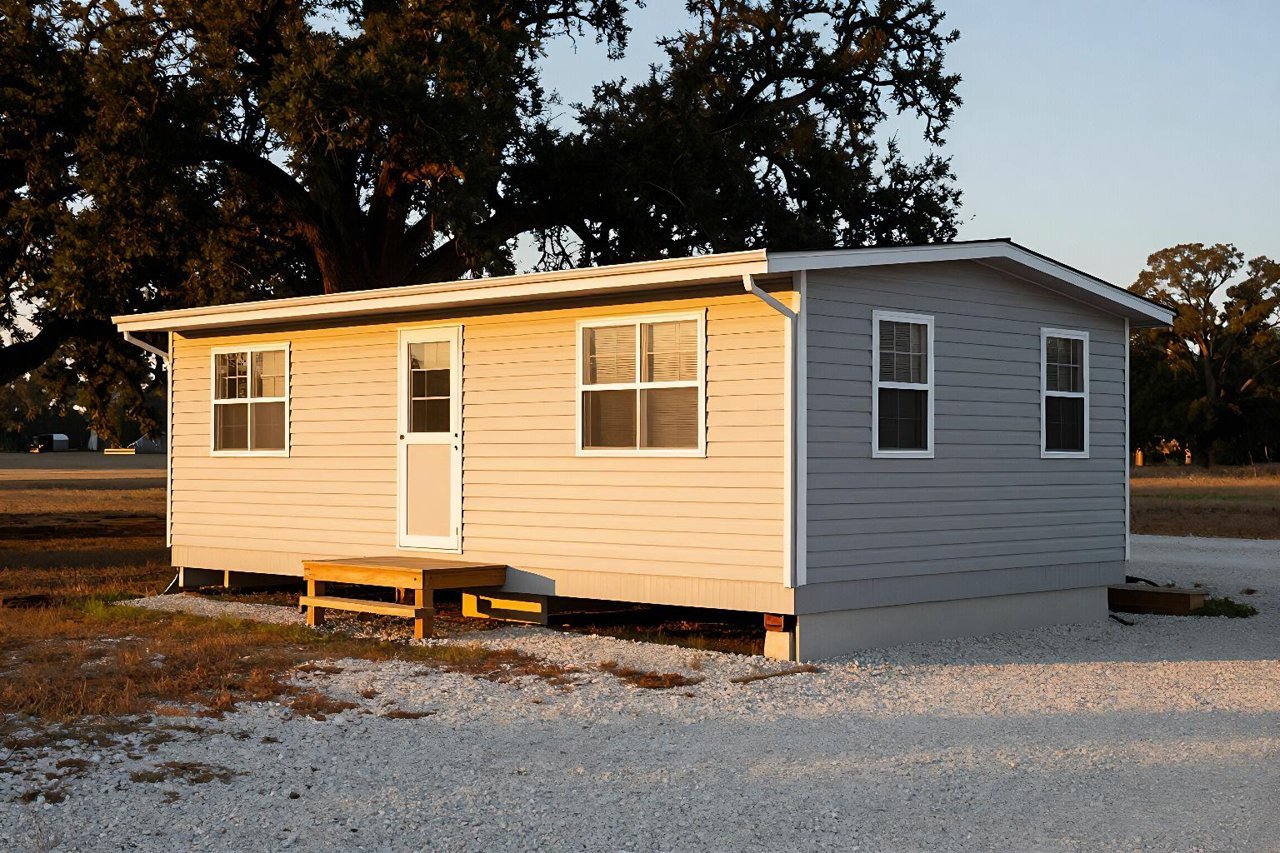
A manufactured home is one of the few ways to buy a house for $80,000 in plenty of American markets. For a veteran with VA entitlement, that matters a lot. The VA does guarantee loans on manufactured homes — the rules live in Chapter 12 of the VA Lender’s Handbook — but the bar is noticeably higher than it is for a site-built house, and a good share of the units listed online simply won’t clear it.
Learning those rules before you fall for a place on a rented lot will save you months of dead ends.
The Home Has to Be Treated as Real Estate, Not a Vehicle
This is the filter that kills most deals. In many states, a manufactured home is titled much like a car — through the DMV, with the structure treated as personal property. VA will not guarantee a loan on personal property. Full stop.
Before closing, the home’s title has to be surrendered and the unit converted to real property: legally attached to the land, recorded in the county deed records, and taxed as an improvement rather than a chattel. Lenders call it title elimination or a real property conversion. Some states finish it in ten days. Others want a foundation certification, an assessor’s form, and a few weeks of waiting.
If a seller says the home “comes with a title,” that’s your cue to start asking harder questions.
What VA Requires of the Home Itself
HUD-code construction, built after June 15, 1976
Anything older is a pre-HUD mobile home and is ineligible. The appraiser will look for two things: the HUD data plate inside the home (usually in a bedroom closet or near the electrical panel) and the red HUD certification label on the exterior. If either is missing, the appraisal stalls until you can obtain a replacement letter from HUD’s Institute for Building Technology and Safety — a process that can take weeks.
At least 400 square feet of living area
VA sets a floor on size. A 300-square-foot park model won’t qualify no matter how nicely it’s finished. The home also needs a kitchen, a bathroom, and at least one bedroom, plus utilities that meet local code.
A permanent foundation, not just skirting
Piers and footings installed to the manufacturer’s written instructions, tie-downs, a vapor barrier over the soil, and proper skirting. A unit resting on loose blocks with cinder-block skirting and no anchoring fails. Plenty of lenders now require an engineer’s foundation certification even when VA doesn’t explicitly demand one, so budget $400 to $900 for that inspection.
You need to own the land underneath
VA generally wants the veteran to hold title to the lot. A home in a leased-land manufactured housing community is where VA financing usually dies — narrow leasehold exceptions exist, but they’re lender-specific and uncommon. If the land is rented, plan on hearing no.
Unpermitted additions are the other quiet killer. A stick-built sunroom bolted to the side of a HUD-code home can trigger a structural inspection or disqualify the property outright, because the addition wasn’t built to the same standard.
What VA Wants From You
You need a valid Certificate of Eligibility and a clean credit history — VA doesn’t publish a minimum score, but most lenders want 620 or better on manufactured homes, higher than the 580 to 600 they’ll accept on a site-built purchase. You’ll also certify that you intend to occupy the home as your primary residence within 60 days of closing. Investment purchases aren’t allowed.
The VA funding fee applies: 2.15% of the loan amount on a first use with nothing down, or 3.3% on a subsequent use. Veterans with a service-connected disability rating are typically exempt. The fee can be rolled into the loan, which is how most buyers handle it. Seller concessions are capped at 4% of the sales price, and the seller can pay a reasonable amount of the buyer’s closing costs.
Rates and Costs Run a Bit Higher
Fewer lenders write manufactured home loans, and the ones that do price in the extra work. Expect a rate roughly a quarter to three-quarters of a point above what you’d see quoted for a site-built purchase with the same credit profile. On a $90,000 loan, a half-point difference is about $27 a month — real money, but rarely a deal-breaker.
It pays to shop at least three lenders, including a credit union or two. The pricing gap between the best and worst quote on the same manufactured home scenario is often wider than it is on conventional loans. Understanding what actually drives your VA mortgage rate — loan size, credit score, down payment, and lender markup — helps you push back when a quote looks padded.
Manufactured, Modular, and “Mobile” Are Not the Same Word
People use these interchangeably in conversation. Lenders don’t.
A manufactured home is built to the federal HUD code in a factory and arrives on a steel chassis. A modular home is also factory-built but constructed to state or local building codes and is real property from day one — VA treats modulars like any other house, with none of the foundation or title hurdles. “Mobile home” is the outdated term for any factory-built unit; in lending it now usually signals a pre-1976 structure, which is ineligible.
If you’re shopping listings, read the property description carefully. A modular listed as a manufactured home, or the reverse, can send your financing down the wrong path before anyone catches it.
VA Versus FHA on a Manufactured Home
The FHA route is a legitimate alternative and sometimes the only one — it has two separate programs with very different rules, and one of them allows a loan on a home that stays personal property in a leased community. That flexibility comes at a price: 3.5% down and mortgage insurance premiums for the life of the loan on most FHA purchases.
It’s worth reading up on how FHA handles manufactured homes across its two programs before you decide which path fits your situation.
VA still wins on cost for most eligible veterans. No down payment, no monthly mortgage insurance, and no county-by-county purchase ceiling for borrowers with full entitlement — unlike FHA’s loan limit, which caps out well below what some manufactured homes on acreage command. If you’ve got a service-connected disability exemption from the funding fee, the gap widens further.
What the Appraisal Actually Looks At
A VA-assigned fee appraiser inspects the home and issues a Notice of Value. They’re checking more than square footage: the foundation and anchoring, the HUD labels, roof condition with at least a couple of years of remaining life, the heating and cooling systems, plumbing, electrical service, site drainage, and whether the home has safe access to a public or approved private road.
The inspection standards overlap heavily with FHA’s, so what an FHA appraiser scrutinizes is a decent preview of what will get flagged. Peeling paint, a missing handrail, exposed wiring, or a water heater without a discharge pipe can all trigger repair conditions before closing.
A Practical Order of Operations
- Pull your Certificate of Eligibility first — it’s free and takes minutes on the VA portal.
- Get pre-approved with a lender that has a manufactured home program. Ask directly how many they closed last year.
- Shop only homes on land owned by the seller, with HUD tags still attached.
- Order a title search early so you know the real property conversion is possible before you pay for an appraisal.
- Get a foundation certification lined up before the VA appraiser visits.
- Lock your rate only after the Notice of Value comes back clean.
Where These Deals Usually Fall Apart
Three failure points account for most of them. The first is title: a home the seller never converted to real property, in a state where conversion takes eight weeks and the seller won’t wait. The second is the foundation — a home that’s been sitting on blocks since the 1990s and needs $6,000 of piers and tie-downs to pass. The third is land, plain and simple: a beautifully renovated unit in a leased community that no VA lender will touch.
None of these are surprises if you check them in the first week. Ask the seller for the last tax bill, the current title status, and photos of the foundation and HUD label before you write an offer. If any of those answers come back vague, walk. There are plenty of manufactured homes on owned land that will finance cleanly, and the right one is worth waiting for.