
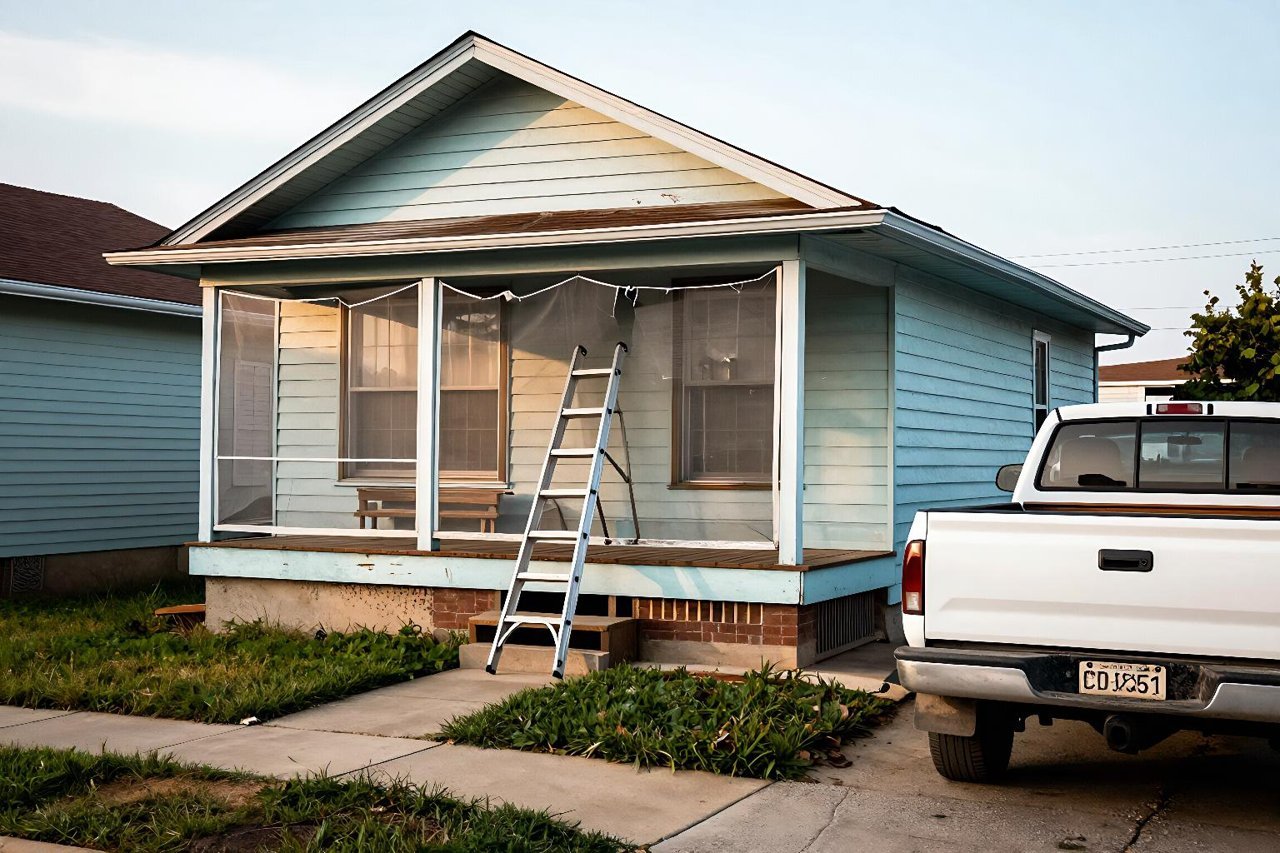
A three-bedroom ranch in Cleveland listed at $89,000. Collapsed back porch, a furnace from 1987, a kitchen untouched since the Reagan administration. Comps two streets over sell for $210,000. That gap is why buyers chase fixer-uppers, and it’s also why so many of those deals collapse at the appraisal desk.
The house usually isn’t the problem. The financing is. Most mortgage programs are built for homes that are already safe, sound and livable, and a fixer-upper fails all three tests on day one. The real question is which loan lets you buy the property and fund the repairs in one transaction, before anyone expects the house to be finished.
Why a Standard Mortgage Falls Apart on a Fixer-Upper
Fannie Mae and Freddie Mac require appraisers to flag anything threatening health, safety or structural integrity. FHA goes further with its Minimum Property Requirements. The usual suspects:
- Peeling or chipping paint on pre-1978 homes (lead-based paint)
- Missing or non-functioning utilities, including running water and heat
- A roof with less than two years of remaining life
- Exposed wiring, broken windows, missing handrails, trip hazards
- Moisture or pest problems in the crawl space or attic
Find any of that and the appraiser marks the report “subject to” repairs. Now the seller has to fix the roof, or you pay for it in cash before closing, or the loan never funds. On a typical fixer, that repair list runs $4,000 to $9,000, and it lands on a house you don’t own yet.
FHA 203(k): The Renovation Loan Most Buyers End Up Using
The 203(k) bundles purchase price and repair budget into a single loan with a single closing, sized against the home’s after-improved value instead of its current condition. The down payment is 3.5%, same as any FHA loan. Repair funds sit in escrow and get released to your contractor in draws as work is completed.
Two versions exist, and choosing the wrong one can cost you months.
Limited 203(k): up to $35,000, no structural work
The Limited version caps repairs at $35,000 and bans structural changes, but it also skips the HUD consultant and much of the paperwork. Kitchens, bathrooms, roofing, HVAC, flooring, windows, paint and appliances all qualify. Approval moves faster, and for most first-time fixer buyers this is the version that actually closes.
Standard 203(k): gut rehabs and load-bearing changes
Standard 203(k) allows foundation repair, room additions and moving walls. It requires a HUD-approved 203(k) consultant who inspects the property, reviews the contractor’s bid and signs off on every draw, usually $400 to $1,000 in fees. All work must be finished within six months of closing. Lenders expect a 10% to 20% contingency reserve inside the loan, plus up to six months of mortgage payments in reserves if you can’t live in the house during construction.
Before you commit, check what else you qualify for. A side-by-side look at FHA, VA and USDA loans takes ten minutes and can change your entire budget, especially if you’re a veteran who could put nothing down.
Fannie Mae HomeStyle and Freddie Mac CHOICERenovation
These are the conventional counterparts, and they’re often the better call if your credit score is north of 700 and you’d rather avoid FHA’s upfront mortgage insurance premium.
What they cover, and what they cost
Down payment is 5% on a primary residence and 15% on an investment property. Renovation costs can run up to 75% of the as-completed appraised value, structural work is allowed, and no HUD consultant is required. What you get instead is a stricter contractor approval process and a 10% to 15% contingency reserve, bumped to 20% when the scope includes major structural repair. Loan sizes are capped by conforming limits, which the FHFA resets every year, so it’s worth checking how mortgage rates and loan limits are shaping up in 2026 before assuming a conventional renovation loan beats a 203(k) on monthly payment. HomeStyle also lets you perform some of the work yourself if you’re genuinely handy, though lenders cap how much of the budget that can represent.
VA Renovation Loans and USDA Repair Options
Veterans with remaining entitlement can roll roughly $50,000 of repairs into a VA loan with no down payment and no monthly payment reserve requirement. Repairs have to be finished within six months, and not every lender offers the product, so you’ll need to shop specifically for it.
USDA-backed lending is 100% financing for eligible rural areas, but the repair side is narrower. Minor fixes can sometimes ride along in a repair escrow, and existing owners can tap USDA Section 504 loans for up to $40,000 in repairs, with grants available to borrowers 62 and older. If the property sits outside city limits, read up on mortgage options for rural home buyers before you default to FHA.
Hard Money and Bridge Loans: Fast, Expensive, Sometimes Right
When the house won’t qualify for anything government-backed, say the seller is an estate that refuses to touch repairs and you’re competing against cash offers, a hard money loan can close in ten days. Expect 9% to 13% interest, two to four points, 12- to 24-month terms, and leverage based on after-repair value rather than purchase price.
Run the carrying cost honestly. A $150,000 hard money loan at 12% for nine months costs about $13,500 in interest plus $4,500 in points. If your renovation adds $80,000 of value, that $18,000 is worth it. If the ARV comes in soft, you’re digging with a shovel.
Matching the Loan to the Project
- $5,000 to $35,000, cosmetic and systems work, owner-occupied: FHA Limited 203(k)
- Structural repair, additions, full gut, $40,000 or more: FHA Standard 203(k) or Fannie Mae HomeStyle
- Veteran, 0% down, moderate repairs: VA renovation loan
- Rural property, minor fixes: USDA with a repair escrow
- Cash purchase, auction, investor flip: hard money now, refinance later
What Underwriters Check Before They Release a Dollar
Renovation loans get denied for paperwork far more often than for credit. The file needs a licensed, insured contractor with a line-item bid and a W-9, a scope of work detailed enough that the appraiser can value each item, a schedule that fits the six-month program window, proof of the contingency reserve, and any permits required for structural or electrical work.
The appraisal is based on the finished house. If your contractor’s bid exceeds the value the appraiser assigns to those improvements, you cover the difference in cash, which is why a second opinion on the after-repair value is worth paying for before you sign anything. It also pays to compare the lender rather than just the loan; a Finance of America Mortgage review is a reasonable starting point for seeing how one lender’s renovation products stack up against its standard offerings on rates and fees.
Running the Numbers Before You Make an Offer
Total cost is not purchase price plus repairs. Using the Cleveland example: $89,000 purchase, $42,000 in repairs, a 15% contingency at $6,300, consultant and closing costs near $6,500, and carrying costs of roughly $1,200 a month for six months. Call it $151,000 all-in on a house that appraises at $210,000 when finished. That works. Push the repairs to $70,000 and the same house starts to look ordinary.
Timing matters just as much as dollars. Expect four to eight weeks of underwriting and consultant scheduling before your contractor swings a hammer, then six months of construction, then a final inspection and draw reconciliation. If your lease ends in three months, you’re paying double housing for a while. Put that in the contingency line, not out of it.
Keep the scope honest, too. The best fixer-upper purchase is the one where the repair list is short enough to finish, ugly enough to scare off other buyers, and priced far enough below the finished comps to absorb a surprise or two. Pick the loan that matches the worst thing in the house, and the rest tends to sort itself out.