
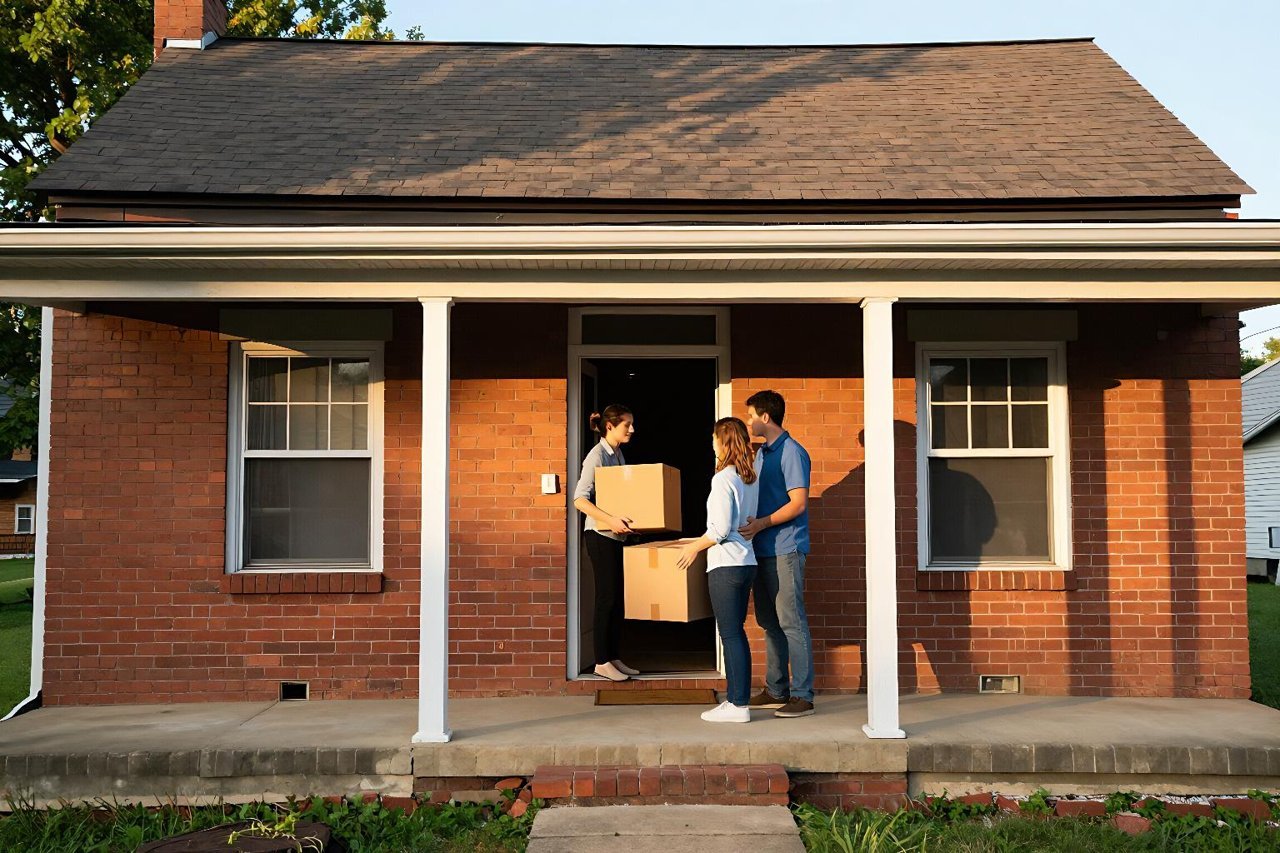
A $265,000 house in Lancaster County with an FHA loan needs about $9,275 down. Add the appraisal, title insurance, lender fees, and prepaid taxes, and the cash at closing climbs toward $17,000. Pennsylvania’s median household income sits near $75,000, and plenty of working families have a few thousand dollars saved, not seventeen. That gap is exactly what down payment assistance in Pennsylvania is built to close.
The money is real, but it is scattered. Some sits with a state agency, some with cities and counties, a slice with the federal government, and a smaller piece with employers and nonprofits. Here is where it lives and how buyers actually get to it.
How Pennsylvania Down Payment Assistance Usually Works
Almost none of it arrives as a check you deposit. Most assistance comes as a second mortgage sitting behind your first loan, often at 0% interest, often structured to disappear over time.
Grants versus forgivable second loans
A true grant never has to be repaid. Those exist, but they are rarer and usually tied to a specific funding cycle, an employer, or a targeted neighborhood. Forgivable second loans are the standard: you receive $6,000 or $10,000 at closing, make no monthly payments on it, and the balance shrinks by a set percentage each year. Stay in the house long enough and it vanishes. Sell in year two and you may owe a prorated chunk back at closing.
Read the recapture clause before you sign
Two numbers matter more than the headline amount: the forgiveness schedule and the resale or refinance rules. A $10,000 loan forgiven over ten years is worth less to a buyer who plans to move in three years than a $6,000 grant with no strings. Ask the loan officer to show you, in writing, what you would owe if you sold in year four.
Start With PHFA, the State Housing Agency
The Pennsylvania Housing Finance Agency runs the largest single pool of buyer help in the state. PHFA is not a lender with branches. It sets the terms, buys the loans from participating mortgage companies, and keeps pricing a notch below market for qualifying households. Nearly every assistance dollar a Pennsylvania first-time buyer touches flows through a PHFA program.
The Keystone Home Loan
This is the workhorse: a 30-year fixed mortgage with below-market pricing, available to first-time buyers and to repeat buyers in designated target areas. It pairs with optional down payment and closing cost help. Income limits are set county by county and generally land in the low six figures, so a household earning $95,000 in Erie may qualify while the same income in Chester County may not.
K-FIT and the Homebuyer Dream Program
K-FIT, the Keystone Forgivable in Ten Years second loan, attaches to a Keystone mortgage and forgives 10% of the balance annually. It has historically covered a few thousand dollars toward closing costs, and the annual allocation gets consumed quickly, so the calendar matters as much as your file.
The Homebuyer Dream Program, funded through the Federal Home Loan Bank of Pittsburgh, has paid out grants in the $10,000 range to lower-income buyers who complete counseling. Money is released in rounds through the year. If a lender tells you it is closed, ask when the next round opens rather than walking away.
Every PHFA program requires an eight-hour homebuyer education course from an approved counseling agency. Most cost $0 to $100 and can be finished online over a weekend. Skipping it is the single most common reason a file stalls two weeks before closing.
City and County Programs Fill the Gaps
Local money often has looser credit requirements and tighter geography. You have to buy inside the jurisdiction, and you usually have to complete counseling locally.
Philadelphia
The Philly First Home program, administered by the Philadelphia Housing Development Corporation, has offered roughly $10,000 in forgivable assistance, forgiven over 15 years, for buyers under the area income limits. Combined with PHFA first mortgage pricing, a Philadelphia buyer with steady income and a 640 score can realistically close with a few thousand dollars of their own money.
Pittsburgh and Allegheny County
The Urban Redevelopment Authority has run homeownership programs with second mortgages in the $10,000 to $20,000 range, with the amount depending on income and whether the property sits in a targeted neighborhood. Allegheny County administers its own funds separately, so a buyer in Penn Hills and a buyer in Mount Washington may face different rules.
Smaller cities and rural counties
Berks, Lehigh, Northampton, Dauphin, Erie, and Lackawanna counties all run assistance programs funded through federal HOME dollars, typically $5,000 to $15,000 as a deferred or forgivable loan. Housing authorities in several metros also operate voucher homeownership programs that let a Housing Choice Voucher holder apply the subsidy to a mortgage payment instead of rent. Households headed by a single parent are frequently the target population for these smaller pots, and there is a practical breakdown of where that funding actually sits in this guide to down payment assistance for single mothers.
Who Qualifies, and What You Will Need to Prove
Requirements differ by program, but the core checklist is consistent across Pennsylvania. Most buyers need a middle credit score of 620 or better, a debt-to-income ratio under about 45%, and household income below the program’s county limit.
- Two years of federal tax returns and W-2s for every borrower on the loan
- Thirty days of current pay stubs, plus documentation for any bonus or overtime income
- Two full months of bank statements, every page, including the blank ones
- Photo ID and Social Security numbers for all borrowers
- Your homebuyer education certificate from a PHFA-approved agency
- A fully executed purchase agreement once you are under contract
- Gift letters and transfer documentation for any family money used
Self-employed buyers should expect a heavier file: two years of returns with all schedules, a current profit and loss statement, and possibly a year-to-date balance sheet. Lenders will also count a side gig or 1099 income only if it has a two-year history, which trips up a lot of applicants who started driving for a delivery app last spring.
Stacking Assistance Without Wrecking Your Approval
Layering is allowed, and it is normal. FHA permits the entire 3.5% down payment to come from eligible assistance or a documented gift. Conventional loans with 3% down accept flexible sources. VA loans require nothing down at all. A Pittsburgh buyer can plausibly combine a PHFA first mortgage, a K-FIT second, and a URA grant, provided the total does not exceed the actual cash needed to close.
That last point is where deals break. Underwriters cap total assistance at your verified cash requirement, so an extra $4,000 of grant money cannot simply become a cushion. If a seller agrees to a $5,000 credit and you also receive $10,000 in assistance, expect the lender to reduce one of them. Getting the sequencing right is one reason it pays to understand how different loan structures price out, whether you are comparing FHA and conventional or reading a full Huntington Bank mortgage guide to see how a portfolio lender handles second liens.
The Lender You Choose Changes the Answer
Not every mortgage company can originate a PHFA loan. The agency publishes an approved lender list, and a broker who does not work with PHFA may quietly steer you toward a conventional loan with 3% down and no help rather than lose the commission. Ask the question directly on the first call: do you originate Keystone loans, and have you closed one in the last ninety days?
Large regional banks vary enormously on this. Some treat state housing programs as a core product line; others route every borrower into their own portfolio products. If you are weighing a big bank against a local mortgage broker, this plain-spoken Huntington Bank review is a useful reality check on what regional banks do and do not deliver. Credit unions are often the better bet in smaller Pennsylvania markets, since many belong to PHFA’s network and keep counseling referrals in-house.
What the Process Looks Like, Week by Week
The timeline is shorter than most buyers expect, which is why starting late is the most expensive mistake in the whole process.
Week one: call a PHFA-approved counseling agency and register for the education course. Ask which assistance programs currently have money available, because allocations run dry and reopen.
Week two: get pre-approved with a lender who originates Keystone loans. Have them run a soft scenario with assistance included, not just the base mortgage, so the monthly payment you see is the real one.
Weeks three through six: shop with a clear ceiling. Sellers in most Pennsylvania markets still accept FHA offers, but your agent should note the assistance in the contract so the appraisal and timeline account for it.
Weeks six through eight: the assistance gets reserved. PHFA funds and most county programs must be locked in before closing, not after. A file that goes to underwriting without the reservation in place can lose the money entirely if the allocation runs out mid-month.
One more detail worth flagging: if you refinance later, your servicer has to agree to subordinate that silent second mortgage rather than pay it off. Most will, but it takes paperwork and a few weeks. Buyers who discover this at the refinance table, three years after closing, are the ones who end up paying back a loan they thought had already been forgiven.