
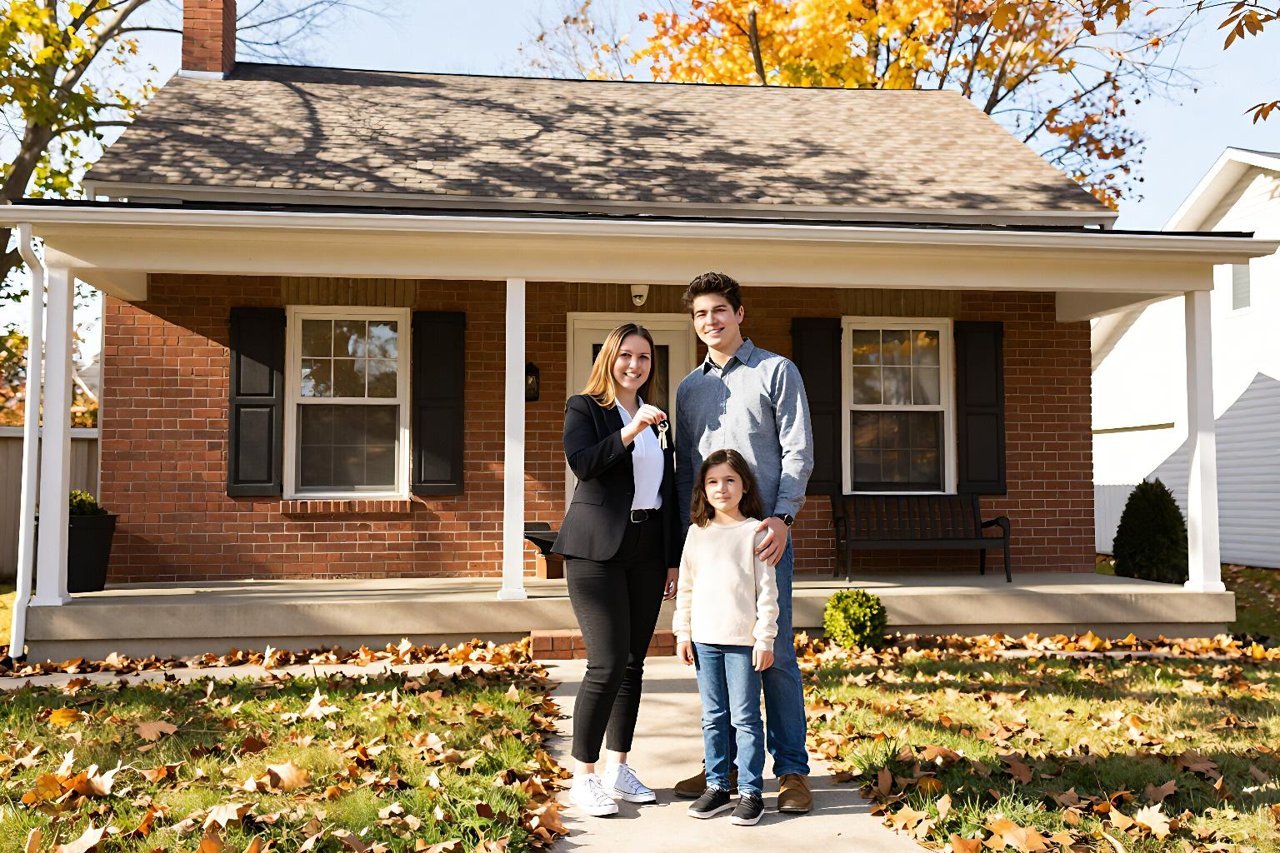
Michigan puts real money behind first-time buyers. The catch is that the money is scattered across a state agency, a few dozen county and city offices, and four federal loan programs, and nobody hands you a map at the closing table. This is that map, including the parts lenders tend to gloss over.
MSHDA is where most of the money starts
The Michigan State Housing Development Authority runs the state’s main first-time buyer machinery. Two pieces matter: the mortgage itself, and the cash that covers the down payment.
MI Home Loan and the zero-down option
MI Home Loan is a 30-year fixed-rate mortgage offered through MSHDA-approved lenders. The flagship version lets qualifying first-time buyers put nothing down. There’s also MI Home Loan Flex, which drops the first-time buyer requirement but keeps the income limits in place.
Plan on a credit score around 640 for most scenarios and a debt-to-income ratio a lender can work with. You also have to finish a homebuyer education course. It’s online, costs roughly $25 to $50, and takes an evening or two. Do it early. A missing certificate is one of the most common reasons a file stalls a week before closing.
Income limits are set by county and household size, so a family of three in Oakland or Wayne County can earn well into the six figures and still qualify, while rural counties have lower ceilings. Purchase price caps land in the mid-$200,000s across most of the state, higher in a handful of markets. If you’re shopping near the top of a cap, get pre-approved before you fall for a house you can’t finance through the program.
The down payment assistance layer
MSHDA’s Down Payment Assistance program stacks a second mortgage on top of the first. It currently runs up to $10,000 at 0% interest with no monthly payment, and it’s forgiven gradually as long as you keep the home as your primary residence. Think of it as a quiet loan that disappears if you stay put.
That second mortgage is also where most buyers get fuzzy on the details, particularly about where down payment assistance money in Michigan actually sits and which office controls it. Short version: the state program is the reliable one, and the local programs are the ones that require phone calls.
Federal loans that stack with Michigan aid
MSHDA isn’t the only path. These four back most Michigan first purchases, and each pairs differently with state and local assistance:
- FHA loans ask for 3.5% down and are forgiving on credit history, which makes them the default for buyers rebuilding a score.
- Conventional 97 needs just 3% down and can be cheaper over the long run for buyers with solid credit, though mortgage insurance stays until you hit 20% equity.
- USDA Rural Development loans offer 0% down in eligible rural areas, and large swaths of Michigan outside the metro cores qualify. The income cap is the gatekeeper here.
- VA loans run 0% down with no monthly mortgage insurance for eligible veterans, active duty service members, and some surviving spouses.
Stacking matters. A USDA loan with a local grant can leave a buyer with almost nothing out of pocket, which is a very different transaction than an FHA loan with 3.5% down and no assistance at all.
The fine print that decides your file
Most denials in Michigan aren’t about credit. They’re about eligibility rules nobody read carefully.
Who counts as a first-time buyer
Michigan defines it as someone who hasn’t owned a principal residence in the past three years. Renters qualify. So do people who owned a home years ago, sold it, and have rented since. Owning a rental property or a vacant lot usually doesn’t disqualify you, but an owner-occupied home in the last 36 months will.
Household income, not just your income
MSHDA counts the income of everyone who will live in the home and everyone on the loan. A partner moving in with you can push the household over the county limit even if they’re not borrowing. Check the current limits for your county before you assume you’re under them.
Property rules
The home has to be your primary residence, in Michigan, and in reasonable condition. A gut renovation is out. A house with peeling paint or a failing roof may need repairs completed before closing, which is worth knowing before you waive an inspection.
City and county programs worth a phone call
Several Michigan counties and cities run their own down payment help, often in the $5,000 to $15,000 range with their own income caps and their own repayment terms. Kent, Kalamazoo, Ingham, Wayne, and Oakland counties have all funded variations of this, and the terms change with each budget cycle. In Detroit, the Detroit Home Mortgage effort was built specifically to solve the city’s appraisal gap problem, where sale prices outrun what an appraiser will support.
The trick is timing. Local funds are usually first-come, first-served and tied to a specific fiscal year. Ask a HUD-approved housing counselor in your county what’s open right now, not what existed two years ago.
Help aimed at specific buyers
Some programs are built around household circumstances rather than geography. If you’re raising kids on one income, there’s targeted down payment help for single mothers that combines state assistance with nonprofit grants. Buyers with a disability have a separate set of options, including assistance programs for disabled buyers that many lenders never bring up. Veterans should ask about both VA financing and the state bond program, because the two can be combined in ways that surprise people.
Zero down doesn’t mean zero cash
This is the part that sinks deals. Even with 0% down and a $10,000 second mortgage, you still need money on hand for:
- Closing costs, typically 2% to 3% of the purchase price, though seller concessions can absorb some of it
- Earnest money, usually $1,000 to $3,000 in Michigan, which gets credited back at closing
- Appraisal, roughly $500 to $700, paid upfront and out of pocket
- Home inspection, $400 to $600
- Prepaid taxes and insurance for the escrow account, which can run a couple thousand dollars
On a $220,000 house, that’s often $6,000 to $9,000 in cash even when the down payment is technically zero. Our step-by-step walkthrough of how much money you really need to buy a home breaks down each line item so you can build a realistic number instead of a hopeful one.
Mistakes that cost Michigan buyers real money
- Calling one lender. Not every lender is MSHDA-approved, and the ones that are don’t all price the same. Two quotes on the same loan can differ by thousands.
- Forgetting the Principal Residence Exemption. File Form 2368 with your township by June 1 and you’ll knock roughly 18 mills off your property taxes. Miss it and you’re paying the school operating tax on a home you live in.
- Draining every account to close. Underwriters want to see reserves, and a $400 water heater two weeks after moving in shouldn’t go on a credit card.
- Opening a store card during underwriting. New credit can shift your debt-to-income ratio enough to kill an approval that was already issued.
- Waiving the inspection on a 0% down purchase. The program’s repair requirements are strict, and you’ll want to know about the furnace before you’re committed.
How to sequence the next 30 days
Start with the homebuyer education course, because it takes time and it’s required by nearly every program on this list. Then pull your credit reports and fix anything obvious, like a collections account you forgot about. Next, contact two or three MSHDA-approved lenders and ask each one the same three questions: what’s my rate today, what will my total monthly payment be including taxes and insurance, and which assistance programs do I qualify for?
Once you have a pre-approval letter with an assistance dollar amount attached, call your county’s housing office and ask what local funds are open. Then, and only then, start touring houses. Buyers who do it in that order tend to close in 30 to 45 days. Buyers who shop first and finance later spend a month chasing paperwork while the seller gets nervous.