
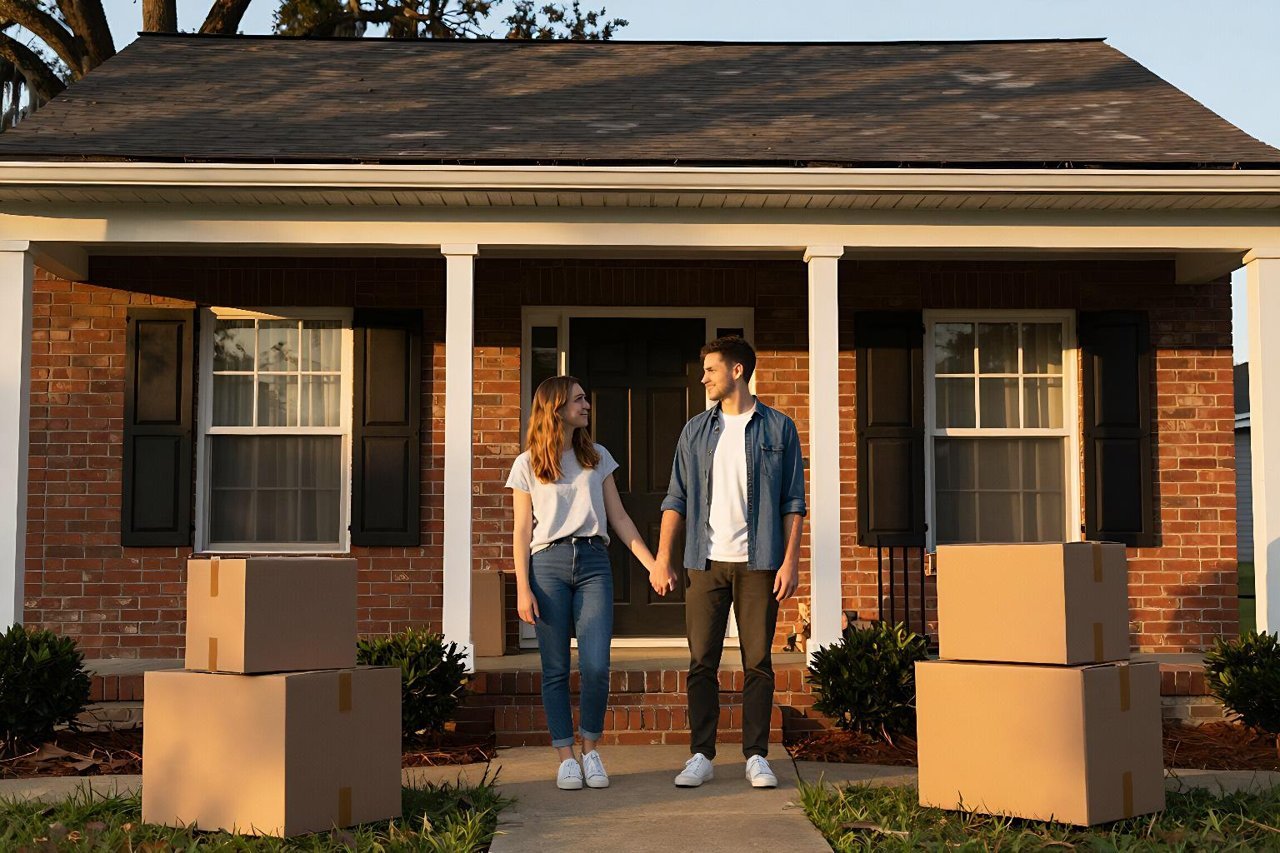
Angela had $4,300 in a savings account and a pre-approval letter for $265,000. She’d already talked herself out of buying in Lexington County when a loan officer mentioned that South Carolina would match her savings four dollars to one. Ten months later she closed on a three-bedroom ranch and handed over $1,100 at the table.
That story isn’t unusual here. South Carolina has quietly built one of the more useful first-time buyer ecosystems in the Southeast, and most of it runs through a single state agency that almost nobody calls by its full name.
SC Housing Is the Engine Behind Most of It
The South Carolina State Housing Finance and Development Authority, which everyone shortens to SC Housing, isn’t a bank you walk into. It’s a conduit: it issues tax-exempt bonds, sells the loans to investors, and passes the savings to borrowers as lower rates and down payment help. You apply through a participating lender, not through the agency itself.
Its workhorse product is Palmetto Home Advantage, a 30-year fixed first mortgage that can be paired with a second lien for cash to close. Rates on it typically run a quarter to a half point below what the same borrower would get on a standard conventional loan, though that gap moves with the bond market.
Down payment help that gets forgiven, not just deferred
Most SC Housing first mortgages can carry a companion second mortgage of up to $8,000, or a percentage of the loan amount if that’s lower. It covers down payment and closing costs. The part that separates it from the silent seconds you’ll see advertised elsewhere: it’s forgiven on a schedule. Stay in the house as your primary residence and the balance falls away year by year. Sell, refinance, or rent it out too early and you repay a prorated slice.
It’s worth understanding the plumbing here, because the cash rarely comes from the agency’s own pocket. If you want to know which entities actually fund these second liens and how the recapture rules work, this breakdown of where South Carolina down payment money comes from is a good place to start.
Income limits apply and they’re county-specific. In most of the state the cap lands somewhere between 80% and 115% of area median income depending on the program and whether the property sits in a targeted census tract. Credit score floors sit around 620 for the conventional version and 640 for some FHA pairings, but individual lenders can and do set overlays above those numbers.
First Home Club: A Four-to-One Match on Your Own Savings
This is the program that surprises people most. Save $1,875 in a dedicated account over at least ten months, and SC Housing adds $7,500. That’s up to $9,375 toward a down payment, generated from money you were saving anyway.
Two catches. The savings have to be steady, not a lump sum you drop in during month nine. And you have to complete an eight-hour HUD-approved homebuyer education course, which most participants find genuinely useful once they’re sitting in it. Nonprofit counseling agencies in Greenville, Columbia, Charleston, and Spartanburg run the course regularly, often online and sometimes free.
Palmetto Heroes Adds Extra Weight for Certain Jobs
Teachers, nurses, law enforcement officers, firefighters, correctional officers, EMTs, active-duty military, and veterans qualify for an enhanced version of the down payment assistance, currently up to $8,000, along with a rate discount on many loan types. A first-year teacher in Horry County can often get into a starter home with less than $2,000 of her own money.
You’d be surprised how many eligible buyers never ask. The program doesn’t advertise heavily, and it isn’t automatic. You have to tell the loan officer you want it applied for.
Federal Loans Do the Heavy Lifting on the First Mortgage
FHA runs at 3.5% down with a 580 minimum score at most lenders. VA runs at zero down for eligible veterans and surviving spouses. USDA’s Section 502 guaranteed loan also runs at zero down, and it’s the one South Carolinians overlook most often, because large stretches of the state’s rural map qualify, including plenty of land within commuting distance of Florence, Aiken, and Sumter.
Program rules for all three shift constantly, and a change in USDA’s income calculation or FHA’s condo approval process can quietly kill a deal mid-contract. Keeping an eye on recent USDA, FHA, and VA program changes is worth twenty minutes before you lock a rate.
County and City Programs Stack on Top
State and federal aid isn’t the ceiling. Local money exists too, and it’s scattered.
- Charleston and North Charleston have operated homebuyer assistance programs tied to specific neighborhoods, sometimes as grants rather than loans.
- Greenville County channels aid through nonprofit partners and employer-assisted housing programs run by the hospital systems and universities.
- Richland and Lexington counties pair local funds with the state programs, particularly for households under 80% of area median income.
- Habitat for Humanity affiliates in roughly two dozen counties offer sweat-equity paths to ownership with no traditional mortgage at all.
The catch is that local programs open and close with funding cycles. A program that existed last spring may have a waiting list by fall. Call the county housing office directly rather than trusting a website last updated in 2022.
The Mortgage Credit Certificate Nobody Mentions
South Carolina issues Mortgage Credit Certificates, which let you claim 20% of the mortgage interest you pay as a federal tax credit, capped around $2,000 annually, for as long as you own the home. On a $260,000 loan at 6.5%, that’s roughly $3,380 of interest in year one, and about $676 back as a credit. It doesn’t reduce your payment, but it changes your effective cost of borrowing. Supply is limited and allocated on a first-come basis each year.
Where the Fine Print Actually Bites
Most of the friction comes from lender overlays rather than government rules. A bank can take a program that allows a 620 score and require 660. It can decline a property for a roof with eight years left on it. Regional lenders vary widely in how they handle these stacked loans, and it pays to read up before you commit to one. Reviews of First Horizon’s mortgage programs and fee structure and what Synovus expects from borrowers before applying give you a sense of the questions to ask any lender in the state.
Watch the recapture tax too. If you use a bond-backed first mortgage and sell within nine years while your income has risen sharply, part of the subsidy can be clawed back. It rarely amounts to much, but it’s a real line item.
A Realistic Order of Operations
Buyers who get the most out of these programs tend to follow a similar sequence.
- Take the homebuyer education course first, before you’re under contract and stressed.
- Talk to a HUD-approved counselor about which programs you qualify for, not just which loan amount you can carry.
- Get quotes from at least two SC Housing participating lenders and ask each one to price the same scenario.
- Confirm the down payment assistance structure before you write an offer, since some sellers won’t accept certain second-lien arrangements.
- Ask your lender to calculate the total cash to close, not just the down payment.
On a $260,000 purchase with 3.5% down, the down payment is $9,100 and closing costs might land near $7,000. Between a $8,000 forgivable second and a $7,500 First Home Club match, a buyer who planned ahead can arrive at closing with a few thousand dollars rather than $16,000.
Questions to Ask Before You Sign Anything
Ask whether the second mortgage is forgivable or deferred, and over exactly how many years. Ask what happens if you refinance in year four. Ask whether the first mortgage carries a recapture provision. Ask if the lender sells servicing, and to whom, because a program-compliant loan serviced badly becomes a program-compliant headache.
Then ask the one question that gets skipped: what would this look like without any assistance at all? Sometimes the answer is a lower rate with no strings. Usually it isn’t. But knowing the comparison is what turns a stack of programs into a decision you can actually defend five years down the road, when the roof needs replacing and the payment still has to clear.