
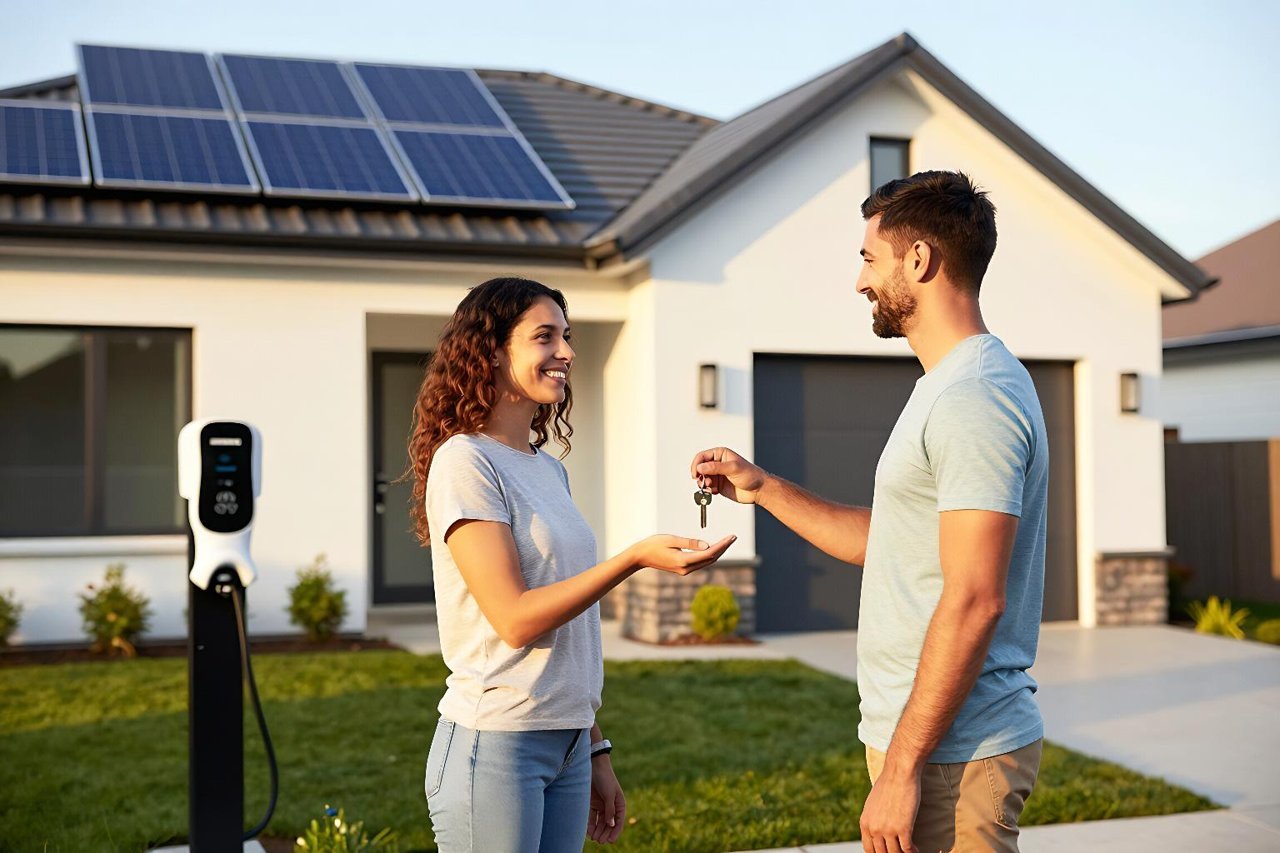
The term “green mortgage” gets thrown around a lot in sustainable housing circles, but the definition is refreshingly simple. A green mortgage is a home loan that uses a property’s energy performance to determine part of your loan terms. If the home is energy efficient, or if you commit to making it that way, the lender rewards you, usually with a lower interest rate or a cash back payment.
Lenders have a strong business reason for offering these perks. A house that costs less to heat, cool and power leaves you with more cash in your bank account every month. That makes you a safer bet to keep up with your mortgage repayments. So a small discount on the rate can still be profitable for the bank because they’re less likely to end up in a foreclosure sale.
What Is a Green Mortgage?
A green mortgage isn’t a single, uniform product. It’s an umbrella term that covers several lending programs, each with its own criteria. In the United States, the most established version is the Energy-Efficient Mortgage (EEM), which allows borrowers to finance energy-saving improvements as part of their home loan. The FHA, VA, and Fannie Mae each operate their own versions, and private lenders sometimes borrow the concept for their own portfolios.
Because EEMs get grouped under the wider green label, people often assume they’re interchangeable. They aren’t. An EEM is nearly always tied to renovation work, while a broader green mortgage may simply reward you for buying a home that already has a strong energy performance score. If you want to compare the FHA’s EEM against the newer conventional options, our detailed guide to the Energy-Efficient Mortgage (EEM) covers the program rules, qualification steps, and the exact numbers for 2025.
How the Financial Benefit Works
Let’s put some real numbers behind it. Many lenders who offer a green interest rate reduce it by between 0.25 and 0.5 percentage points. On a $350,000, 30-year fixed-rate mortgage, that might not sound like much, but the effect is huge. At an interest rate of 6.5%, your monthly principal and interest payment is about $2,212. Drop the rate to 6.0% and that same mortgage costs roughly $2,098 each month.
You save $114 per month, or $1,368 in the first year. Over the full 30-year term, the total interest saved approaches $41,000. That’s not pocket change.
Interest rate reductions aren’t the only reward. Other green mortgage programs offer a cash rebate, often between $500 and $1,500, when the home achieves a certain energy rating. Some lenders will pay for the required energy assessment or give you a credit toward closing costs. A few forward-thinking institutions even offer a slightly higher borrowing limit because they know your utility bills will be lower, making the monthly debt load more affordable.
If you receive a rate discount and your monthly utilities drop by $80, the combined effect can be $200 or more of breathing room in your budget every month. That’s what a green mortgage is really about: the lender shares the financial benefit of a low-energy home with you.
The Three Main Types of Green Mortgage Products
Government-Backed Energy-Efficient Mortgages
FHA EEMs are the original model. They allow you to roll the cost of eligible improvements, like insulation or a modern HVAC unit, into your FHA loan without requiring a larger down payment. You must first get a home energy assessment from an approved rater, and the total cost of upgrades must be less than a cap set by the program. The FHA also applies its usual mortgage insurance premiums to this type of loan.
Similar products exist through the VA for eligible veterans and through the USDA in rural areas. These are usually the least expensive entry point because the down payment requirement is small or zero, but they come with strict paperwork and the need for an official energy report.
Fannie Mae and Freddie Mac Conventional Programs
Conventional green mortgages have become easier to find since Fannie Mae launched HomeStyle Energy and Freddie Mac introduced GreenCHOICE. Both allow you to finance up to 15% of the as-completed appraised value for energy-saving improvements. That makes them useful when you’re buying a fixer-upper that needs a major efficiency overhaul.
Private conforming loans are often more flexible about what counts as an eligible upgrade. You might be able to include solar panels, battery storage, or even a full heat pump system. The catch is that you’ll typically need better credit, and the loan will need to meet standard conventional underwriting guidelines.
Proprietary Green Mortgages From Individual Banks
Several large retail banks now offer their own “green” mortgages, primarily for new-build homes with strong sustainability credentials. The property usually needs an Energy Star certificate or a HERS index score in a very efficient range. These programs tend to be simple: the bank offers a flat 0.25% rate reduction and no extra paperwork beyond proof that the house meets the standard.
That’s attractive if you’re buying a certified eco-home from a developer, but it can be difficult to retrofit. The property must already be assessed, so you can’t use this type of green mortgage if the house is energy-hungry and you’re planning to improve it later.
Who Qualifies for a Green Mortgage?
Qualifying starts with the same things as any mortgage application: a credit score in the mid-600s or above, stable income, and a debt-to-income ratio that meets lender limits. For FHA loans, a credit score of 580 can be enough. Then comes the environmental piece. You need to verify that the house is energy efficient or that your renovation plan will make it more efficient.
That verification usually happens in the form of a home energy assessment. A rating professional will inspect insulation, windows, mechanical systems, and sometimes perform a blower door test to detect air leaks. The report will produce a score that the lender uses to decide whether you qualify for the incentive.
Occupancy rules also matter. Most green mortgage programs are designed for owner-occupied residences. You can’t usually buy a rental property and claim the energy discount because the lender’s risk is tied to your personal utility bills. If you’re not living in the house, there’s no guarantee that the savings will be applied to your monthly budget. For that reason, you’ll be asked to confirm that the property will be your primary residence. Before you sign anything, it’s worth understanding what separates a true primary residence mortgage from an investment property loan, especially if you’re planning to buy a vacation home with energy-efficient features.
Immigration status can also be a limiting factor. Federal green mortgage products generally require a Social Security number and legal residency. If you’re buying from abroad or don’t have a green card yet, you won’t be able to access an FHA EEM. Some non-bank lenders have stepped in with their own green products, but the terms are usually stricter. Foreign nationals who want an energy-efficient home might need to start with a conventional mortgage and then refinance later. For a closer look at those options, including loans that use an ITIN or foreign credit history, read our guide on how to get a US home loan without a green card.
Potential Hidden Costs and Pitfalls
The green label can be attractive, but it does not mean you’re automatically getting a better deal. A lender might offer a “green rate” that is 0.25% lower than its standard rate, but then charge higher origination fees to recover the difference. You should always compare the annual percentage rate (APR), not just the interest rate, and ask for the total closing costs on the green loan versus a standard loan.
Another hidden cost is the energy assessment itself. A professional home energy audit typically costs anywhere from $300 to $800, depending on the size of the house and whether the inspector uses specialized equipment. Some lenders will reimburse that fee after closing, but many will not. If the discounted rate saves you only $30 a month, it will take more than a year to break even on the audit cost.
There is also the risk that the property won’t score as well on the assessment as the seller claimed. A home may have solar panels but lack adequate attic insulation. When that happens, you’re left with a choice: walk away, renegotiate the price, or expand your loan to include the energy upgrades. Make sure your purchase contract gives you the right to back out if the energy score comes in below the level you need.
How to Compare Green Mortgage Offers Without Getting Blinded by Buzzwords
Start by asking a lender to show you the interest rate, APR, closing costs, and estimated energy savings side by side. You want a complete picture of how the green component changes your out-of-pocket expenses.
Next, ask whether the green incentive is a permanent feature of the loan or only available through a promotional period. Some lenders discount the rate for only the first three to five years, after which it reverts to the standard adjustable rate. That can make the initial savings less valuable if you plan to stay in the home for a long time.
Here’s a useful checklist to guide your comparison:
- Get an official energy performance score before applying, not after.
- Ask if the discount is automatically applied or if you must request it.
- Check whether the lender requires you to use their approved energy rater.
- Confirm that the rate remains fixed for the entire term if that’s what you’re promised.
- Look for any clawback clause that takes away the cash rebate if you refinance within two years.
Some lenders will also let you combine a green mortgage with other down payment assistance programs. A local first-time homebuyer grant plus a green rate discount can produce a compelling combination if you qualify for both. But each program has separate underwriting rules, so expect extra paperwork.
Making Your Decision: Green, Standard, or Refinance Later?
If you’re already set on an energy-efficient home, the green mortgage is nearly always worth exploring. The application process is almost identical to a conventional loan, and the only added step is the energy paperwork. A rate discount gives you immediate monthly savings, and if the home has a high efficiency score, that saving continues for the life of the loan.
The more complex situation is when you’re deciding between a cheaper, inefficient home and a pricier, efficient one. Here, the mortgage rate is only part of the puzzle. You need to estimate your future energy costs and maintenance expenses. A home with a heat pump, modern windows, and good insulation will likely command a higher purchase price, but the combination of a lower interest rate and reduced utility bills could tip the monthly cost in its favour.
If you’re planning to make energy upgrades to a property you already own, refinancing into a green mortgage can work, but the savings are less dramatic. You’ll pay thousands in closing costs on the refinance, and the energy audit fee is unavoidable. Adding the upgrade costs to your new loan amount can also make your total debt higher. Run a 10-year projection that includes loan payments, energy bills, and maintenance to see whether the refinance really pays off.
Request quotes from at least three different lenders before you settle. The difference between a standard mortgage and a green mortgage can be as simple as one lender recognising the value of an efficient home and another refusing to change its rate model. Shop around, compare the real numbers, and you’ll find out whether a green mortgage is the right tool for your home-buying journey.