
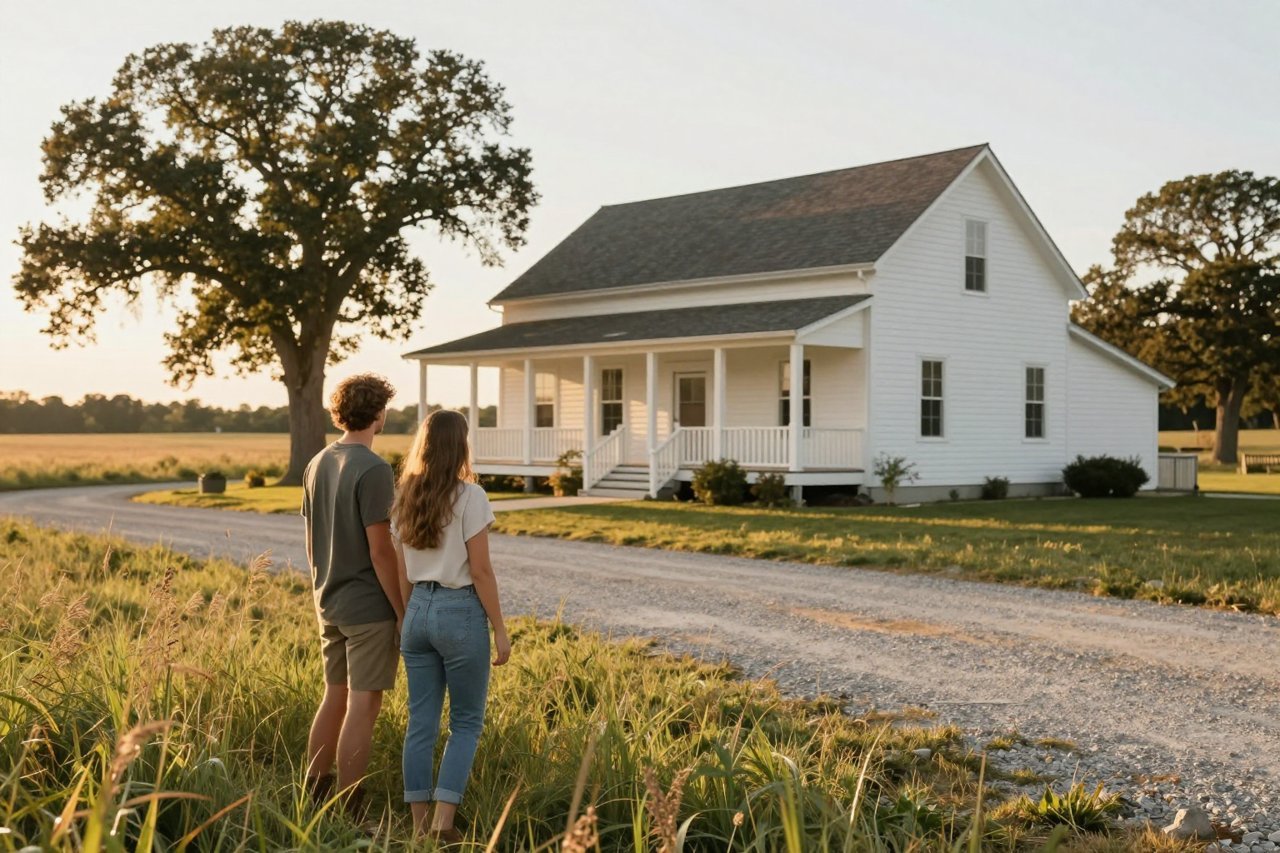
A couple I know spent eight months losing bidding wars on a $210,000 ceiling. Every listing inside the city was either a tear-down or a stampede. Then a coworker asked whether they’d looked at USDA loans. Five months later they closed on a three-bedroom with a quarter acre, twenty-two minutes from downtown, and put nothing down.
That outcome is real and repeatable, which is why first-time buyers keep searching for the program. It’s also why so many of those searches end in frustration. USDA financing is generous in places nobody expects and rigid in places nobody warns you about. The rigid parts tend to show up after you’ve already paid $650 for an inspection.
Two programs share the USDA name, and they work nothing alike
Most explainers lump them together. They have different income caps, different credit standards, different rates, and completely different application paths.
The guaranteed loan is what most first-time buyers end up using
A normal lender funds the mortgage and USDA insures part of it against default. Because the lender underwrites, ordinary mortgage rules apply. Rates run close to conventional, 100% financing is standard, and the income ceiling is 115% of the area median, which in a lot of rural counties is a genuinely comfortable salary. If you have decent credit and a steady job, this is the version you’re probably shopping for.
The direct loan exists for tighter budgets
Here USDA is the lender itself. Income limits drop to low and very low thresholds, and the agency can buy the rate down to as little as 1% for qualifying households, with terms stretching to 33 or 38 years. It’s slower and far more document-heavy, and it’s a lifeline if you fit the box. The full breakdown of USDA direct versus guaranteed loans is worth ten minutes before you apply anywhere.
The address gets approved or rejected before you do
This is the biggest source of wasted Saturdays in the whole program. USDA eligibility is a property test first. If the house sits outside an eligible boundary, no credit score, no down payment, and no persuasive loan officer will move it inside one.
The rough rule is communities of 35,000 people or fewer, but the real boundaries follow census blocks, not highways or city-limit signs. A subdivision can be eligible on one side of a street and dead on the other. Parcels that look suburban on a map sometimes qualify because they were carved out decades ago.
Before you tour anything, pull the address up in the USDA tool. Learning how to read the loan eligibility map takes about ninety seconds per listing and will save you months. If you want the wider picture of how the lines were drawn, see what the USDA rural map approves and what it rejects. Some of the rejections surprise people.
USDA does not require you to be a first-time buyer
Worth stating plainly, because plenty of people assume they’ve aged out of the conversation. There’s no first-time buyer requirement here. What USDA does require is that the home becomes your primary residence, that you don’t already own an adequate house within reasonable commuting distance, and that the property isn’t a working farm or set up to generate income. Previous owners qualify. So do people who sold six years ago and want back in.
Household income counts, not just your paycheck
The number that gets measured is total household income for everyone who’ll live there, not the income of whoever signs the note. A partner, a roommate, an adult child with a part-time job, all of it can push a file over the ceiling. Adult members who aren’t borrowing usually sign a form confirming they won’t contribute to the mortgage, and an underwriter will look at whether that’s plausible.
Guaranteed loans cap household income at 115% of the area median. Direct loans sit much lower. Check the exact figure for your county before you tour, because a promotion or a second job can move you out of one program and into the other.
Credit and debt get the ordinary mortgage treatment
USDA’s automated underwriting system typically wants a 640 middle score. Below that you’re in manual underwriting territory, which means compensating factors, letters of explanation, and a longer wait. Debt-to-income generally lands at 41%, with room to stretch into the mid-40s when there are reserves or a solid history of paying rent at a similar level.
What trips people up isn’t the score. It’s the file. Self-employment income gets averaged over two years and frequently comes in lower than borrowers expect. Undisclosed debt from a furniture store shows up on the final credit pull before closing. The rules that surprise otherwise qualified buyers are documented in detail in USDA guaranteed loan requirements.
Zero down still isn’t zero cash
Nothing down is not the same as nothing needed. Expect a 1% upfront guarantee fee that gets rolled into the loan balance, plus an annual fee of 0.35% of the balance baked into your payment. Closing costs typically run 2% to 5% of the purchase price, and sellers can only contribute so much toward them.
Then there are the rural-specific line items: a well test, a septic inspection, a longer driveway appraisal, sometimes a water potability report. Budget a few thousand beyond the down payment you aren’t making. The honest math on what 100% USDA financing really costs is worth reading before you set your price ceiling.
The house has to survive its own appraisal
USDA appraisals apply minimum property requirements, closer to FHA standards than conventional. Peeling exterior paint, a roof at the end of its life, exposed wiring in a basement, a shared well without a recorded easement, or a crawl space with standing water can all stop a deal cold.
This is where rural buyers get blindsided. That charming 1978 ranch with good bones but a tired roof might be priced perfectly and still be unfinanceable until the seller fixes it. Ask your agent to flag condition issues on the first walkthrough rather than after the appraisal comes back.
What the loan file actually needs
The document list is manageable if you gather it once and gather it properly:
- Last 30 days of pay stubs and two years of W-2s
- Two years of federal tax returns, all schedules, including business returns if self-employed
- Two months of statements for every asset account you’ll use for closing
- Signed gift letters and paper trails for any down payment or closing help
- Rental history with landlord contact information, going back a year
- Photo ID, and explanation letters for any deposit that isn’t payroll
Unsourced cash is the most common reason a clean file stalls. A $4,000 deposit from your mother with no letter becomes a two-week delay.
Three checks to run before your next showing
Look up the address in the USDA eligibility map first. Not after the offer, not after the inspection. Pull up the county income limit second, and add every adult’s earnings before you compare yourself against it. Third, ask a lender for a full pre-approval with the USDA overlay applied, meaning they’ve already run the automated system and seen your tax returns.
A pre-qualification call tells you almost nothing about whether USDA will fund the house. Sellers in rural markets have learned that lesson too, and a listing agent who has watched two USDA contracts collapse will want proof before accepting your offer. Show up with the address verified, the income limit confirmed, and a lender who has actually closed one of these. That combination wins offers in places where nobody else is competing.