
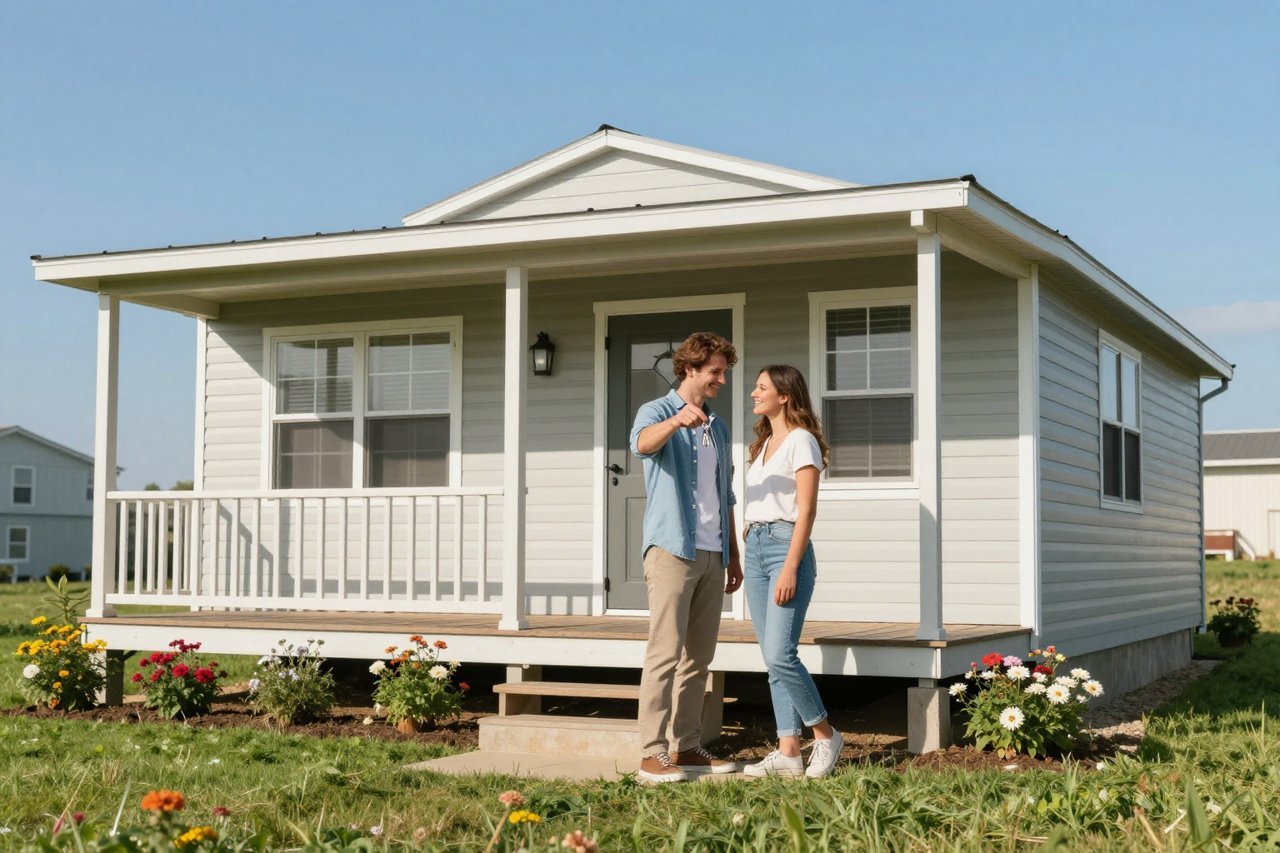
Mobile home mortgages don’t work like loans for standard houses. Lenders first decide whether your home is personal property or real property, and that single classification shapes your rate, your down payment, and even how long you have to pay off the loan. A home bolted to a permanent foundation on land you own is usually treated as real estate. A home placed on rented land in a mobile home community is treated more like a vehicle.
Many buyers compare a few advertised rates and skip the structural questions. That mistake leads to thousands of dollars in unnecessary interest. The good news is that you have more financing options than you think. You can use a chattel loan, an FHA or VA mortgage, or a conventional lender, but each route has different approval requirements and property standards.
Mobile Home vs. Manufactured Home: What the Names Mean for Your Loan
In a strict legal sense, a mobile home is a factory-built dwelling constructed before June 15, 1976. Anything newer is a manufactured home built to federal HUD standards. Yet many people still say mobile home when describing any factory-built unit. Lenders, however, use the distinction to decide whether a house is eligible for a mortgage.
If you’re looking at a home from the 1960s or early 1970s, it may only qualify for a personal loan or very expensive chattel financing. A newer manufactured home can secure a real estate mortgage, provided the wheels are removed and an inspector confirms the foundation is permanent. The HUD data plate on the interior wall tells you the exact serial number and build date, so verify it before you submit an application.
Two Funding Paths: Chattel Loans and Real Property Mortgages
When you speak with a lender, you’ll hear two phrases: chattel loan and real property mortgage. Here is what separates them and which one makes sense for your purchase.
Chattel Loans
If the manufactured home sits on rented land or remains registered as personal property, you’ll get a chattel loan. These loans cover only the structure, not the ground under it. Because the lender can repossess the home more quickly than they can foreclose on land, they take on a different kind of risk. That risk shows up in the numbers: rates run 1.5 to 3 percentage points higher than conventional mortgages, and terms are much shorter, often 15 years for a single-wide and 20 years for a double-wide.
Real Property Mortgages
When you own the land, place the home on a permanent foundation, and combine the title and deed into one package, the property becomes real estate. That opens the door to FHA Title II loans, VA loans, USDA loans, and conventional conforming loans. These mortgages amortize over 30 years and carry rates that are close to the rates for site-built homes.
A hybrid option, FHA Title I, can finance the manufactured home and the lot, but it still behaves like a chattel loan. It works well for buyers who plan to own their land but cannot satisfy the stricter foundation rules for Title II. Before choosing this route, ask the lender how the title is filed in your state.
Key Differences at a Glance
- Loan term: Chattel loans run 15 to 20 years; real property mortgages can stretch to 30 years.
- Interest rate: Chattel rates typically run 2 to 4 points higher than real property mortgage rates.
- Down payment: Chattel lenders often require 10% to 20%; FHA real property loans allow as little as 3.5% down.
- Collateral: Chattel loans secure only the home; real property mortgages bundle the land and home.
- Default process: Repossession for a chattel loan is faster than a judicial foreclosure.
Land Ownership Is the Whole Game
Buyers often overlook the parcel beneath the house until the financing stage. If you rent your space in a manufactured home community, you’re subject to the park’s lease terms, rent increases, and resale rules. Some parks prohibit the subordination of their ground lease to a mortgage, which effectively blocks real property financing. Always read the park lease before signing a sales contract.
On the other hand, if you own the land and the house is legally affixed, the package appreciates along with the real estate market. That is why land ownership converts a manufactured home from a depreciating asset into a more stable investment. It also lets you compare mortgage offers from a wider pool of lenders, including local banks and credit unions.
Typical Rates and Down Payments in 2026
In early 2026, 30-year mortgage rates for site-built homes hovered around 6.25%. Manufactured home chattel loans, however, often landed at 8.5% to 10.5% depending on credit and down payment. The spread can add hundreds of dollars to your monthly payment.
Consider a concrete example. A three-bedroom double-wide costs roughly $130,000 including installation. A 20-year chattel loan at 8.5% produces a monthly payment near $1,127. The same amount financed as a 30-year FHA real property mortgage at 6.5% gives you a payment near $822. Saving $300 every month is enough to cover a park lot lease or real estate taxes.
Down payment requirements vary by lender and whether the unit is new or used. Many chattel lenders want 10% down on new multi-section homes and 20% down on used single-section homes. FHA loans on real property permit 3.5% down, but you’ll need to meet the home’s minimum property standards and pay an upfront mortgage insurance premium.
FHA, VA, USDA, and Conventional Routes
Specialty lenders are not the only way to finance a mobile home. Federal programs cover manufactured homes when they meet strict criteria.
FHA Title II is the most popular for borrowers who own their land. It requires a minimum credit score of 580 with 3.5% down, although many lenders raise that minimum to 600 or 620. VA loans offer zero down payment for qualified veterans, only if the manufactured home is permanently affixed to land and meets VA appraisal requirements. USDA loans provide a zero-down option in eligible rural areas and sometimes allow chattel financing through the Section 502 program.
Conventional loans from Fannie Mae and Freddie Mac also finance manufactured homes, but they require a higher credit score and a larger down payment than FHA. You’ll generally need 5% down for a multi-section home that is treated as real property. Single-wide homes are treated more suspiciously and may not qualify for conventional financing at all.
Credit Scores and Qualifying in 2026
Credit standards are changing. A chattel lender typically wants a FICO score of at least 640 for a new double-wide, and many require 680 for the best rate. If your score is in the low 600s, expect a higher down payment or a co-signer. FHA’s 580 minimum still exists, but lender overlays often push the effective minimum to 620.
Your debt-to-income ratio matters just as much as your score. Keep your total monthly debt below 45% of gross income. If you plan to buy a manufactured home while carrying an auto loan, wait until the auto loan has fewer than 10 payments left; that may help your ratio. Do not open new credit cards or lines of credit during the loan process, because each inquiry can drop your score by several points.
One of the most affordable ways to finance a mobile home is through a community-chartered lender. The best credit unions to join in 2026 according to your needs include several that hold manufactured home loans in their own portfolios. Portfolio lenders may offer more flexible underwriting for older homes and can avoid the strict resale requirements that large national banks impose. Joining a credit union a few months before your application also gives you a chance to establish a relationship and qualify for a member discount.
How 2026 Rule Changes Affect a Mobile Home Mortgage
Federal rule changes are reshaping the manufactured home lending landscape. New HUD energy efficiency standards will raise the cost of new homes, but they also make monthly utility expenses more predictable. Lenders who sell loans to Fannie Mae and Freddie Mac face stricter chattel loan requirements starting later in the fall, and some states are requiring clearer title cleanup procedures.
For a detailed look at timing and loan limits, read our manufactured home mortgage guide. It covers the specific 2026 land lease protections and the updated HUD code requirements that can trip up buyers at the closing table.
Can You Tap Equity on a Mobile Home?
Once your home is classified as real property and sits on owned land, you can build equity the same way you would with a traditional house. After a few years of payments and modest appreciation, you may qualify for a cash-out refinance or a home equity loan. Borrowers with chattel loans typically have far fewer options, because the home alone does not provide enough collateral for a second mortgage.
If you are considering a cash-out refinance, timing is important. Closing costs and appraisal fees are still high in many regions, and interest rates can be volatile. Review what to know before tapping home equity in 2026 so you understand the true cost and whether your manufactured home will meet the lender’s minimum value threshold. A land-lease arrangement may also block equity lending, so check your lot lease for any prohibition on additional liens.
Choosing the Right Lender for Your Mobile Home Mortgage
Shop around with at least three different sources: a nationwide FHA-approved lender, a local bank near the home, and a credit union you are eligible to join. Ask each one for a written Loan Estimate. Compare loan costs, title fees, escrow requirements, and prepayment penalties side by side.
Prepayment penalties deserve special attention. Some chattel lenders charge up to 5% of the remaining balance if you pay off the loan within the first five years. That fee could wipe out the savings from refinancing to a lower rate. Real property mortgages generally have no prepayment penalty, but you’ll still pay title and appraisal costs.
Finally, remember that your down payment is not the only cash you need. Budget for moving the home, setting up utilities, and preparing the foundation. On leased land, ask who owns the central water and sewer lines. A well-written contract will make your mobile home mortgage less stressful for years to come.