
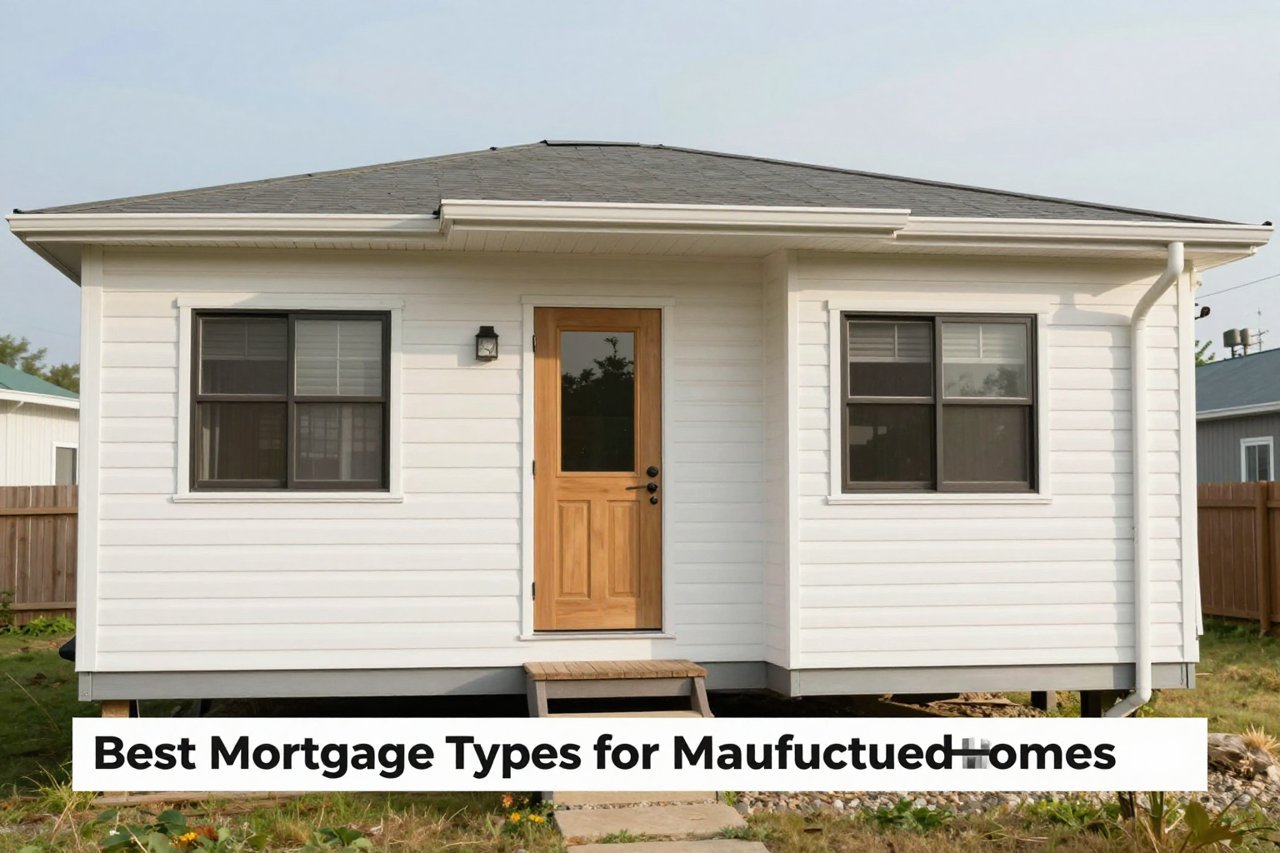
A double-wide on two acres outside Cullman, Alabama lists for $149,000. Two buyers make nearly identical offers in the same week. The first closes on a 30-year fixed loan at 6.5% and pays $916 a month. The second finances the same house as personal property at 9.9% over 20 years and pays $1,389. Same home, same dirt, same credit score range. The difference is the loan program, and it is worth roughly $470 every month.
That gap is why the question of the best mortgage types for manufactured homes is not academic. Structure matters more than almost anything else, and it usually has less to do with your credit score than people assume. What drives the outcome is how the home is titled, whether land is part of the deal, and which lenders are willing to touch the file.
Real Property vs. Chattel: The Split That Sets Your Rate
Nearly every manufactured home loan lands in one of two buckets.
Real property loans treat the home and the land as a single piece of real estate. The home is permanently affixed to a foundation, its title is surrendered and converted to a deed, and the lender takes a mortgage just like it would on a site-built house. Rates track the same market as any other home loan.
Chattel loans finance the home as personal property, the same legal category as a car or an RV. The home keeps a DMV title instead of a deed. Rates run 2 to 3 percentage points higher, terms usually cap at 20 years, and down payments often start at 10%.
Which lenders play in each sandbox matters enormously. A broker who only writes chattel paper will quote you 10% and call it normal. Before you start making calls, it helps to know where to find manufactured home lenders and what they charge, because the same $149,000 house can be financed three different ways depending on who answers the phone.
FHA, VA, and USDA: The Government-Backed Options
Government insurance does two things for manufactured housing. It lowers the rate, and it tells lenders what paperwork they are allowed to accept. Each program has a different appetite.
FHA 203(b) with land
If you are buying the home and the land together and the home will be permanently affixed, FHA’s standard 203(b) program works almost like it does for a stick-built house. Down payment is 3.5% at a 580 credit score, or 10% down if your score sits between 500 and 579. Thirty-year fixed terms are available.
Two catches. County loan limits apply, and the appraiser has to be comfortable with manufactured housing. A lender who writes one of these a year can lose weeks to a stalling appraisal. Ask how many manufactured home loans they closed last quarter before you hand over a deposit.
FHA Title I, for home-only deals
Title I is the government’s answer to chattel lending. HUD insures the loan, which pulls pricing down below private chattel money, and down payment sits around 5%. Terms generally run 15 to 20 years.
The ceiling is the problem. Title I caps out near $70,000 for a single-section home and not much more than double that for a multi-section unit. Those limits have not kept pace with prices, so Title I mostly helps buyers of older, smaller, or used homes rather than new double-wides.
VA loans
Veterans and surviving spouses get the best structure in the market when the pieces line up. A VA-backed loan on a manufactured home with land, permanently affixed to a foundation, can reach 100% financing with no monthly mortgage insurance. Rates typically come in below FHA and conventional offers, and the only upfront cost is the funding fee. It is worth checking what VA mortgage rates look like today before you assume a manufactured home knocks you out of the program.
VA will also back loans where the home stays titled as personal property, but the lender pool shrinks to a handful of names and the pricing edge mostly disappears. The clean version of the deal is home, land, and a permanent foundation.
USDA Section 502
Rural buyers with modest incomes should look here first. Section 502 offers zero down, 30-year fixed terms, and a rate that competes with anything on the market. Income limits generally cap at 115% of the area median, and the property has to sit in an eligible rural area.
Manufactured homes qualify if they are permanently affixed to a permanent foundation and financed with the land. This program pairs well with other rural options, and there is a useful breakdown of USDA, VA, FHA, and local lender programs for rural buyers if you are weighing all four side by side.
Conventional Loans and Fannie Mae’s MH Advantage
Fannie Mae and Freddie Mac both buy manufactured home loans, which means the conventional market is genuinely open to you. Expect a 5% down minimum on a single-wide, and as little as 3% on qualifying multi-section homes. Credit score floors hover at 620.
The interesting product is Fannie’s MH Advantage designation. Homes built to specific design, energy, and durability standards can qualify for 97% financing, which means 3% down for a first-time buyer who also qualifies for HomeReady. The requirements are real: multi-section construction, a minimum square footage, a permanent foundation, and documented energy performance.
Supply of MH Advantage homes is still thin outside a few markets, but it is growing. HUD’s first major rewrite of the federal construction code in decades is clearing the way for taller, larger, more house-like builds, and those homes are exactly what conventional underwriting wants to see. The manufactured home mortgage guide covering rates, land rules, and the 2026 code changes walks through what that shift means for borrowers.
Chattel Loans: Expensive, But Sometimes the Only Door
Chattel lending is dominated by a small group of specialty financiers such as 21st Mortgage, Vanderbilt, and Triad, plus a long tail of credit unions that keep these loans in portfolio. Typical terms look like this:
- Loan amounts from about $40,000 to $150,000
- Down payments of 10% to 20%
- Terms of 15 to 20 years, rarely longer
- Rates in the 8% to 11% range depending on credit and term
Chattel is not a rip-off. It is what happens when the collateral is a home that can, in theory, be driven away, and the lender has no land to fall back on. That risk gets priced in.
It becomes the right choice when the land is not part of the transaction. If you are placing a home in a leased lot in a land-lease community, buying from a family member who is keeping the acreage, or purchasing in a state where converting the title to real property is slow and expensive, chattel may be your only realistic path.
Land-Home Packages, Credit Unions, and Seller Carry
Community banks and credit unions are worth a call even when the big names say no. Because they hold loans on their own books rather than selling them to Fannie or Freddie, they can be flexible on home age, acreage, outbuildings, and unusual property layouts. A local lender who knows the county appraiser is worth more than a marginally better rate from a call center.
Retailers often bundle land and home into a single package, which simplifies the transaction but not always the pricing. Compare the package rate against what a separate land loan plus a real-property mortgage would cost.
Seller financing shows up regularly in this market, especially with private sales of older homes. It can be fast and forgiving on credit history, but have a real estate attorney read the contract. Balloon payments and acceleration clauses are common.
How to Choose Without Overthinking It
Work through these in order. The first answer usually decides the rest.
- Do you own the land, or is it part of the purchase? Land in the deal opens up FHA, VA, USDA, and conventional pricing.
- Will the home be permanently affixed? Foundation work costs money upfront and pays for itself over 30 years.
- What is the purchase price? Below $80,000, chattel or Title I are often the only realistic options.
- What is your credit score and debt-to-income ratio? A 640 score opens conventional doors that a 560 does not.
- How long will you stay? If the answer is under five years, paying points or foundation costs rarely pays back.
If You Already Own One
The rate you signed up for is not permanent. Borrowers who bought with chattel paper five or six years ago at 10% often find they can now qualify for a real-property mortgage in the 6s, particularly if they have since paid off the land or affixed the home to a permanent foundation. Payments can drop by hundreds of dollars a month.
The process is not automatic. Underwriting on a refinance of a manufactured home asks harder questions about title status, foundation certification, and whether the home has ever been moved. Getting the paperwork organized before you apply is most of the battle, and there is a practical walkthrough of how to refinance a manufactured home without getting stuck in underwriting that covers exactly which documents trip people up.
Start with the land question, get two quotes from lenders in different categories, and compare the annual percentage rate rather than the headline number. On a $149,000 home, that comparison is the difference between a $916 payment and a $1,389 one, and it takes about an afternoon to sort out.